
There is no answer on the map. The Google Maps search engine indicates as the destination the commercial offices of the real estate firm Terrenos Houston, which markets properties in the community of Colony Ridge, located in Liberty County, about 35 kilometers north of Houston and its population ranges between 75,000 and 100,000 inhabitants according to county officials. But that is not destiny.
To understand the place you have to enter its streets. Diagonally to the agency, a food truck breaks the logic of the search engine. “Yes, there are tacos,” the sign announces. Among the smell of corn and oil, a woman gives directions.
The stall is almost empty. The heat falls strongly: 33 degrees Celsius in the middle of the afternoon. Under a long tent, a plastic table and long benches function as an above-ground dining room. A client arrives. Order quickly, without lingering. Before leaving, he mentions the immigration raids and the criticism of the company that sold these lands, accused by residents for marketing lots in flood-prone areas and even affected by wastewater. The Hispanic community has been the most affected, with complaints of lack of information about the risks. The client does not give more details. He's in a hurry. He leaves.
Colony Ridge has been singled out by Texas Republican legislators as a refuge for undocumented migrants and even as a crime center linked to cartels. However, the state presence is limited: there are around 10 police officers for a community of more than 80,000 people. Although its residents maintain that the level of crime is low compared to other cities, poor surveillance translates into daily security problems.
At the beginning of 2025, tension increased. The area became a target for immigration raids.
Following the instructions of the food truck saleswoman, signs in Spanish begin to appear on the road. This is how the arrival in Colony is announced, an area that borders Montgomery County.
On one of its streets, in the community of Colony, there is a commercial establishment, Veronica's Café. The place is empty. It may be due to the schedule, Thursday 2:00 p.m. in June. The owner, an American, is married to a Central American; With a gentle attitude, he is aware of the clientele that enters or leaves.
"The truth is, while driving through my community, I have seen state troopers stop people and search for them. I simply close my eyes and say a prayer for them; I believe that God is in control of everything," says Verónica. Furthermore, he indicates that he had to adapt to the situation.
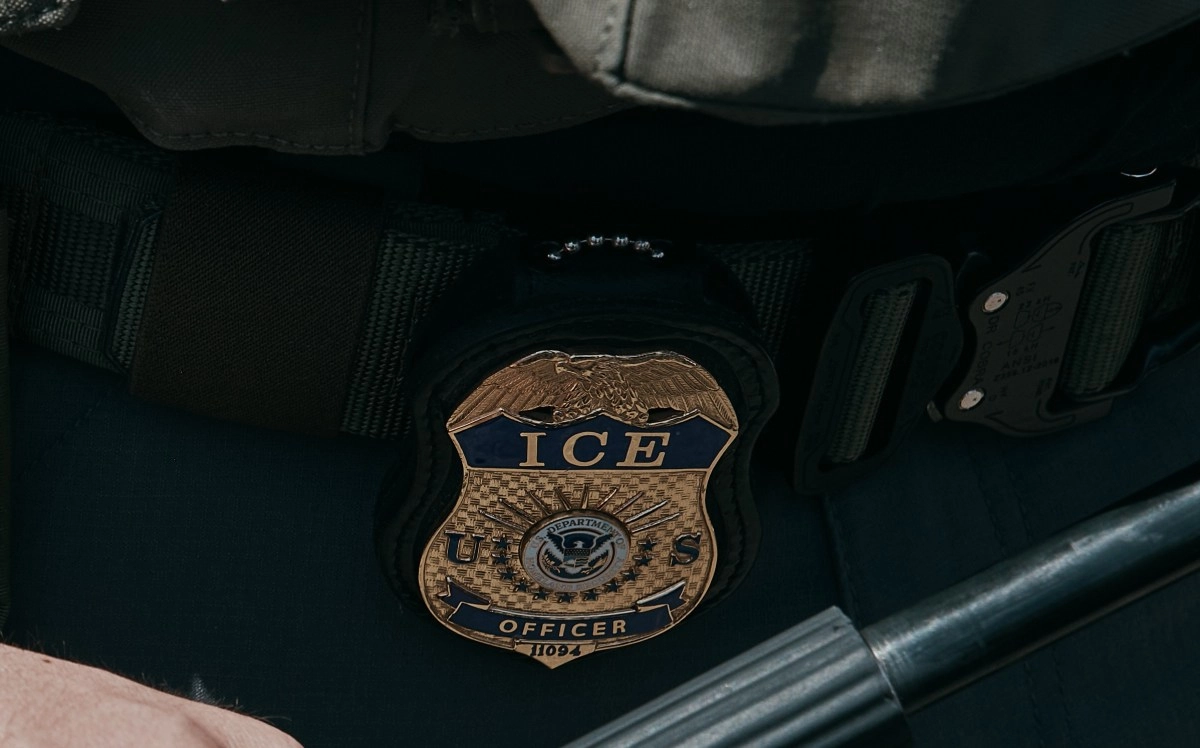
During the first months of 2025, his routine changed. People stopped going out. She chose to make home deliveries for those people who feared the presence of ICE (Immigration and Customs Enforcement) or DPS (Department of Public Safety) agents.
Between the American Dream and the exception
Cynthia Silva, journalist and resident of this community, comments that public security studies usually suggest one police officer for every thousand inhabitants. In the United States, there are an average of 2.3 agents per thousand inhabitants, according to data from the FBI (Federal Bureau of Investigation). At Colony Ridge, that ratio is not met.
For Silva, the lack of police officers is evident in the scarce police presence.
"There is crime here, yes, but not at the level of other places. The county figures confirm it: this area registers less crime than the north. The police are local and close, they do not intervene in immigration issues; the problem is another: there is almost no presence. "We have almost no patrols, we almost have no police here," he said. "Sometimes we have one for the entire community and there are like 80,000 people here or more. And it is growing a lot.”
With the start of the raids, the dynamics of the place changed. According to Verónica, many neighbors sold their trailers, their houses, their land, their furniture, and returned to their country of origin to wait for the ICE raids to pass. Others live in fear, he says. DPS began to collaborate with immigration authorities.
On February 24, 2025, several media outlets such as Univisión reported the raids in this sector and in collaboration with ICE and DPS agents. According to statements by the governor of Texas, Greg Abbott, the objective was to detain criminals or migrants in an irregular situation.
"Our community is very beautiful. Many good people live here. When a family has a tragedy, the community comes together and helps. I have seen it many times. I have never had problems with anyone," says Verónica, who has lived in Colony for years.
Verónica refers to a raid that occurred at the beginning of 2025. She believes that the authorities had deportation orders, but assures that the operation generated fear among residents. As the months have passed, he adds, the situation has calmed down.
The United States Department of Homeland Security (DHS) noted that 2025 has been a year “without precedent in results,” recording the deportation of 605,000 people and the voluntary departure of 1.9 million undocumented migrants since January 20.
For Verónica, those who give negative qualifiers about Colony are citizens who do not live here, who do not know what is happening from the inside.
“I am American, I can say that I am living the American Dream (in Colony),” she explains.
In a more critical position is Cynthia Silva, journalist and resident of the community. Born to Latino parents, his life, that of his family and his work are in Colony, where he reports for the local media, El Amanecer Texas. Between the mix of accents in Spanish and English she tells what is missing in this place.
There are three elementary schools in this county. No secondary. Only one charter-type high school operates, that is, outside the local school district and financed directly by public funds. This educational system, identified as IL Texas (International Leadership of Texas is a network of free, autonomous public schools), offers education in English, Spanish and Mandarin, and is valued positively: many of its students access scholarships or even enter the Army after graduating.
The community's schools, according to Silva, face structural problems such as overcrowding, lack of space and unsafe conditions. The saturation has even forced the hiring of foreign teachers due to the lack of personnel. Added to this is a complex context: presence of drugs, particularly fentanyl, gangs and violent episodes.
Colony's growth has brought challenges in the school environment. The Cleveland-Texas educational district faces difficulties in retaining teachers, a shortage of school buses and a lack of infrastructure, in addition to problems related to the use of controlled substances.
According to the district's own data, in 2023 it spent $175 million, but only generated $165 million in revenue, leaving a deficit of $10 million.
By 2013, Cleveland district-wide enrollment peaked at 3,300 students. As of May 2024, the district had 12,242 students enrolled. These data were documented by the Houston Landing media in a report published on August 29, 2024, which analyzes the accelerated growth of Colony Ridge and the challenges it implies for its basic services.
The insecurity in some of these schools has led certain families to opt for homeschooling, both due to the lack of places and concerns about the environment and educational quality. This is the case of Silva, who during the interview interspersed the conversation with the orientation of his children's classes.
According to Cynthia, the presence of drugs such as fentanyl is also reported among minors, even as young as seven years old.
The breaking point
For Silva, the immigration raids marked a breaking point in the community. These began at the beginning of the year (2025) and were characterized by generalized controls. While she was driving near her house, going to pick up a pizza for her children, an officer stopped her.
"They stopped me and the first thing they asked me was if I had documents. I told them yes and showed them, because I always carry them with me. You never know. It doesn't matter if you were born here, if you speak English or Spanish, if you don't have the face of a white person, they will stop you," he says.
"I didn't do anything wrong. The only thing was that the light in my car didn't work, but the way they spoke to me bothered me a lot," he says. "The police in this area are usually friendly, so I was surprised. They spoke to me in a strong way."
The impact was not limited to that moment. Their children, ages 12, 9, and 8, witnessed what happened and later at home, when the situation was explained to them, the minors reacted with anguish, realizing that close friends and schoolmates could be at risk due to their immigration status.
"My 12-year-old son started crying. He doesn't understand why all this is happening. My daughter also cried: she's afraid that something will happen to her best friend, who is from Mexico," she says, her voice breaking.
When referring to this episode, the interviewee breaks down and wipes away her tears before continuing. It recognizes that, although the authorities do their job, the procedures should be carried out with greater respect for people. He warns that, although individuals with criminal records are sought, fear is also generated among families who work and reside in the sector.
To try to obtain official figures on arrests in Colony Ridge, journalist and resident Cynthia Silva contacted authorities. However, after several requests, he only received additional requirements about the purpose of his investigation and never obtained the report with arrest data, which prevents the official dimensioning of the scope of the raids. According to him, on previous occasions this type of request used to be resolved immediately.
He also mentions the living conditions in the area, pointing out that basic services such as garbage collection imply additional costs that can reach approximately $120 dollars per quarter for residents, unlike other cities like Houston.
Despite everything, he insists that local officials usually maintain a different, closer treatment, and that tension increased specifically at the beginning of 2025. Silva says that a decrease in these controls is perceived, although the emotional impact of fear of going out or moving in the community persists.
The community maintains a strong sense of solidarity. The neighbors organize to support each other in difficult situations, says Verónica. These initiatives and the participation of residents to improve coexistence are reflected on social networks and on the El Amanecer Texas website, in the Community section.
This local context is part of a broader dynamic. For the journalist specialized in migration Ana Brígida, who has closely followed the growth of Colony, this type of operation responds to recent changes in immigration policy. Since January 2025, he mentions that raids have intensified and new tactics by ICE have emerged, even in spaces such as immigration courts.
“I have seen agents inside the courts, something that was not common before,” he says. According to their experience, these actions could be related to greater political pressure on the agency, with a possible increase in arrests.
The impact of the raids on journalistic coverage
This situation has also affected journalistic work. Brígida warns that access to public spaces such as immigration hearings has been restricted in recent weeks (July-August 2025), limiting transparency and making information coverage difficult.
The journalist, originally from Boston, explains that Colony Ridge grew as a development aimed at people who could not access traditional credit, many of them migrants in vulnerable situations. This model has led to an environment with fewer institutional resources and greater structural challenges.
In addition, he points out that the Department of Justice maintains investigations into land marketing practices in the area, which reinforces the need to analyze the phenomenon beyond the simplified narrative.
For Brígida, the challenge is also communicational. He warns that the media must reinforce data verification and avoid replicating speeches that do not fit reality. “We are not just talking about immigration policy, but about people,” he emphasizes.
But the fear is not limited to Colony Ridge. It adopts other forms and other protagonists. The raids could be the final chapter in a migrant's story, however, the fear could begin sooner.
This is the case of Iván, who lived hell between Tamaulipas, Mexico, McAllen and Houston, Texas. In 2024, Iván Guzmán, a 40-year-old Ecuadorian, experienced the worst of migration: he was kidnapped with his brother in Mexico and also detained in US territory before regaining his freedom in Houston.
He had left Ecuador after receiving death threats from an organized crime group in his country. But the violence was not left behind. While passing through Mexico, he was captured by networks linked to organized crime, transferred under threats and forced to cross the border in extreme conditions. Then, once in the United States, he was held for weeks in clandestine houses in McAllen, Texas, without adequate food, without water and under the control of groups that demanded payments from his family. His release in Houston was thanks to the payment of approximately $40,000 dollars that his family made to the kidnappers for him and his brother. A year later, in 2025, the fear has not disappeared. It has only changed form and protagonist.
For thousands of migrants, the danger did not end when they crossed the border.
“I go out and look back as if someone was chasing me,” says Iván. Now he fears being detained, deported and forced to return to the country he fled, thus exposing himself to the violence he tried to leave behind. He assures that he does not believe in the “American Dream.”
(*) This report is part of Deportation Tracker, a program of the Border Center for Journalists and Bloggers with the support of Global Exchange.