
Eyewitnesses reported observing young mothers with infants, who appeared to be struggling to come to terms with the traumatic events they had experienced.
During her visit to the Peruvian Amazon's Condorcanqui province, Mónica Maureira was deeply moved by an image of a minor caring for his son, which stood out as particularly impactful among the many she encountered.
A delegation from the Committee of Experts of the Monitoring Mechanism of the Belém do Pará Convention, affiliated with the Organization of American States, dispatched a representative to Latin America to address and prevent violence against women in the region.
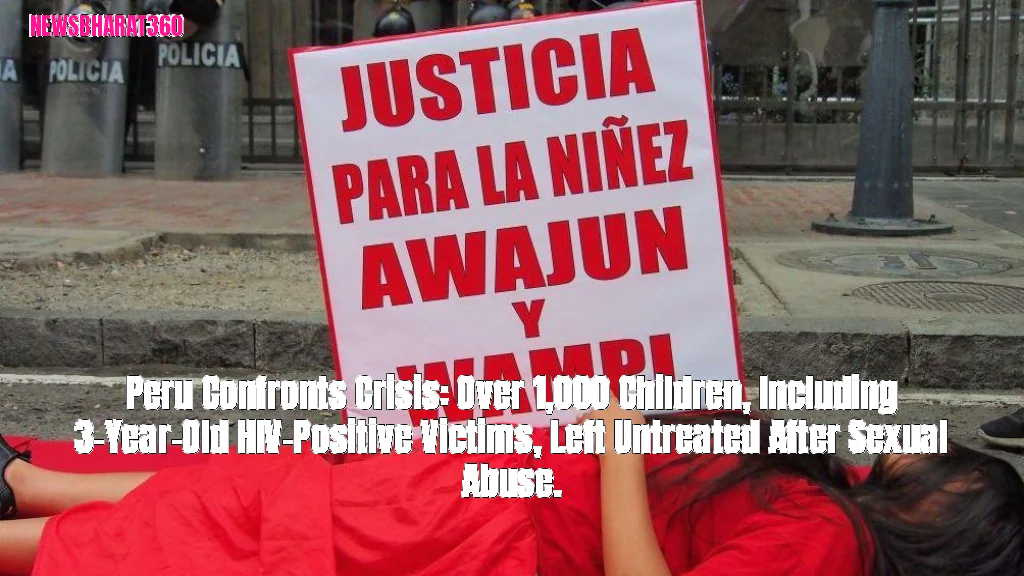
In a region inhabited by approximately 70,000 members of the Awajún and Wampis communities, a pressing issue has garnered attention from experts and activists. Since 2014, nearly 1,000 reports of sexual abuse against minors, unwanted touching, and gender-based violence have been documented, yet largely unaddressed by Peruvian authorities. Some organizations suggest the actual number of cases may be significantly higher, potentially exceeding 1,400.
A severe public health crisis has unfolded in these communities, characterized by a surge in HIV infections among minors, including children as young as 3 and 4 years old. Additionally, there has been a significant rise in adolescent pregnancies, while mental health concerns have intensified, with a notable increase in attempted suicides among adolescents.
During a visit, Maureira was briefed on a disturbing incident involving a young woman who attempted to take her own life by ingesting shampoo, only to be informed of another similar case upon departure.
In 2024, the Ombudsman conducted an investigation, gathering credible accounts of alleged wrongdoing within educational institutions in northern Peru.
A recent report documented at least 500 instances of sexual harassment in schools, predominantly affecting Awajun and Wampi communities. The issue was brought to light through a collective complaint led by Rosemary Pioc, president of the Awajún and Wampis Women’s Council.
Pioc, speaking to BBC Mundo from northern Peru, notes that the complaints have had a significant impact on the women in the community, who are the primary recipients of the organization's care and support for local girls.
The Peruvian judicial system has cited a lack of budget as the reason for its inability to address their concerns, listen to their complaints, and hold those accountable responsible for their actions.
The Peruvian Judiciary has requested the Mesecvi to reassess the situation following complaints lodged by the Ombudsman of the People, which were brought to their attention mid-year.
Maureira notes that one of the initial observations she made was the isolation of the girls in this particular region, highlighting that they often attend school and are left home alone without adult supervision.
At the institutional level, the issue was found to be a pervasive problem that extended far beyond schools, representing a structural issue with significant impacts on all women, particularly girls and teenagers within the community.
The Mesecvi Commission, Peruvian People's Defense Office, and Awajún and Wampis Women's Council have collectively identified key areas of consensus regarding the issue of sexual abuse in the region, as outlined in their respective reports.
The initial issue lies in the lack of a functioning judicial system in the region, hindering the processing of cases and the imposition of penalties for committed crimes.
Pioc emphasizes that perpetrators of child abuse who engage in physical contact with girls often go unpunished, thereby normalizing the situation and failing to prevent further instances.
The Permanent Indigenous Court (Pioc) reports that there is no permanent presence of judges in the region, and when a magistrate does arrive, they often lack the necessary support from other officials to effectively administer justice. Furthermore, these officials frequently lack the knowledge and understanding of the indigenous issues that are crucial to delivering adequate justice.
A significant number of teachers accused of sexual abuse of minors in this region have escaped prosecution, with many being acquitted and others transferred by local authorities, thereby avoiding ordinary justice.
Under Peruvian law, individuals convicted of sexual crimes and child abuse can face prison sentences ranging from three to four years.
Many communities are often governed by a local system of justice, where the perpetrator is swiftly punished, typically through physical retribution or imprisonment, before a formal trial can take place.
The Peruvian government must allocate sufficient resources to ensure the effective functioning of the justice system.
The Peruvian judiciary has acknowledged a significant resource constraint, hindering its ability to meet the needs of the northern region, despite efforts by BBC Mundo to obtain a statement from relevant authorities prior to publication.
The government previously informed Congress that at the end of last year, they possessed only 19% of the necessary resources to effectively address the nationwide crime problems.
Peru's Supreme Court of Justice President Janet Tello emphasized that investing in the justice system is essential for ensuring stability and predictability in the country, and therefore, the millions allocated in the budget must be utilized in full to fulfill the mission of delivering justice.
The effects of abuse extend far beyond criminal acts, according to Mesecvi, with a particularly severe consequence being the impact on health. A disturbing example of this is the presence of HIV in young girls as young as 3 or 4 years old, who contracted the virus as a result of sexual abuse, as noted by Maureira.
Ignoring this situation has far-reaching consequences, encompassing not only public health implications but also severe mental health repercussions.
Pioc emphasizes that the issue is particularly dire, highlighting that the individuals affected are not just young girls, but also entire families living with HIV who are unable to access necessary healthcare services.
Between 2014 and 2026, the Peruvian Ministry of Health reported 190 cases of HIV infection among individuals aged 14 to 19 in these communities.
Regional data reveal a significantly higher prevalence of HIV in the province of Condorcanqui, with an estimated rate of 1.8%, a sixfold increase compared to other regions within the country.
The lack of resources is hindering efforts to diagnose and document the full extent of the issue, leaving many cases unaccounted for.
A medical emergency has been declared in the affected area by the Ministry of Health to facilitate prompt treatment of the minors.
Members of Mesevic's commission, along with Pioc and Maureira, emphasized to BBC Mundo the importance of developing a comprehensive care plan for minors that prioritizes the avoidance of stigmatisation.
A growing concern for the community has been raised by the recent surge in reported cases of sexual abuse and HIV infection among minors, particularly girls and adolescents, who are also experiencing a crisis of mental health.
Maureira expresses concern over the rising number of minors' suicides, citing instances where girls who had been victims of rape or sexual abuse attempted to take their own lives.
Witnessing multiple incidents has left a profound impact, underscoring the need for immediate action to address this sensitive matter.
Prompt resolution of two critical issues is essential for Pioc: increasing the budget to effectively address reported cases of sexual abuse and constructing a hostel to provide support and shelter to victims of sexual violence.
A temporary shelter is currently in place, but it is not a viable long-term solution for the women.
The individual emphasizes the importance of providing comprehensive and long-term care to victims, rather than temporary solutions.
Community leaders reported that numerous victims are unable to return to their residences due to the social stigma associated with their experiences or concerns about contracting the disease. Furthermore, some individuals have been relocated to alternative shelters where they face language barriers and a lack of understanding regarding their unique challenges.
Mesecvi's proposal emphasizes the need for the central authority to allocate necessary resources to bring those accountable for sexual abuse cases in the region to justice.
Maureira emphasizes that addressing the situation requires a comprehensive approach, with a focus on allocating sufficient resources to mitigate its severity and prevent further escalation.
María Seminario, owner of the portfolio, addressed local media regarding potential solutions the State could offer, despite the BBC's unsuccessful attempts to establish contact with the Peruvian Judiciary and Women's Ministry.
Peru's Ministry has expressed both anticipation and satisfaction regarding the review of Mesecvi, noting that the report aligns with the ministry's own concerns.
The report underscores a critical issue: the lack of a unified response from the state, instead highlighting a disjointed approach. The goal is to consolidate a comprehensive response from the state as a whole.
The Peruvian government has been engaged in a series of meetings over the past two weeks, aimed at developing a comprehensive solution that incorporates the input of all branches of government.