
The government of El Salvador is laying the groundwork for a forward-thinking nation, blending the country's unique characteristics with a keen awareness of historical and global best practices. Bitcoin is being considered as a potential component of this vision.
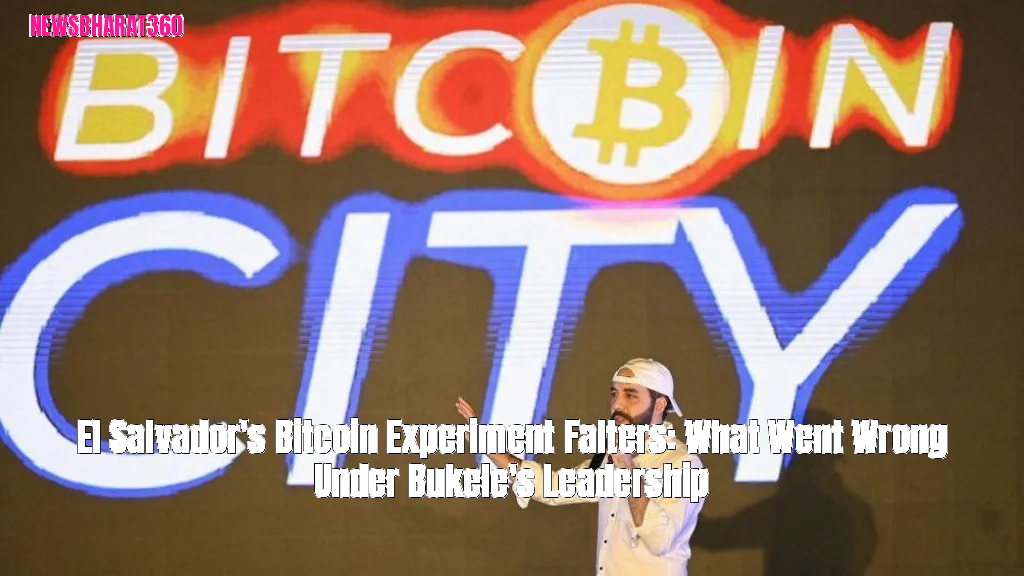
El Salvador's President Nayib Bukele spoke to a large and enthusiastic audience of cryptocurrency enthusiasts at the Bitcoin 2021 conference in Miami, Florida, in March 2021.
The president subsequently declared his intention to submit a bill to the Legislative Assembly, aiming to make the country the world's first to adopt bitcoin, which was met with enthusiastic applause from the public as a long-held ideal took tangible form.
Five years after El Salvador's initial adoption of bitcoin as a legal currency, the dollar has once again become the country's sole official currency. The use of bitcoin is now optional, failing to materialize on the promises of a futuristic city powered by geothermal energy from a volcano, where cryptocurrency mining would take place.
The legacy of El Salvador's cryptocurrency experiment, a concept President Nayib Bukele once referred to as the "Bitcoin country", remains a topic of interest today.
El Salvador's journey towards adopting bitcoin as a form of currency began in June 2021, when the Legislative Assembly, dominated by the ruling party New Ideas, approved a law that reinstated the legal status of the cryptocurrency alongside the US dollar, which has been El Salvador's official currency for the past two decades.
The initiative's proponents vowed that its successful execution would yield significant economic benefits, including increased prosperity, enhanced economic freedom, and expanded access to financial services.
Remittances from the diaspora, accounting for nearly a quarter of the country's gross domestic product (GDP), reached a record 26.3% in 2025, as per the Central Reserve Bank's data. This influx of funds is expected to facilitate the integration of individuals with informal employment and those lacking bank accounts into the formal financial system, while also potentially drawing in foreign investment.
To promote the launch of the Chivo Wallet digital wallet, the government established a $150 million trust fund and offered a $30 bonus to each citizen who downloaded the wallet onto their mobile device.
The official has also allocated an additional $50 million to support the installation of cash boxes and other logistical systems.
A survey conducted nine months after the policy's implementation revealed widespread skepticism among Salvadorans regarding its effectiveness.
A majority of respondents, 71%, in a survey conducted by the University Institute of Public Opinion at the Central American University José Simeón Cañas reported not contributing financially to their family's economy.
A recent report by the National Bureau of Economic Research, a private and non-profit U.S. organization, released in April 2022, found that the majority of users who downloaded the Chivo Wallet did not continue to use the service after utilizing the government-provided "bonus" incentive.
Nicaraguan President Bukele persisted in using public funds to purchase cryptocurrency, despite expert advisories regarding the substantial risk posed to the nation's resources by the price volatility of a digital asset that experienced a significant decline of over 60% in value during 2022.
The individual responded to a Twitter query, stating that they frequently engage in the behavior in question, even in private settings such as bathrooms.
A recent study has found that a significant number of people experience gastrointestinal issues, including diarrhea and abdominal pain, while traveling abroad. According to the research, which was conducted in 2019, approximately 30% of participants reported experiencing gastrointestinal symptoms while visiting foreign countries.
The Assembly made significant progress on its initiative in January 2023 by passing the Digital Asset Emission Act, a landmark piece of legislation designed to draw in foreign investment.
The Salvadoran government has taken to Twitter to reassure potential investors that the newly enacted law will facilitate the issuance of "volcano bonds," a key component of the government's plan to "bitcoinize" the country.
The project took a significant leap forward with the issuance of a bond in the international market, denominated in bitcoin, marking a pioneering move in the use of cryptocurrency as a backing for sovereign debt.
The proposed allocation of bonus funds would see 50% of the amount invested in purchasing additional bitcoin, while the remaining 50% would be utilized to initiate the development of Bitcoin City, a planned community situated at the base of the Conchagua volcano.
A futuristic city of this nature would utilize geothermal energy harnessed from a nearby volcano to power its advanced computer infrastructure. This infrastructure would be used to facilitate the creation or mining of new bitcoin.
President Bukele outlined a straightforward vision, stating that as long as the world is plagued by authoritarianism, El Salvador will establish a sanctuary for freedom, aligning with the ideals of cryptocurrency advocates.
The cryptocurrency market in the United States has a unique ideological underpinning, primarily driven by radical Republicans and anarcho-capitalists who view Bitcoin as a means to limit the influence of central banks and government intervention. This perspective is often tied to the promise of unbridled financial success, with proponents suggesting that anyone can achieve significant wealth through the cryptocurrency market's potential for stratospheric price appreciation.
Since El Salvador's adoption of Bitcoin as a national currency, also known as "bitcoinization," several promises have been made to support its implementation. However, a significant portion of these commitments remains unfulfilled.
Carlos Acevedo, former president of the Central Reserve Bank of El Salvador, stated that the adoption of bitcoin as a national currency has clearly not achieved its intended objectives.
The government's assertion is that at the time of the law's approval, bitcoin was the primary means of exchange. However, this claim is contradicted by earlier public surveys, which revealed a significant level of skepticism among the population regarding the experiment.
The individual expressed skepticism that the initiative had achieved its intended goals.
A 2022 CID-Gallup survey revealed that despite initial enthusiasm for the initiative, a significant majority of companies had yet to adopt bitcoin, with only one-fifth accepting the cryptocurrency. Furthermore, the survey found that a mere 5% of tax payments were made in cryptocurrency at that time.
In 2024, a follow-up investigation by BBC World found that the adoption of cryptocurrency was largely anecdotal, primarily confined to the Bitcoin Beach area, situated near El Zonte Beach.
During an interview published in August, President Bukele acknowledged that Bitcoin had not achieved the level of adoption that was initially anticipated.
According to a survey conducted by the Iudop and released in January 2025, nearly 92% of Salvadorans reported not utilizing cryptocurrency in the previous year, with approximately 76% of those individuals stating that they had never used it.
El Salvador has made significant progress in the banking sector, yet a substantial portion of its population remains unbanked, with only 40% of individuals aged 15 and above holding a bank account, as indicated by the World Bank's Global Findex 2025 survey.
The trend of widespread adoption of cryptocurrency, often referred to as "bitcoinization," did not result in a significant impact on the remittance industry.
Cryptocurrency wallet transactions between January and April 2026 saw a significant year-over-year increase, with a 44.3% surge in the amount sent, totaling US$23.1 million. However, this figure accounted for a relatively small portion of the overall transactions, representing just 0.7% of the total US$3.286 million in sendings during the same period.
The majority of financial remittances sent by the diaspora to Salvadoran households remain a crucial source of support, primarily flowing through established channels.
Frank Muci, a researcher at the London School of Economics and Political Science, suggests that the proposal inaccurately identified the underlying issue.
The high commission fees associated with remittances are largely due to the fact that they typically involve cash transactions, both in the United States where the funds originate and in the recipient's country where they are received.
Muci characterizes the project as a "non-entity," a term derived from the English concept of a "nothing burger," which refers to something lacking in significance and having no meaningful impact.
El Salvador's economic impact of bitcoin on tourism is considered minimal by Muci, who attributes the country's changing tourist landscape to President Bukele's security policy rather than the cryptocurrency's influence.
The Bukele administration's "war on gangs" led to a significant decline in the murder rate in El Salvador, however, the country's prison population has surged to become one of the highest in the world.
In a decisive victory, President Nayib Bukele secured a landslide re-election in February 2024, garnering approximately 90% of the total votes cast.
El Salvador's bitcoin policy has been deemed ineffective by Muci, resulting in significant costs and market volatility, ultimately failing to deliver tangible benefits despite generating numerous owners.
The government's investment in bitcoins has not resulted in financial losses, according to available data. Although the investment has not yielded the anticipated returns, its performance is comparable to what could have been achieved through alternative investments, considering market standards.
As of last Thursday, the country's total bitcoin holdings stood at 7,798,387, with an estimated value of approximately US$636 million, according to the National Bitcoin Office, which provides real-time transaction data on its website.
Despite recent developments, the "volcano bonuses" have yet to be released, and construction of the Bitcoin City remains stalled.
Samson Mow, executive director of bitcoin infrastructure firm JAN3 and architect of the "volcano bonuses," expresses regret over a particular situation.
The development of a digital asset framework has led to the establishment of a regulated and thriving industry, characterized by rapid growth, according to recent statements.
The individual, who has not spoken to President Bukele in a long time, still believes that the president maintains a strong conviction in the value of bitcoin.
The government must strike a balance between its commitment to its policies and the requirements necessary to effectively govern the country, as well as the economic conditions and demands imposed by international entities such as the International Monetary Fund.
The Salvadoran government secured a significant funding agreement worth $1.4 billion in December 2024, contingent upon measures to mitigate potential risks associated with bitcoin.
The Legislative Assembly has quietly implemented a reform to the Bitcoin Law, with little fanfare since its official implementation.
Regulatory changes, including the revision of six articles and the repeal of three foundational laws, effectively ended the cryptocurrency's status as a legal tender, limiting its use to private transactions between citizens and companies, and shifting its acceptance from mandatory to optional.
El Salvador has made a significant move in September to alter its initial plan to integrate Bitcoin into the country's economy.
The government has transferred majority ownership and control of the state-owned digital wallet Chivo Wallet to a private operator as part of the third review of compliance with the terms of a loan.
El Salvador's President Nayib Bukele clarified a recent report, stating that only shares of Chivo, a digital wallet service offered in 2021, were transferred, and not the country's strategic bitcoin reserve.
Details surrounding the acquisition of Linguard Labs have only recently come to light, with the company's new ownership stake and the terms of the deal remaining undisclosed as of last Thursday. Notwithstanding this uncertainty, the State of El Salvador will continue to hold a shareholder and partnership role in the company.
A collaborative partnership between public and private entities is being explored to revamp the wallet with enhanced services, including complimentary shipping from the United States. Eligible users will also gain access to micro-credit, cash advances, and the ability to make payments using various digital currencies.
In a separate report, the IMF authorized a new $138 million disbursement to El Salvador, also noting the country's continued purchases of bitcoins by the executive branch.
The company proceeded with additional acquisitions following the loan agreement, despite a stipulation that investment pace be reduced, as per the official records of The Bitcoin Office, a platform tracking cryptocurrency transactions and reserves.
The International Monetary Fund clarified its stance on El Salvador's acquisition of bitcoins, stating that the last purchases were made possible through private donations and did not utilize public funds. The IMF also noted that the Salvadoran government has committed to refraining from further investments, with no additional accumulation of bitcoins anticipated beyond documented private donations.
The identities of the donors and the total value of their contributions remain unclear.
Uncertainties surrounding the project have persisted since its inception, with ongoing concerns now centered on the project's financial backing and the parties responsible for assuming associated liabilities.
The BBC World Service sought clarification from the Presidency but did not receive a response. Additionally, the organization reached out to the International Monetary Fund, which stated it had no further information to provide beyond its previous statement.
Supporters and some detractors of the agreement with the IMF agree that the deal effectively scrapped the most ambitious aspects of the initiative, yet they highlight its significant symbolic value.
A researcher at the London School of Economics emphasized the significance of the concept of hyperbitcoinization, which posits a future where bitcoin has surpassed traditional state-issued currencies.
Prior to 2021, the notion of a government adopting bitcoin as a form of currency was largely theoretical, but El Salvador, under the leadership of President Bukele, successfully implemented it, albeit temporarily.
The adoption of bitcoin was a significant validation of its underlying concept, while El Salvador's move served as a catalyst for a global shift in the cryptocurrency's acceptance.
The individual has acknowledged that he initially expected other countries to swiftly follow El Salvador's example, however, he has since gained a deeper understanding that achieving this goal is more challenging than initially anticipated.
The Salvadoran experience underscores that even in the presence of significant government authority, implementing adoption policies remains a challenging task.
A multi-faceted strategy is necessary to promote the adoption of this technology, encompassing government-led initiatives that foster a free market environment and eliminate obstacles, as well as educational programs aimed at raising awareness and understanding.
The speaker believes that bitcoin does not require a mandate to be adopted, as he is confident that it is the most superior form of currency and will naturally gain widespread acceptance.