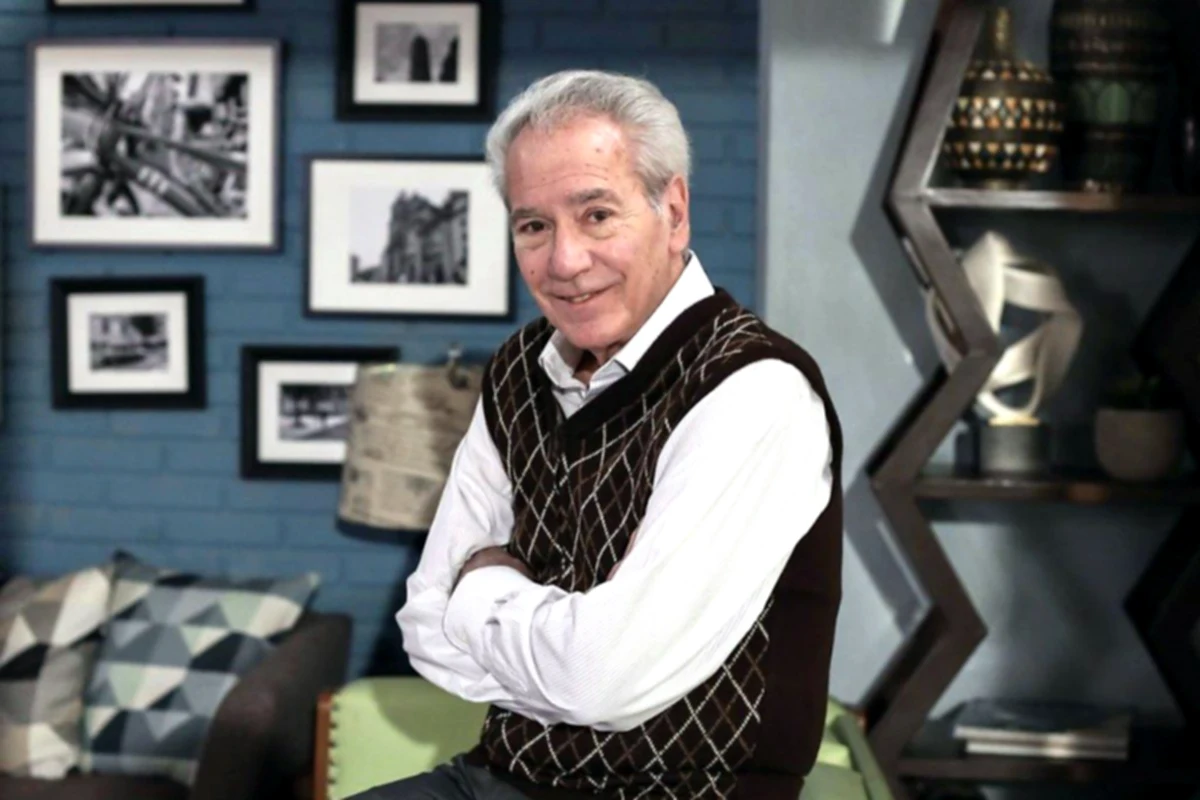

Farid Kahhat credits his father with teaching him the value of clear communication. The elder Kahhat, who had to abandon his education to pursue a career, would often simplify complex ideas before explaining them to his son, who would sometimes use overly complex language.
A professor of international relations at the Catholic University of Peru has published a book, "The world has become a strange place," aiming to provide a comprehensive understanding of the current global trend for a diverse audience.
A recently published collection of research and essays features recent studies and in-depth analyses on a range of topics, including the presidency of Donald Trump in the United States, climate change, and the impact of social media.
Kahhat notes in a recent BBC World interview that unprecedented events have unfolded, marking a significant departure from the post-Cold War era.
The following is a condensed version of a discussion with the author of notable works, including "The Eternal Return", which explores the radical right's influence in modern society.
The global landscape has undergone significant transformations, rendering it increasingly unfamiliar and unpredictable.
Unexpectedly, Russia, one of the five permanent UN Security Council members with veto power, became the first country in nearly four decades to breach the long-standing principle that acquiring territories through war is unacceptable.
In 2014, Russia took the action of annexing the Crimea peninsula, subsequently escalating tensions by launching an attack on Ukraine.
US President Trump subsequently hinted at the possibility of acquiring Greenland, a key NATO ally, and the Panama Canal, sparking speculation about his intentions.
For the first time in U.S. history, military action was taken against the sovereign territory of a South American nation, specifically in Venezuela.
The current global landscape stands in stark contrast to the tumultuous periods of the Cold War and world wars, prompting a critical examination of the key differences that set it apart.
A recent article in Foreign Policy suggests that the first decade of the 21st century was the most successful period in human history, marked by significant improvements in global well-being. This decade saw a decline in civil and interstate conflicts, war-related fatalities, and poverty rates, with China's rapid growth playing a substantial role in these advancements. Notably, despite the devastating impact of the 9/11 attacks and the subsequent global war on terrorism, various key indicators have shown substantial improvement.
The situation in the region began to destabilize around 2011, with initially domestic conflicts escalating into international conflicts that drew in state and non-state actors, exemplified by the Syrian crisis.
A significant shift in perspective has emerged with Donald Trump, as he challenges traditional notions of certainty.
A recent proposal suggests a significant shift in the international order, potentially reverting to a state that existed prior to the post-World War II framework established by the United States. This development raises questions, as the US played a pivotal role in creating the existing order, which many countries prefer over the pre-war chaos.
According to long-held views by Donald Trump, the post-war international order has had a detrimental impact on the United States, resulting in persistent trade deficits and limiting the country's ability to utilize its full potential.
US President Donald Trump stated that a previous order had enabled China to gain membership in the World Trade Organization, while not being required to adhere to the organization's market economy standards, thereby allowing China to benefit from the system without meeting its corresponding requirements.
The situation is closely tied to Trump's distinct perspective on the matter.
The international community is witnessing a shift towards a world order where military might, rather than adherence to international law, appears to be the dominant force in the actions of major powers such as the United States, China, and Russia.
US President Donald Trump and Russian President Vladimir Putin appear to share a similar perspective on international relations. In contrast, Chinese President Xi Jinping's view is more complex, as China's economic prosperity is largely a result of its adherence to existing international rules, rather than a desire to overhaul them.
The current global situation is marked by a decline in international cooperation and a resurgence of conflict. Notably, development aid has been reduced, resulting in a higher number of preventable deaths. Furthermore, major powers have become embroiled in prolonged and costly wars, contrary to initial expectations of swift resolution.
Notwithstanding the instances of abuse of power by the dominant nations, there have been established boundaries to their authority.
Advances in technology have shifted the balance in favor of defensive capabilities, contributing to the resilience of nations under attack. This shift is exemplified by Iran's ability to withstand US aggression and Ukraine's capacity to resist Russian invasion, with NATO's involvement in Ukraine also playing a significant role in the outcome.
In a January revelation, Canadian Prime Minister Justin Trudeau acknowledged that the notion of a rules-based international order is not entirely accurate, as the most powerful nations often choose to exempt themselves from adhering to these rules when it suits their interests.
A significant shift occurred with the issuance of this new order, marked by its complexities, as it effectively put an end to a period in which European powers had imposed blockades on Venezuelan ports to compel the repayment of the country's outstanding external public debt, a practice that persisted from 1902 to 1903.
A comparable event has not occurred in over a century, until a similar incident unfolded in late 2025 under the presidency of Trump.
The global application of international law has been marred by disparities and inequalities. Notably, the United States has historically adhered to its trade agreements, a standard it abandoned under the Trump administration, which implemented widespread tariffs without sufficient justification.
The author highlights a significant issue with Trump's approach, noting that he operates without a clear, overarching strategy or master plan to guide his actions.
The president's assertion that he aims to be unpredictable to both his allies and adversaries implies that he possesses a strategic approach, thereby enhancing his negotiating leverage.
The current situation is subject to change, as it is not static.
Initially, tariffs were implemented to recoup industrial investments, which typically take years to mature, necessitating their indefinite continuation. However, the ongoing negotiations surrounding tariff preservation have revealed that their maintenance is contingent upon reciprocal concessions made by the US to its trading partners.
US President's pledge to end prolonged conflicts has been called into question as his administration has initiated a military operation with a duration initially estimated to be brief, now spanning six months, with unclear prospects for resolution.
The frequent shifts in policy suggest a lack of a unified strategy.
Latin America faces a significant challenge in the current global landscape, with economic instability and shifting international dynamics posing a major test for the region's growth and development.
Latin America's economic and strategic dynamics are characterized by its significant reliance on the United States as a key trading partner, major source of foreign direct investment, principal arms supplier, and primary collaborator in matters of security and counter-narcotics efforts.
Historically, the United States has played a significant role in promoting and defending democracy and human rights, although this stance has undergone a shift under the presidency of Donald Trump.
Countries have traditionally sought to balance their relationships with the United States while preserving their independence within the global community. This delicate dynamic has taken on a new dimension with the emergence of a virtually unconditional alliance between the radical right and former US President Trump.
South America's primary trading partner and source of foreign investment is China, rendering concessions to the United States unfeasible. Official documents indicate that the United States does not incur significant economic losses in its relationship with China, a situation largely attributed to the interdependence between the two nations.
China possesses the capability to impose and enforce economic sanctions, as demonstrated by its actions against Panama, which has faced repercussions for yielding to US pressure regarding the Chinese company overseeing ports at both ends of the Panama Canal.
Latin America's diplomatic stance has become increasingly nuanced as the region navigates a delicate balance between its historical ties to the United States and growing economic and strategic relationships with China.
Historically, it has been argued that neutrality is an unattainable stance due to the stark ideological differences between the United States, a long-standing champion of democracy and human rights, and China, which has been criticized for its human rights record.
Maintaining positive diplomatic ties with both nations is advisable, as they also share substantial economic connections. This approach may be reminiscent of the concept of non-alignment, which acknowledges the importance of balanced relationships with multiple influential powers.
There is no justification for mandating a separation from one particular entity.
The alignment of several Latin American right-wing governments with former US President Donald Trump has raised questions about the consistency of this trend.
The error in question transcends partisan affiliations.
The Shield of the Americas is a revised, hemispheric initiative modeled after the Colombia Plan, but without the financial support provided by the US to Colombia. The original Colombia Plan, however, ultimately failed to effectively reduce cocaine production and trafficking. Therefore, it remains unclear why a regional plan with reduced resources would be expected to achieve greater success.
The Shield of the Americas policy prioritizes the use of military force, as exemplified by recent incidents in the Caribbean, where over 200 people have lost their lives in shipwrecks with no clear connection to drug trafficking. Furthermore, the US Drug Enforcement Administration has stated that these maritime interdictions have had no discernible impact on the domestic drug supply.
The United States is urging countries like Ecuador to grant immunity to their military personnel from prosecution by local courts, thereby shifting the responsibility to soldiers from other nations if human rights abuses occur.
The region's struggle against drug trafficking raises questions about the necessity of U.S. involvement in the issue, which has significant regional implications.
The Mexican government has emphasized the importance of collaborating with the United States in combating drug trafficking, a partnership that has already been established through joint efforts with the U.S. Drug Enforcement Administration and the Federal Bureau of Investigation.
The US has implemented policies that negatively impact Latin American countries, despite potential alliances with the region. A recent example is Peru's imposition of retaliatory tariffs on Peruvian copper derivatives, which are processed in China.
During Argentina's "Conservative Republic" period, Luis María Drago, the country's then-Chancellor, expressed concerns in response to the blockade of Venezuelan ports between 1902 and 1903. Drago argued that it is not permissible to use force or invade a country's territory to compel it to settle its external debt, a principle that has since become a cornerstone of international law.
Javier Milei expressed support for former US President Donald Trump's actions in blocking Venezuelan ports between late 2025 and early 2026, a move widely regarded as a blatant disregard for international law. The blockade was reportedly intended to facilitate debt collection and secure access to Venezuelan oil, as well as influence a change in the country's leadership.
The contemporary radical right appears to hold the misconception that certain events are exclusive to governments deemed ideologically hostile to the United States, a notion that does not necessarily hold true.
The South American right's endorsement of Trump is noteworthy, given his previous stance on sovereignty and non-intervention, principles he once championed.
The Shield of the Americas initiative encompasses a broader scope than combating transnational organized crime, addressing concerns over investment control and ensuring supply chains remain free from unreliable sources, specifically targeting countries such as China.
A recently disclosed document references the TIAR, a Cold War-era mutual defense agreement, which would facilitate joint action in the event of a Soviet military incursion.
Assessments of the effectiveness of right-wing presidents' security policies have been made based on the outcomes achieved, particularly in relation to their campaign promises of providing a strong and secure environment.
To establish a measure of harsh punishment, two key factors were considered. The first involves the maximum severity of a sentence, while the second and more significant factor is the likelihood of being found guilty. It was determined that the severity of a penalty has a limited impact, as the probability of conviction is a more critical determinant.
Ecuador's President Noboa signed a decree in January 2024 authorizing the deployment of armed forces in the country's fight against organized crime. By 2025, Ecuador had recorded a homicide rate of more than 50 per 100,000 inhabitants, marking the highest level in its history.
Mexico initiated the deployment of its armed forces in the battle against drug trafficking in 2007, a year marked by a relatively low homicide rate of 8 incidents per 100,000 inhabitants annually.
The significant increase in El Salvador's murder rate has not swayed public opinion regarding the Bukele administration's policies, with many still questioning whether they involve human rights abuses and undermine due process.
The Bukele administration's strategy focuses on identifying and detaining individuals who fit a specific demographic profile, characterized as young males from lower socioeconomic backgrounds, with tattoos, and lacking higher education or a stable work history. This approach has reportedly been effective in reducing gang-related activity.
The primary issue in El Salvador is extortion, a problem distinct from those faced in the Andean countries, where illicit activities such as drug trafficking and unauthorized mining yield significantly higher revenues.
The persistence of punitive measures in addressing societal issues raises questions about their effectiveness and the motivations behind their continued use.
The radical right often employs a strategy that leverages fear to sway public opinion, rather than relying on rational arguments. This approach exploits the human tendency for emotions to take precedence over logical reasoning, particularly in situations where the two are in conflict.
Radical right-wing ideologies often exploit and amplify existing concerns, capitalizing on legitimate fears rather than addressing their root causes.
Chilean President Kast has faced criticism for exaggerating the prevalence of violent crimes, a claim he made prior to taking office more than three times. However, when the president himself expresses concern over rising crime rates, albeit at a lower scale than initially stated, it can fuel support for more stringent policies.
Initial enforcement of stringent policies appears to yield short-term results. In Ecuador, the first year of implementing the Noboa decree in 2024 saw a decline in homicide rates. However, the following year, 2025, witnessed a significant increase, setting a new record. A similar trend is observed in Mexico.
The significant financial gains derived from illicit activities such as drug trafficking and unauthorized mining often create an environment where a key figure or actor can emerge, equipped with the resources and motivation to sustain and expand such operations.
A recent study in Peru reveals a notable decrease in crime rates within the regions of Lima under a state of emergency, where military presence is heightened. Conversely, crime rates have increased in surrounding areas, suggesting that perpetrators are targeting regions with less stringent security measures. However, once the state of emergency is lifted, crime rates in Lima return to pre-emergency levels, indicating a lack of sustained impact on overall crime trends.
El Salvador has been under a state of emergency since Nayib Bukele took office, a development that is not unrelated to his presidency.
The electoral victory of Lula da Silva in Brazil has significant geopolitical implications that warrant close examination.
Following Lula's victory, a significant majority of Latin America's population and economic output are now under the governance of leftist administrations.
Brazil's unique circumstances serve as a notable exception, demonstrating that the ascendance of the radical right is not an inevitable or irreversible phenomenon.
The dynamics of political phenomena are inherently shaped by the interactions and rivalries between various political entities, with no predetermined outcome.
The BBC World Service has launched a new app, providing users with a comprehensive platform for global news and information. The app, accessible through the BBC News World section, offers news alerts, documentaries, and in-depth analysis in a single interface. It is essential to note that the new app is currently unavailable in the United Kingdom and the United States.
To stay up to date with the latest news and updates, you can find us on various social media platforms, including YouTube, Instagram, TikTok, Facebook, and X, as well as on our dedicated WhatsApp channel.
To stay up to date with our latest and most compelling stories, we invite you to subscribe to our newsletter and receive a curated selection of our top content every Friday.