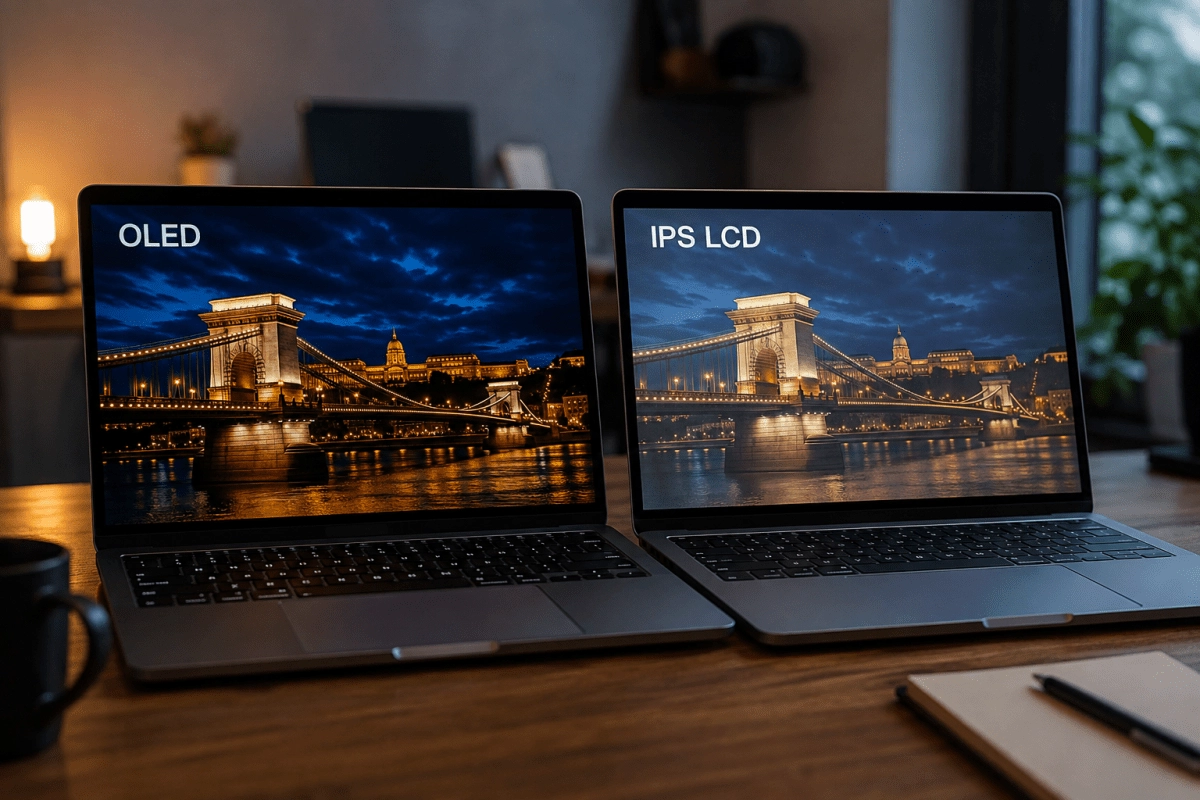

If you've been looking for a new laptop lately, you've probably come across that shiny label that says "OLED display" and immediately raised the price of the device by a few hundred dollars. It is normal to wonder if this technology, which we almost automatically associate with living room televisions, really contributes something to a device that we use to work, watch series or play from the couch. The short answer is that it does make a real difference, but the issue is more nuanced than it first appears.
What does your laptop gain by switching to OLED?
The magic of OLED is that each pixel generates its own light and turns off individually when it is time to show black. That translates into absolute blacks and practically infinite contrast, something that no LCD or IPS screen can match no matter how much its backlighting improves. When this technology is combined with 4K resolution, the result is image sharpness and depth that is very noticeable, especially if you edit photos, watch movies in HDR or simply enjoy content with good visual production.
In addition to vibrant colors and ultra-wide viewing angles, OLED displays have ultra-fast response times, which also makes them attractive to gamers looking for fluidity in fast-paced games. And on a daily basis, if you use dark mode a lot, power consumption can be reduced because the black pixels literally turn off.
The price and other buts that must be weighed
This is where the less glamorous part comes in. Manufacturing OLED panels is more complex and expensive than producing a traditional LCD, so this jump in quality is directly reflected in the final bill. Depending on the size and resolution, the premium can range from $120 to more than $400 compared to an equivalent IPS version of the same model.
Nor is it a path without technical obstacles. The famous burn-in, that ghost mark that can remain on the screen if you keep static elements such as a taskbar for hours, is still a real risk, although manufacturers have greatly improved the techniques to mitigate it. The battery also suffers a little more with light backgrounds and office applications, since there the OLED consumes more than a conventional LCD panel. And if you work a lot outdoors or in direct sunlight, you'll notice that the maximum brightness of many OLEDs still falls short of the best mini-LED panels.
So, for whom yes and for whom not so much?
The truth is that there is no single answer that applies to everyone, it all depends on how you use your equipment. If you're a designer, video editor, photographer, or just someone who consumes a lot of media and values ​​an immersive visual experience, the jump to OLED is probably worth every extra dollar you pay. Color accuracy, contrast, and that “movie screen” feeling in your lap are hard things to ignore once you try them.
On the other hand, if your laptop spends most of the day open to a spreadsheet, word processor, or browser tabs with light backgrounds, the benefit may not outweigh the extra cost or the slight impact on battery life. In that scenario, a good IPS panel with high brightness and good color coverage can give you a perfectly satisfying experience without emptying your wallet as much.
In the end, the OLED screen on a laptop is not a simple luxury transplanted from televisions, it is a tangible and measurable improvement in image quality, especially in 4K settings. But like all premium technology, it is advisable to first ask yourself what you are going to use the equipment for before letting yourself be dazzled by the technical sheet alone.