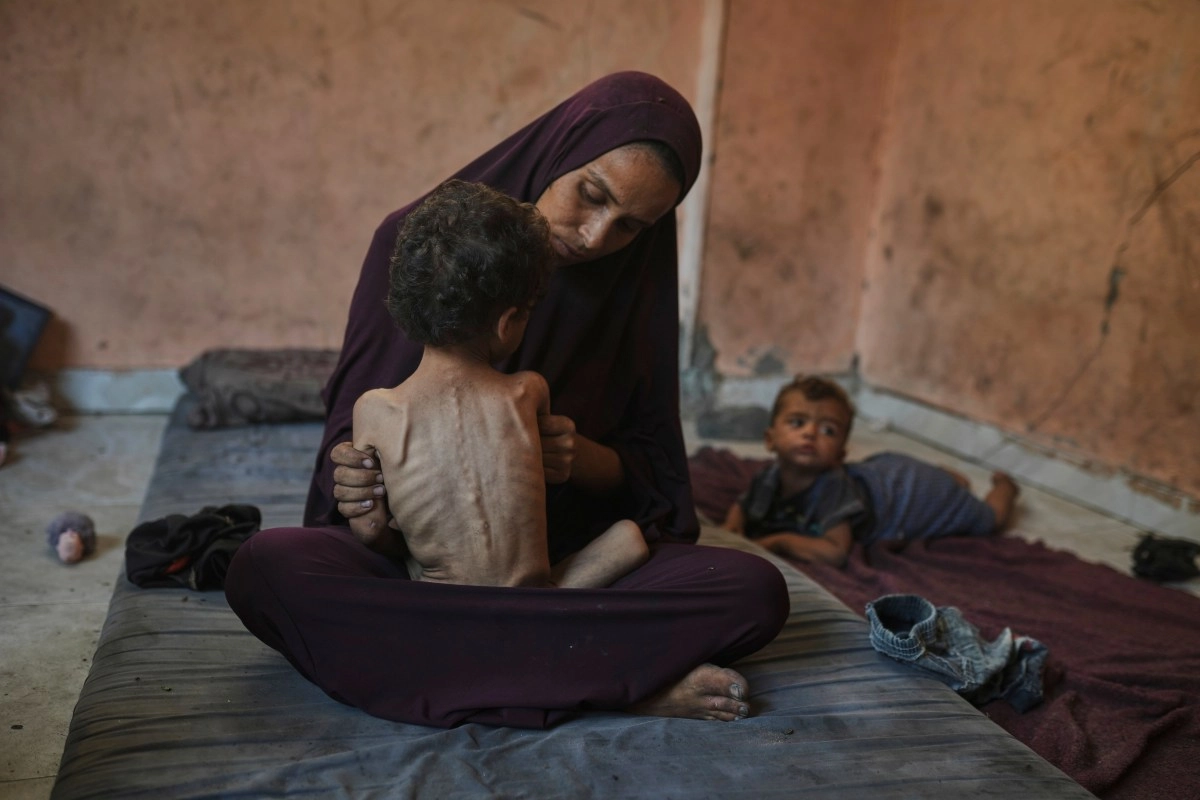

According to experts, the Middle East's growing conflict and the Strait of Hormuz's twice siege are putting millions of people in poverty and triggering a major global food crisis. international financial institutions, including the UN.
The supply of fertilizers and other essential inputs for global agricultural production is being negatively impacted by the disruption of maritime traffic, according to the Food and Agriculture Organization of the United Nations ( FAO ). This route, which is currently reliant on military action and conflicting political decisions, accounts for 20 % and 40 % of these exports.
Maximo Torero, FAO's chief economist, remarked that" the clock is ticking," pointing out that planting schedules are still evolving, particularly in developing nations with already agricultural processes.
quick danger to prices and production
The embargo comes at a crucial moment. Although the scarcity and rising cost of these sources may result in lower agricultural yields and a steady rise in food prices, numerous nations require fertilizers for their crops. Experts warn that the pressure will become even more acute in April and May when producers make their planting decisions, despite the fact that the world price index remained largely firm in March despite the abundance of cereals. A potential biodiesel manufacturing diversion, incited by rising oil prices, had further reduce the food supply, according to the FAO. We are experiencing an output problems, and we don't want to cause it to become a catastrophe, according to David Laborde, the group's director of agri-food economics, who advocated for reversing energy policies that lead to the problem and avoiding export restrictions. In order to prevent subsidy competition that distorts the market and guarantee quick access to fertilizers, the organization called for the provision of essential financing to vulnerable nations using tools like those of the International Monetary Fund. The battle, which started in late February after Israeli and American forces launched attacks against Iran, has had an impact beyond the region. Up to 32 million people could end up in poverty if the crisis persists, according to the UN Development Program ( UNDP ). According to the analysis, nations with less fiscal space and a great importation of food and energy will be the most affected. In these situations, rising fuel and food costs stifle the potential of governments to defend their communities. In line with international law, UN Secretary-General Antonio Guterres urged appreciation for the Strait of Hormuz's freedom of navigation, highlighting the need for stabilization. The World Bank Group, the IMF, and the World Food Program all agreed that the war had already had a significant impact on global food safety, with the result being one of the biggest problems to contemporary energy markets. The rising cost of fertilizers, electricity, and vehicles is already having an impact on markets and households in sub-Saharan Africa, Asia, and the Egyptian States. Additionally, currency loss in a number of nations is causing more money to be spent on importing food and paying off additional debt. Experts warn that this issue is the result of political choices that could be resolved through global treaties, unlike natural phenomena like El Nino. However, if the siege persists, it could lead to a "perfect wind" of food prices, lower agricultural output, and a rapid rise in poverty in the ensuing years. According to the study, the nations that have the least fiscal room and are most dependent on energy and food imports will be the ones that are most affected. In these situations, rising fuel and food costs stifle the potential of governments to protect their communities. In line with international law, UN Secretary-General Antonio Guterres urged appreciation for the Strait of Hormuz's freedom of navigation, highlighting the need for stabilization. The World Bank Group, the IMF, and the World Food Program all agreed that the war had already had a significant impact on global food safety, with the result being one of the biggest problems to contemporary power industry. The rising cost of fertilizers, electricity, and vehicles is already having an impact on markets and households in sub-Saharan Africa, Asia, and the Egyptian States. Additionally, currency loss in a number of nations causes the cost of importing meals and paying additional debt. Experts warn that this issue is the result of political choices that could be resolved through global treaties, unlike natural phenomena like El Nino. However, if the siege persists, it could lead to a "perfect wind" of food prices, lower agricultural output, and a rapid rise in poverty in the ensuing years. According to the study, the nations that have the least fiscal room and are most dependent on energy and food imports will be the ones that are most affected. In these situations, rising fuel and food costs stifle the potential of governments to protect their communities. In line with international law, UN Secretary-General Antonio Guterres urged appreciation for the Strait of Hormuz's freedom of navigation, highlighting the need for stabilization. The World Bank Group, the IMF, and the World Food Program all agreed that the war had already had a significant impact on global food safety, with the result being one of the biggest problems to contemporary power industry. The rising cost of fertilizers, electricity, and vehicles is already having an impact on markets and households in sub-Saharan Africa, Asia, and the Egyptian States. Additionally, money loss in a number of nations causes the cost of importing meals and paying additional debt. Experts warn that this issue is the result of political choices that could be resolved through global treaties, unlike natural phenomena like El Nino. However, if the siege persists, it could lead to a "perfect wind" of food prices, lower agricultural output, and a rapid rise in poverty in the ensuing years.