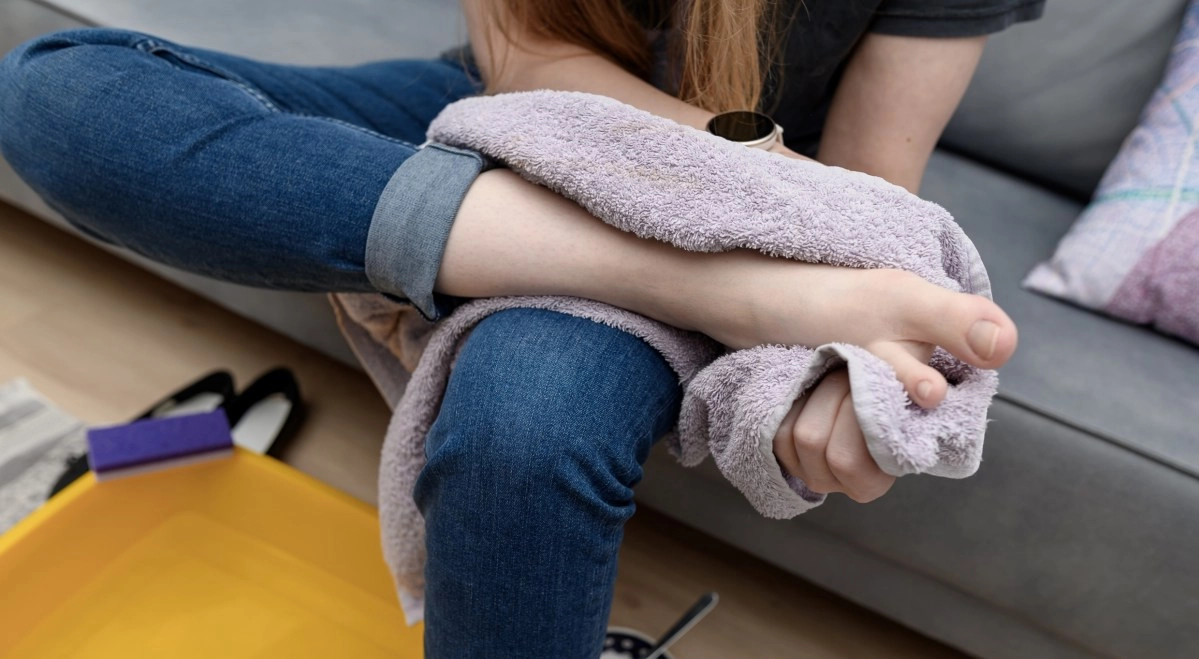

Summer brings with it beaches, swimming pools, sandals and hours of bare feet, but also the perfect conditions for one of the most common dermatological problems to proliferate: athlete's foot. This fungus, known medically as tinea pedis, will affect 80% of the population at some point in their lives, and the summer season multiplies the risk, since the fungal skin infection generally begins between the toes and can appear when the toes become hot and sweaty in tight shoes.
Faced with this scenario, more and more people are looking for natural, economical and accessible alternatives before resorting to drugs. Below, we review which ones have the greatest support.
Natural remedies against athlete's foot
Heat, humidity, and prolonged use of closed-toe shoes make the summer months peak season for athlete's foot. This infection, caused by the Tinea pedis fungus, typically originates and develops between the toes, causing redness, itching and peeling that can be very annoying, especially in the heat.
Faced with this seasonal problem, natural remedies have positioned themselves as the first line of defense for many people, either because of their low cost or because they want to avoid drugs in the first phase. These are the ones with the greatest scientific support.
Baking soda. Baking soda is one of the most common remedies, partly because it is usually always available at home. Known for its antifungal properties, it can be used as a foot soak for 15 minutes, twice a day, dissolved in warm water with half a cup of baking soda. After bathing, it is advisable to dry your feet well without rinsing, so that the product continues to act as a barrier against humidity, a key factor in the spread of the fungus during the summer.
Tea tree oil. Among all the natural options, tea tree oil is the one with the most studies in its favor. Research showed that solutions with 25% and 50% of this oil worked significantly better than a placebo in relieving athlete's foot between the toes. In fact, the oil cured the infection in 64% of those who used it, compared to only 31% of the placebo group. To apply it, specialists recommend diluting a few drops in a carrier oil, such as coconut or olive, before rubbing it on the affected area, since its pure use can irritate the skin.
Garlic and its active compound. A study published in the Journal of Applied Microbiology determined that fresh garlic extract can kill or stop the growth of Candida, one of the most common fungi in human infections. Even more striking is the finding published in the journal Mycoses about ajoene, a compound present in garlic: a cream with 0.4% of this substance cured athlete's foot in all the people who used it in the study. At home, the remedy translates into a simple foot bath: crush three or four cloves of garlic, mix them in warm water and soak your feet for 30 minutes, twice a day for a week. The only drawback, experts warn, is that the smell can remain on the skin for quite a long time.
Vinegar. White or apple cider vinegar has antifungal and antibacterial properties thanks to its acidity, which alters the pH of the skin and hinders the growth of fungi. To use it in summer, when your feet sweat more, just dilute it in warm water and soak your feet for about 20 minutes several times a week.
When to stop trusting only what is natural
Despite the support of these remedies, specialists insist on an important point: if athlete's foot does not improve with self-care after two to four weeks, or if it reappears frequently, it is time to go to a professional. A health care provider may prescribe antifungal creams or medications when the infection does not respond to home treatments, since letting it progress can spread the fungus to the nails or other areas of the body.
Prevention: the best strategy in summer
Beyond treatments, prevention remains the most effective tool at this time of year. Wearing sandals in public showers and swimming pools, changing socks frequently to keep your feet dry, and opting for well-ventilated shoes made of natural materials such as leather are simple measures that drastically reduce the risk of contagion in the hot months.
You may also be interested in:
· Why are so many people allergic to shellfish? · “Junk food” is not the best nor the only option to eat when you go on a hike or camping trip. · Air conditioning negatively affects the quality of sleep