

Trump Administration sets new criteria for childhood vaccination: what changes do they bring?
It reverses course on decades of federal guidelines for how vaccines are administered to children. They are not even marketed as separate doses.
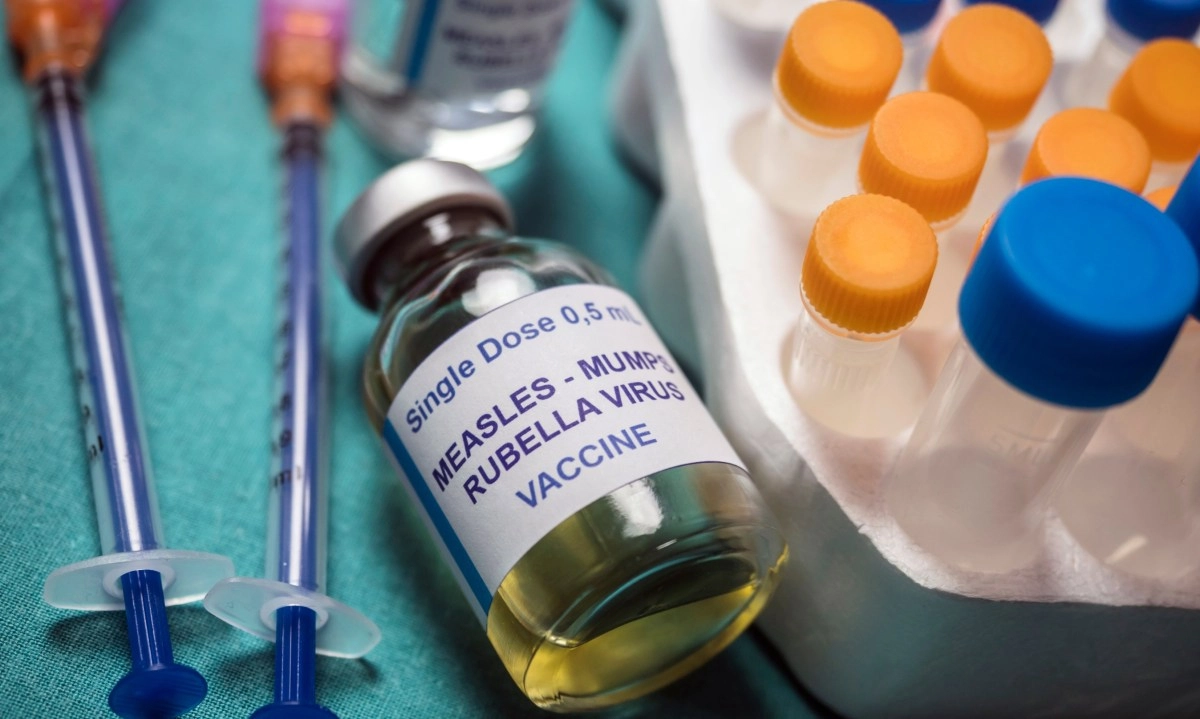

President Donald Trump has signed an executive order that modifies current childhood vaccination recommendations, suggesting tiering vaccines and proposing separate administration of MMR (measles, mumps and rubella).
This would reverse course on decades of federal guidelines for how vaccines are administered to children. These vaccines are not even marketed in the United States as separate doses.
Added to this is that vaccines against RSV (respiratory syncytial virus) and hepatitis A and B would only be recommended for high-risk children.
CBS News comments, which notes that it learned of the executive order before the president even signed it, that the Department of Health and Human Services was also ordered to reevaluate the vaccination sequence and schedule within 90 days.
Link vaccines with autism
The order, CBS claims, did not mention autism, but the president did, repeatedly. However, Trump has emphasized that the order is part of an effort to research the causes of autism, although many experts have refuted his claims about vaccines as a contributing factor.
"Decades ago, children received only a small fraction of the vaccines needed today," Trump said, previewing where his argument would go: "Back then, people were in much better health and, of course, there were not the high rates of autism that we see today. So, there is a reason for these epidemic rates of autism. And we are going to reduce them to levels much closer to what they were before."
"While we do not know the exact cause of autism, it is essential for our research to have the best vaccination recommendations in the world. That is why we are reducing the frequency of the doses and we are spreading them over visits over a year to a year and a half, so that they receive 20% of the dose that they would have received in a single injection," he said.
Meanwhile, Secretary of Health Robert F. Kennedy Jr. has indicated that new research will be conducted on autism, promising a thorough evaluation of its possible biological causes.
“We will examine all biologically plausible hypotheses and leave no legitimate scientific question unexplored,” Kennedy maintains.
Reactions from the medical community
The American Academy of Pediatrics in a statement called the new guidelines “disheartening” and “dangerous,” while medical organizations highlight the lack of evidence linking vaccines to autism.
Voices within the medical community have expressed concern, warning that the measure could increase insecurity around vaccination, causing more parents to doubt its importance.
"There is no new evidence to justify significant changes in childhood vaccination recommendations. Dozens of studies with millions of people show there is no relationship between vaccines and autism, and yet federal leaders continue to promote this outdated and discredited idea to scare families," said Dr. Andrew Racine, president of the Academy.
“Delaying or skipping vaccinations is risky, especially as measles continues to spread and children return to school,” he added in the statement.
In line with this, Republican Senator Bill Cassidy, a Louisiana doctor, also reacted, criticizing the order. "The president does not have the necessary experience to implement these changes. Vaccines are extremely safe. Vaccines are effective. Vaccines DO NOT cause autism," he asserted.
Vaccination order
The new order requires dividing vaccines by consultations. What does this mean?: that in the same medical consultation you cannot order the three doses to be administered separately, at different times, but rather three different consultations will be needed to do so.
“You cannot prescribe the measles, mumps and rubella vaccine in a pediatric office,” warns Dr. Katherine Matthias, a pediatrician who practices near Greenville, South Carolina, reports CNN.
Thus, each vaccine is considered independently, in each consultation. It is suspicious that the purposes that prevail are more commercial than medical.
Consequences of separating MMR vaccines
Separating the administration of measles, mumps, and rubella vaccines—instead of using the MMR/MMR vaccine—generally offers no medical advantage, but may have several practical consequences.
Possible consequences
Safety and effectiveness
The combined MMR/MMR vaccine protects against all three diseases and can be administered simultaneously with many other vaccines without significantly reducing their efficacy or tolerability. Common side effects are mild and temporary, such as fever, malaise, or rash; Febrile seizures are rare and are not associated with permanent sequelae in most cases.
Therefore, separating them is usually not recommended, unless there is a medical indication or a specific reason for the vaccination program. If an individual vaccine has already been administered, the schedule should not be restarted: a professional can indicate how to complete the doses while respecting the corresponding intervals.
Impact on public health
The change comes as measles cases are rising in the United States, with warnings that vaccine splitting could put children's health at risk.
Public health experts insist that parents should continue to follow pediatricians' recommendations and highlight the importance of clear and informed communication about vaccination.
It is worth mentioning the words of Dr. Céline Gounder, CBS News medical correspondent, who stated that dividing the dose of the vaccine has already been tried in the past, with some unfortunate results. “Japan split its vaccine in the 1990s. There, mumps vaccination was reduced to about a third of children, and doctors documented hundreds of cases of children losing hearing,” he noted.
This news has been tken from authentic news syndicates and agencies and only the wordings has been changed keeping the menaing intact. We have not done personal research yet and do not guarantee the complete genuinity and request you to verify from other sources too.