
Going weeks or months without sex is not an illness nor does it necessarily mean that something is wrong. Many people go through periods without sexual activity by their own decision, due to stress, grief, lack of a partner, health problems, hormonal changes, fatigue or simply because they have no desire.
The important thing is to separate the myths from what science really says. Stopping having sex does not automatically “harm” the body, but sexual activity can influence physical and emotional well-being: it can help reduce stress, improve emotional connection, promote sleep and be part of a healthy life when it occurs in a safe and consensual way.
The effects of a sexual break vary greatly from one person to another. For some, almost nothing changes. For others, especially if the lack of sex is not chosen, frustration, anxiety, a feeling of distance from the partner or low self-esteem may appear.
May increase stress in some people
Sexual activity can promote the release of hormones and neurotransmitters associated with pleasure, relaxation and bonding, such as oxytocin, dopamine and endorphins. That's why some people feel that sex helps them release tension.
A period without sex does not cause stress in itself, but if abstinence appears within a relationship with conflict, loneliness or lack of intimacy, it can affect mood. A scientific review published in Sexual Medicine points out that sexual expression can have emotional, social and physical benefits, although it depends on the context and the quality of the experience.
Sleep can also change
Many people sleep better after having sex, especially when there is an orgasm, due to the subsequent relaxation effect. That doesn't mean that stopping sex causes insomnia, but some people may notice that they lose a usual outlet for physical and emotional relief.
The Cleveland Clinic points out that sex can help relieve stress and promote rest for some people, although it does not replace basic habits such as sleeping at regular times, reducing screens at night, and treating anxiety or health problems.
It can affect the intimacy of a couple
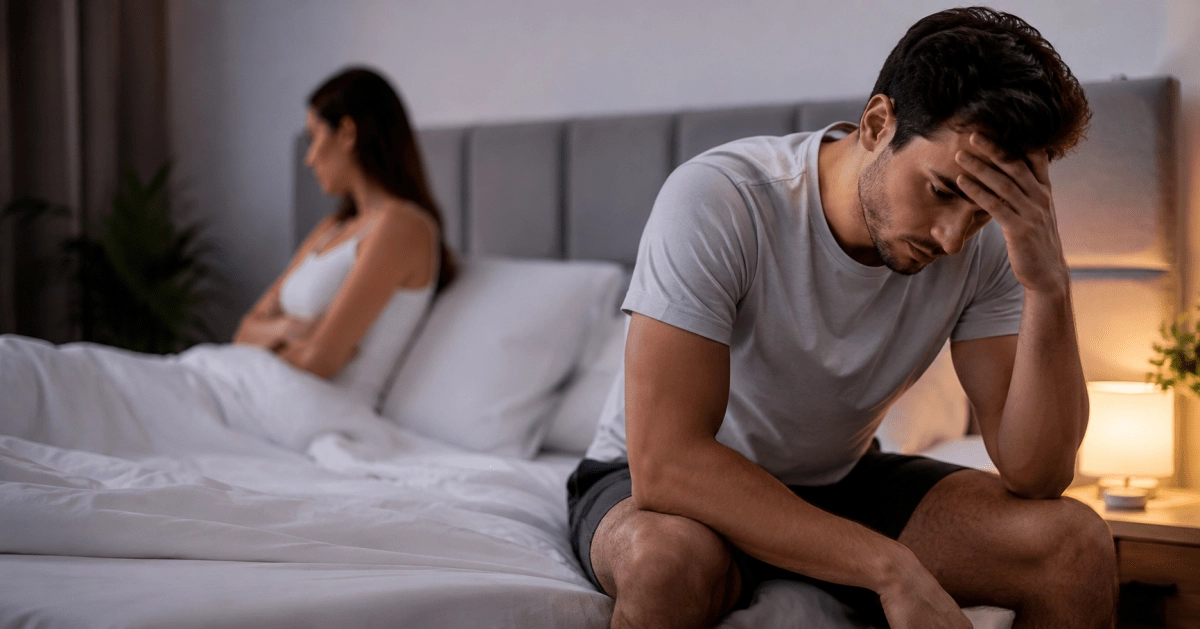
When a person stops having sex within a relationship, the impact is not always physical. Many times it is emotional. Lack of intimacy can generate distance, insecurity or arguments if it is not spoken clearly.
In any case, each couple is different and the binding “contract” does not have to adapt to a supposed “normality.” There are couples who go through stages without sex without it meaning a crisis: the relationship can have other pillars and work wonders, as long as there is communication, affection and mutual agreement.
Sexual health is not limited to the frequency of relationships. The Mayo Clinic remembers that it includes desire, satisfaction, emotional well-being, communication and comfort with one's own body.
What happens to the heart and body
Some studies have found associations between sexual activity and better indicators of cardiovascular health, although this does not prove that sex alone prevents disease.
Research published in The Journal of Sexual Medicine analyzed the relationship between couple sexuality and health, and noted that satisfactory sexual activity can be linked to lower stress and better general well-being.
The key is not to overdo it: stopping sex for a while does not automatically cause heart problems. But an active, safe and satisfying sex life can be part of a healthy lifestyle, along with exercise, good nutrition, sleep and medical check-ups.
Desire can go down or change
Sexual desire is not fixed. It can go up or down depending on age, hormones, stress, medications, mental health, relationship, or fatigue.
After a period without sex, some people feel more desire. Others notice that it is more difficult for them to reconnect with their sexuality. Both situations can be normal. What's more: many people do not feel that sexuality - or shared sexuality - is something necessary in their lives.
It is advisable to consult a professional if the lack of desire appears suddenly, generates distress or is accompanied by pain, erectile dysfunction, vaginal dryness, depression, anxiety or relationship problems.
Not having sex can also be a healthy choice
There are people who do not want to have sex, who choose a stage of abstinence or who feel fine without sexual activity. In those cases, there is no reason to pathologize the situation.
Sexual health also means being able to decide when, how and with whom to have sex, without pressure or guilt. The problem appears when the lack of sex causes suffering, affects a relationship, or is related to a physical or emotional symptom that is not being addressed.
When to see a doctor
It is advisable to speak with a professional if the absence of sex is associated with pain, hormonal changes, depression, anxiety, erection problems, vaginal dryness, sudden loss of desire or persistent conflicts with your partner.
In short: stopping sex for a while does not ruin your health. But if that pause is not chosen or is accompanied by discomfort, it may be a sign that it is worth checking what is happening in the body, mind or relationship.