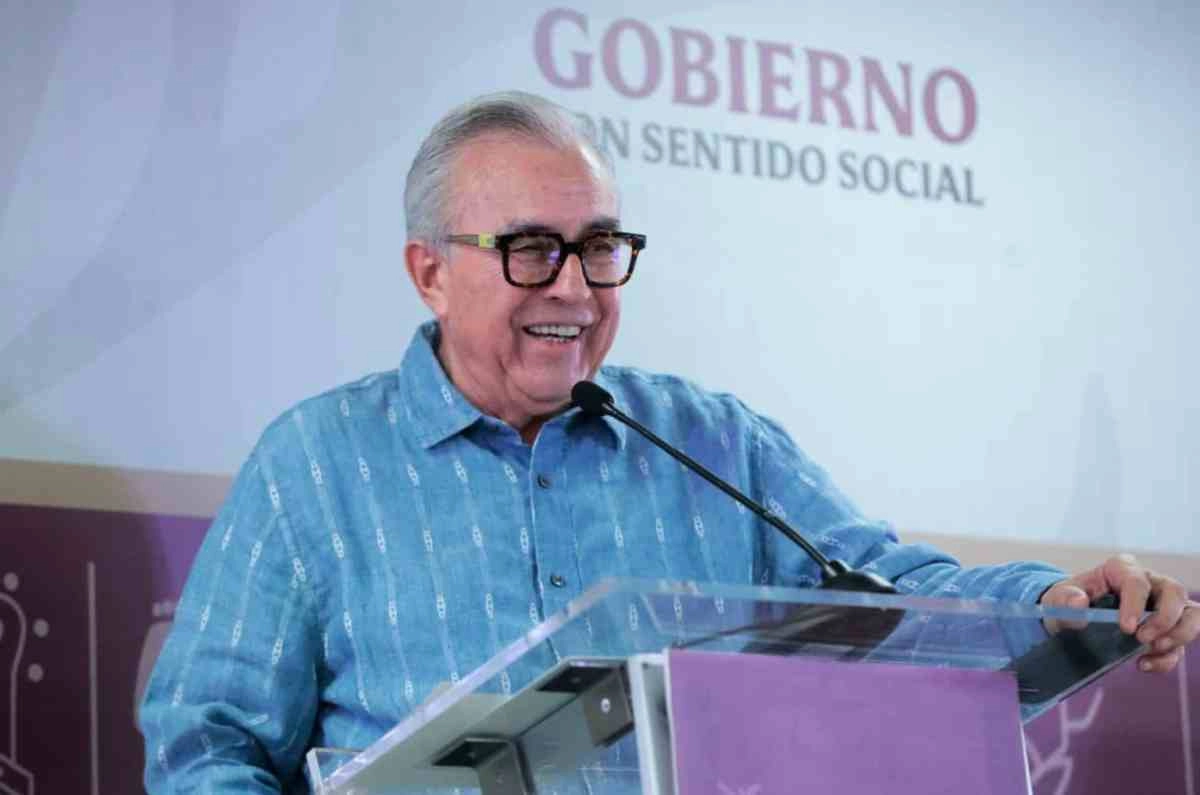

The United States government has not yet sent Mexico the information that, according to Mexican authorities, is necessary to advance an eventual arrest for extradition purposes of the licensed governor of Sinaloa, Rubén Rocha Moya, President Claudia Sheinbaum confirmed this Tuesday. During her morning press conference at the National Palace, the president was questioned about whether Washington had delivered the elements requested by Mexico in relation to the Sinaloan politician.
"They have not sent the urgent detention information for extradition. They have not sent any information," Sheinbaum responded. The case has generated attention between both governments after US authorities pointed out alleged links between Rocha Moya and members of the Sinaloa Cartel. The politician has rejected the accusations.
According to the information provided by the Mexican government, the Ministry of Foreign Affairs (SRE) received requests from the United States Embassy for provisional detention for extradition purposes related to the Sinaloan president. However, the Foreign Ministry indicated that the documents delivered did not contain sufficient elements to establish responsibilities and that it would be up to the Attorney General's Office (FGR) to determine the legal viability of the requests.
Rocha Moya maintains license while investigation continues
Rocha Moya requested to temporarily separate from the position on May 1, 2026, after the accusations from the United States emerged and while investigations by Mexican authorities progressed.
The Sinaloa Congress later approved the license and Yeraldine Bonilla Valverde took over as interim governor. Sheinbaum was questioned about why Rocha Moya has not returned to the state government in the absence of new evidence provided by the United States. The president pointed out that this decision corresponds to the licensed governor himself. “It is his decision; as long as this process continues, to stay that way,” he said.
The president recalled that Rocha Moya decided to leave the position with the argument that she sought to prevent the accusations from affecting the governability of the state.
"I do not want to question the governability of Sinaloa in any way. I prefer to leave my position while this investigation continues," Sheinbaum recalled what the politician said when requesting the license.
The case has also provoked criticism from sectors of the opposition, who have accused the federal government of protecting the Sinaloan president. The government of Mexico, for its part, maintains that any detention or extradition procedure must have legal support. Controversy increased after the SRE initially classified communications related to US applications. After the questions, the undersecretary for North America announced the declassification of documents related to the case.
Meanwhile, the FGR maintains open investigations in Mexico. Rocha Moya has appeared before ministerial authorities and has denied accusations of alleged agreements with criminal organizations to facilitate illicit activities. For now, Sheinbaum maintains that the United States has not provided the additional information that Mexico considers necessary to advance the detention process for extradition purposes.