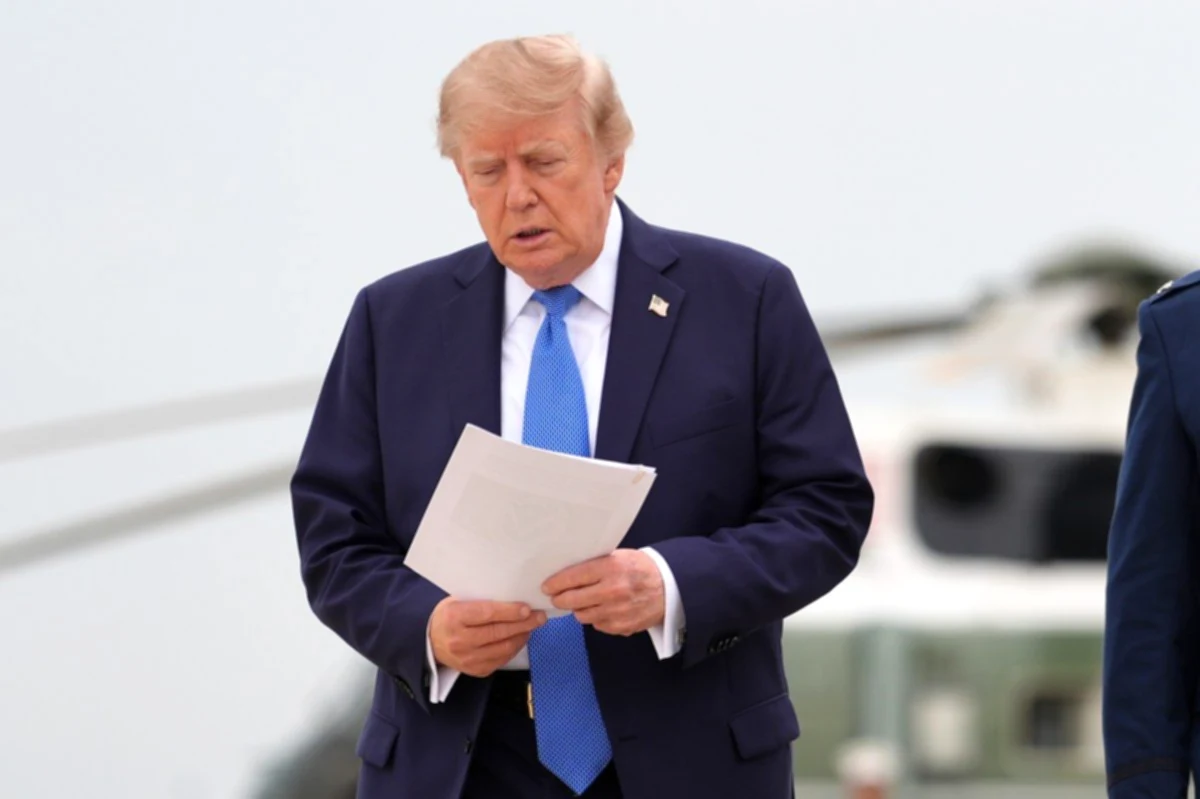

President Donald Trump rejected any possibility of Iran exercising control over the Strait of Hormuz, one of the most strategic sea routes for the global oil trade, and assured that Washington will maintain permanent surveillance over the area.
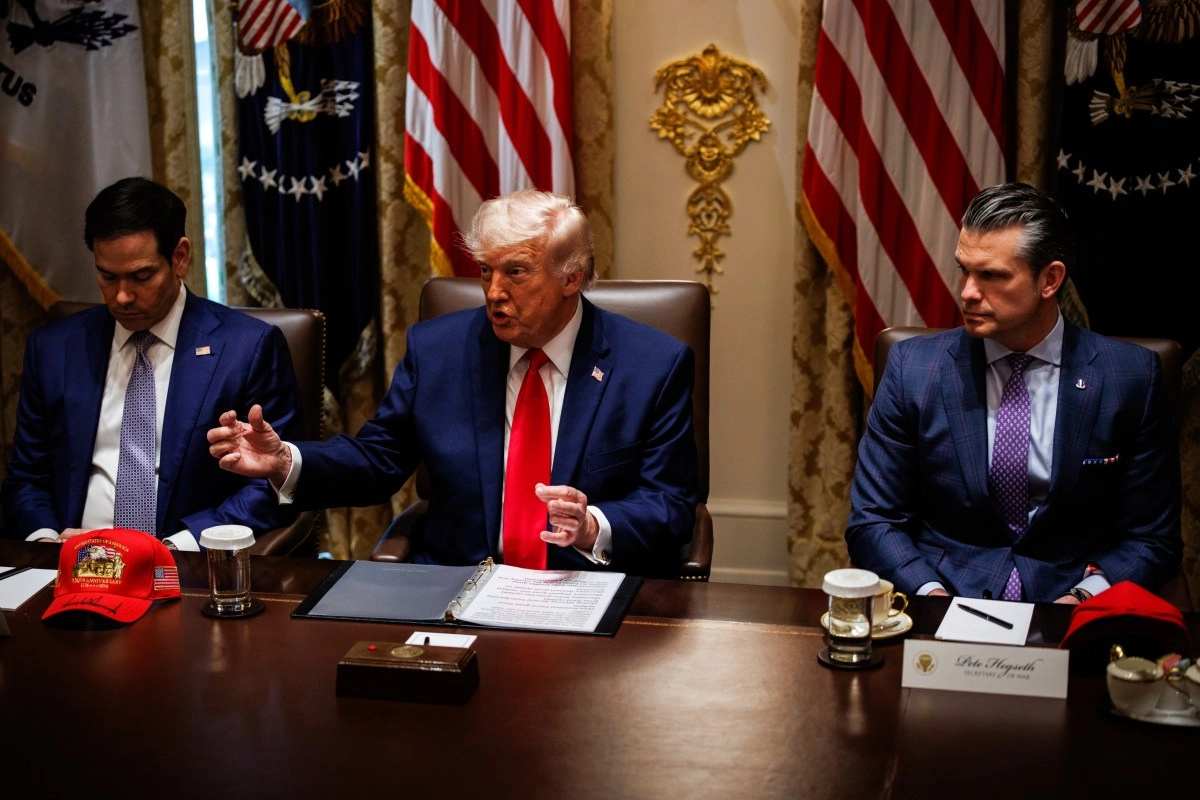
During a cabinet meeting at the White House, Trump responded to reports broadcast by Iranian state television that indicated the existence of an alleged pre-agreement between Tehran and Washington to reactivate maritime transit in the strait under Iranian and Omani supervision.
"They are international waters, no one is going to control them. We are going to monitor them, but no one is going to control them," declared the Republican president before his government officials.
The US administration immediately denied the information disclosed by Iranian media and called the alleged document a “fabrication.” According to the version broadcast by the state channel IRIB, Iran would have agreed to restore maritime traffic to levels prior to the armed conflict that began in February, although maintaining a new supervision mechanism together with Oman.
The Strait of Hormuz connects the Persian Gulf with the Indian Ocean and about a fifth of the oil sold in the world circulates through this route. The partial closure of the maritime passage after the start of the war caused sharp increases in international crude oil prices and increased global inflationary pressure.
Trump rules out sanctions relief for Tehran
Trump also denied that the United States is negotiating the lifting of economic sanctions or the unlocking of frozen Iranian funds, despite reports published in international media in recent days.
"We are not talking about any sanctions relief or giving money. No sanctions, no money, no anything," the president said.
The statements come as US and Iranian officials intensify diplomatic contacts mediated by countries such as Pakistan and Qatar to try to consolidate the fragile ceasefire reached in April.
According to leaks cited by various international media, the draft understanding under discussion does not contemplate a definitive nuclear agreement, but rather an extension of the truce for 60 days to continue negotiations related to uranium enrichment by Tehran.
The Iranian government is also seeking the unfreezing of billions of dollars in assets held abroad as part of an eventual interim agreement.
Military tensions persist in the Middle East
Although Trump assured that the talks “are going very well,” he also warned that the United States could resume the military offensive if the negotiations fail.
“I think they are starting to give us the things they have to give us, and if they don't, then the man to my left is going to finish them off,” the president said, pointing to Defense Secretary Pete Hegseth.
Tension in the region remains high. In recent days, clashes have occurred between US and Iranian forces near the Strait of Hormuz, including attacks on ships and the downing of a drone, according to versions of both governments.
Meanwhile, the regional conflict also remains active in Lebanon and Gaza. Israel intensified military operations against positions linked to Hezbollah and Hamas, groups backed by Tehran.
Benjamin Netanyahu's government maintains that its operations seek to protect Israeli communities near the border with Lebanon after recent drone and rocket attacks.
International analysts consider that any agreement between Washington and Tehran will depend not only on the conditions over the Strait of Hormuz and the Iranian nuclear program, but also on the evolution of parallel conflicts involving Iran's regional allies and Israel.