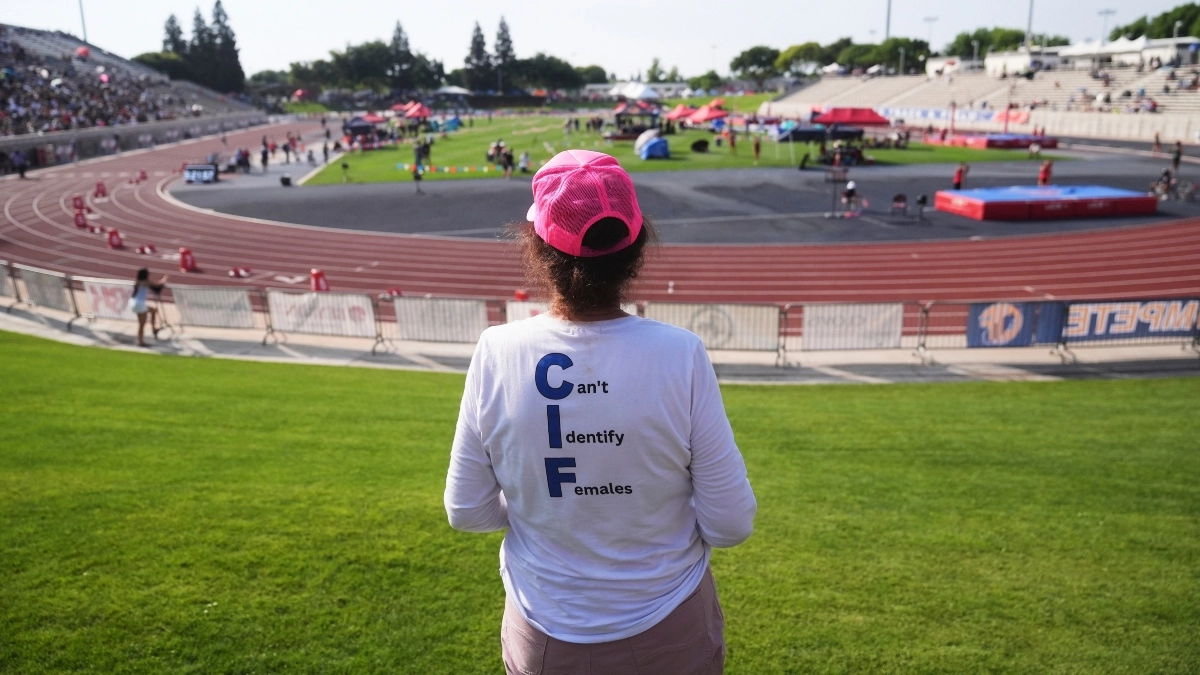

The Supreme Court established a new national precedent allowing states to protect women's sports.
The justices ruled in favor of West Virginia and Idaho, against transgender athletes who sued to gain access to women's sports.
The states were supported by the law firm Alliance Defending Freedom (ADF), while the transgender athletes were represented by the American Civil Liberties Union (ACLU) and Cooley Legal.
In the long-awaited rulings, the Supreme Court upheld state laws requiring student-athletes to compete on sports teams that correspond to their biological sex at birth, rather than their gender identity.
West Virginia Attorney General John McCuskey praised the Court's decision in a statement to Fox News Digital.
"This is a momentous victory for every female athlete who has ever competed, or dreamed of competing, on a fair and safe playing field. Today's Supreme Court decision reaffirms what common sense and the law have long made clear: states have the right to designate sports teams based on biological sex, not gender identity. Without that distinction, Title IX is undermined and decades of hard-won progress for the advancement of female athletes is erased," McCuskey stated.
Idaho Attorney General Raul Labrador echoed McCuskey's statement.
"Today's decision is a victory for common sense, justice and the countless girls and women who dedicate themselves to athletics. Idaho was a national pioneer in becoming the first state to protect women's sports, and I have never hesitated to defend that law," Labrado stated.
"The Supreme Court has confirmed that states can preserve fair competition and protect the opportunities that generations of women fought for. All parents can rest assured that our law protects their daughters who compete in Idaho," she added.
West Virginia's “Women's Sports Protection Act” and Idaho's “Fairness in Women's Sports Act” were the center of an intense legal battle.
These state laws had been blocked in recent years after transgender athletes from West Virginia and Idaho filed successful lawsuits challenging them. After years of failed attempts by the appeals court, the Supreme Court agreed to review both cases last July. Now, after oral hearings in January, the laws will be protected.
The transgender plaintiffs were Lindsay Hecox, a transgender athlete who aspired to compete in women's track and field and cross country at Boise State University, and Becky Pepper-Jackson, a young transgender athlete from West Virginia, who sued the state in 2021, when she was in high school, before recently winning the state shot put championship in women's track and field in May.