
Google seems to have taken note of the criticism that quickly came after its new Google Health app officially replaced the beloved Fitbit app. The change, which went into effect on May 19, 2026 for millions of users around the world, generated a wave of negative comments that the company simply could not ignore.
In response to this barrage of complaints, Google has gotten to work and has revealed a roadmap with concrete improvements that will begin to arrive progressively during the course of this week.
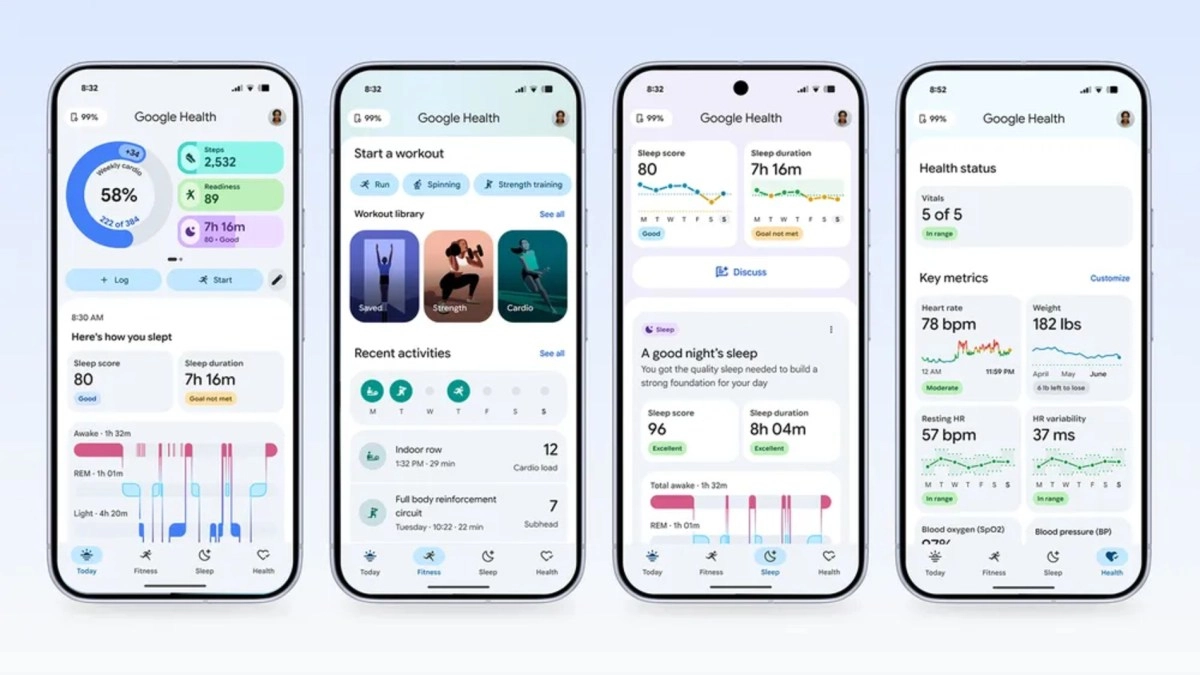
Fitbit's transition to Google Health wasn't exactly a soft landing. Many users found an interface that, although visually modern and more aligned with the Android ecosystem, left out essential functions that were previously part of everyday life. The “Today” dashboard, for example, limited the display of health metrics to only the top half of the screen, which was frustrating for those who wanted to see all their progress at a glance. And that was just the beginning of the complaints.
Google recognizes the problems and acts quickly
What surprised the community most was not so much that there were problems, but the speed with which Google reacted. The company announced that it will simplify the process of customizing the “Today” and “Health” dashboards, so that users can rearrange their favorite metrics, add new ones, or remove those they don't use, without having to navigate complicated menus. It's a change that seems small, but makes a huge difference in the daily experience.
In addition, Google is also working on correcting one of the most annoying errors that were reported after the launch. GPS runs were being incorrectly saved as generic gym routines, ruining outdoor activity tracking for runners and cyclists. The company promised a patch to fix this in the coming days, along with improvements to connectivity with the bracelet to avoid the intermittent outages that several users reported.
The nutritional record also enters the list of urgent repairs. Those who synced their meals from other platforms encountered duplicate entries that messed up their eating history. Google confirmed that it is working to eliminate these duplications and improve integration with third-party apps, which represents a relief for users who are most meticulous about their diet.
The new functions that are here to stay
Beyond fixing what already existed, Google Health is adding features that simply weren't there at launch. One of the most anticipated is the possibility of creating and recording personalized foods, something that Fitbit users have had for years and that was conspicuous by its absence in the debut of Google Health. With this update, you will be able to add your homemade recipes or local products that do not appear in the general database.
Hourly graphs for step tracking are also coming, allowing users to see in greater detail when they are being most active during the day. And when it comes to sleep, the app will incorporate a 24-hour view that will group together both main sleep and naps, offering a more complete picture of daily rest. This was something that Fitbit handled quite well and that sleep tracking fans missed.
Another point that generated a lot of controversy was the artificial intelligence coach powered by Gemini. While the idea of ​​having a personal trainer available 24 hours a day sounds appealing, many users complained that the AI-generated messages in the “Today” tab were generic, repetitive, or simply unnecessary. Google recognized the problem and announced that it will improve the quality of these messages and will allow the assistant to be silenced so that it does not interrupt with irrelevant notifications.
Integration with the ecosystem expands
One of the most interesting moves that Google has on the way is direct integration with Apple Health. In the coming days it will be possible to share the entire medical history with the Apple platform, which represents a huge step towards health data portability. For users who live between Android and iOS devices, or who simply want to have their data accessible from different platforms, this is very welcome news.
Google also confirmed that the changes will arrive gradually throughout the week, and that the improvement process does not stop there. The definitive version of Google Health, now available on both Android and iOS, continues to be a platform with a lot of potential, and the company is clear that gaining the trust of the millions of users who came from Fitbit requires more than a simple name change. It requires listening, and for now, Google is proving that it is.