
Every smartphone, without exception, reaches a point where its battery stops working as it did when it was new. The lithium-ion chemistry that virtually all current smartphones use degrades with each charge cycle, and that wear and tear translates into fewer hours of actual battery life.
Experts agree on something quite clear, when the health of the battery falls below 80% of its original capacity, that is the time to consider the change. It is not a figure taken from the sleeve, Apple itself considers that a battery is in good condition as long as it remains at 80% or more, and below that it begins to be noticeable in the performance of the equipment.
To put it in perspective with real numbers, after a year of normal use the battery usually retains between 90% and 95% of its capacity, after two years we drop to a range of 80% to 85%, and from the third year we are already talking about 70% to 75%. That third year is usually just where most begin to feel that something is not right, even though the phone is still “working.”
When charging your phone becomes your second job
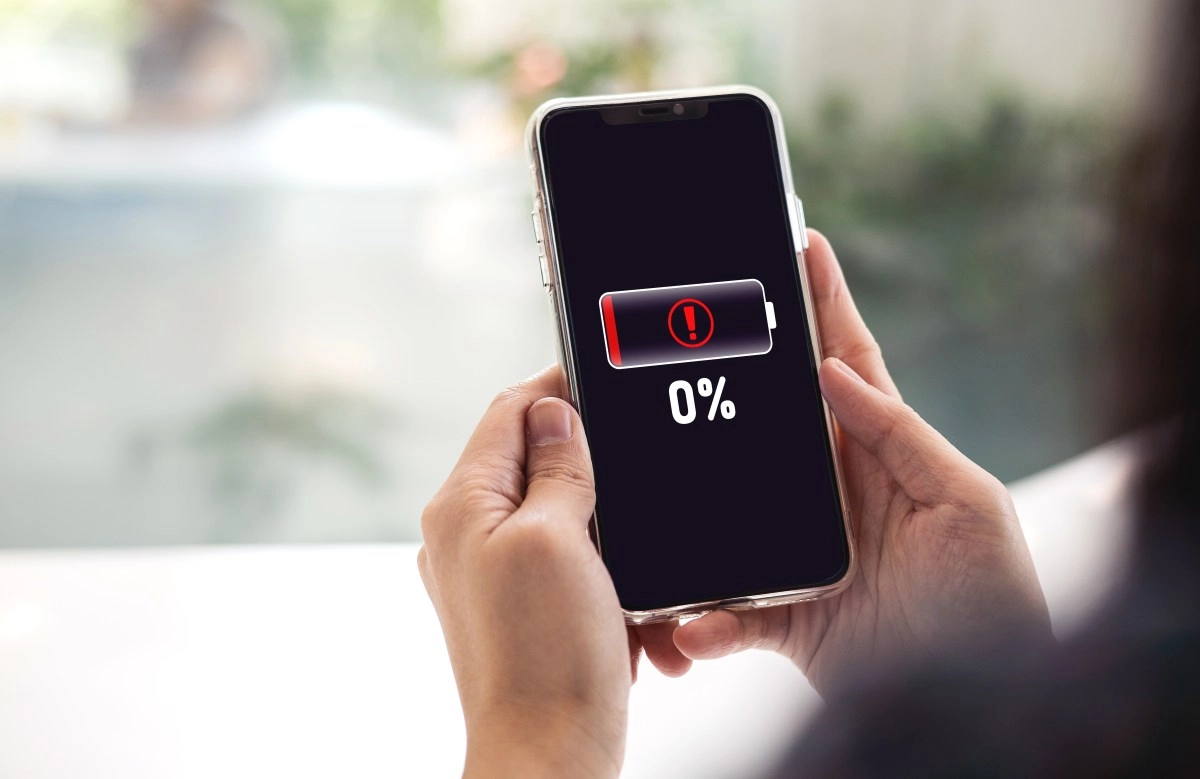
Here's the part we've all experienced, that frustrating feeling of being glued to the charger all day. When the battery reaches that 80% threshold, the user experience starts to become really annoying, because what used to last you a full day now barely lasts you half a day. The phone discharges faster than normal even if you use it the same way you always do, and you end up checking the battery percentage with an anxiety that you didn't have before.
Other signs that reveal this deterioration include a charge level that rises or falls erratically for no apparent reason, the device that turns off by itself even though it supposedly had charge left, or simply that it no longer reaches 100% even if you leave it plugged in overnight. When you notice this, it is no longer a matter of opinion, it is the battery warning that it needs a replacement.
The red line that you should not cross for safety
Beyond comfort, there is a limit where the conversation stops being about autonomy and becomes about physical risk. Battery swelling is the most serious and urgent sign that exists, because internal gas is generated that accumulates hopelessly and can cause the device to catch fire. If you notice that the back of your mobile phone bulges, the recommendation is clear, turn off the device immediately and do not turn it on again until the problem is resolved at a technical service.
This maximum renewal point for security does not wait for you to decide if it suits you or not, it is an alert that demands immediate action no matter how much you want to squeeze the device. The most common causes of this extreme deterioration are constant overloads, high temperatures and, of course, the natural passage of time. That is why keeping the charge between 20% and 80% helps to extend the useful life of the battery and keep you away from this extreme scenario.
In the end, deciding between replacing just the battery or changing the entire phone depends on how satisfied you are with the rest of the equipment. If the screen, performance and functions are still up to par, and the only problem is autonomy, changing the battery is usually the most cost-effective option. But if you also notice other general failures, perhaps it's time to think about something new.