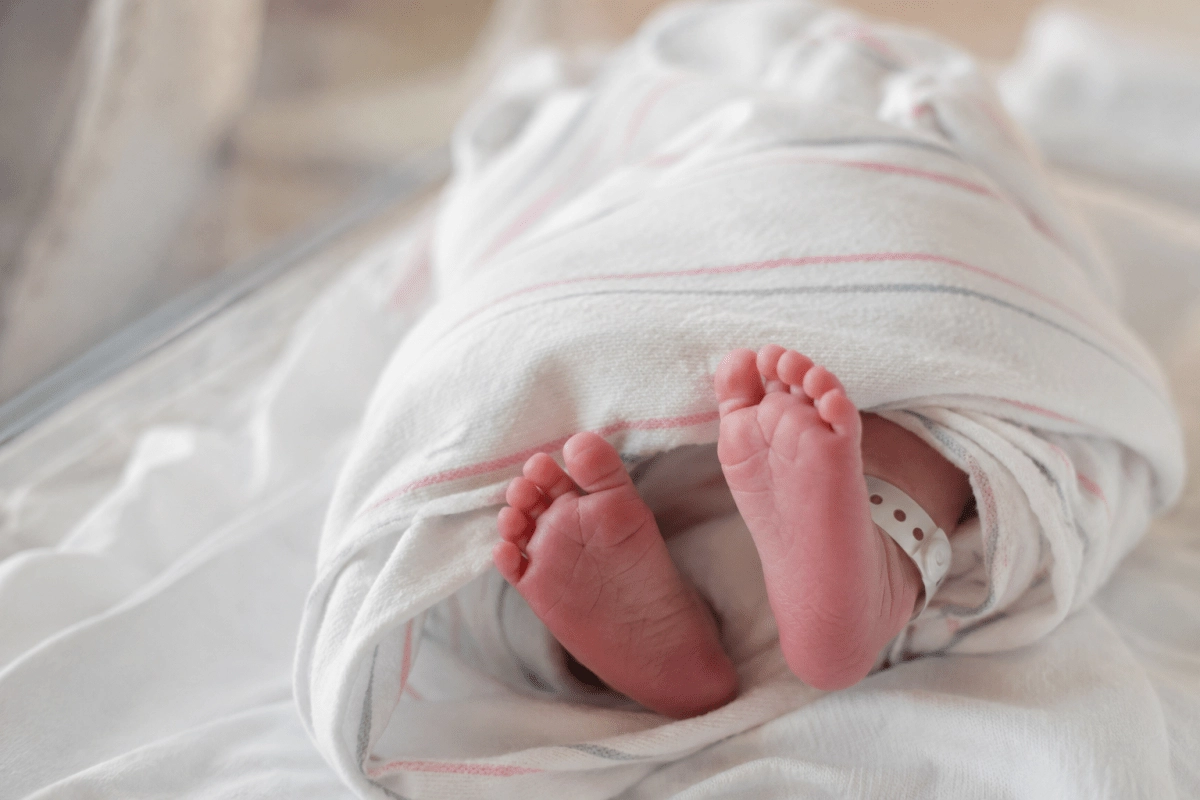

Mabel is 62 years old and has just become a mother for the first time. Her son David was born in San Nicolás, province of Buenos Aires, after a pregnancy achieved through assisted reproduction. The baby weighed 2,750 kilos and, according to the professionals who accompanied the case, was born in good health.
"I always had the desire to be a mother. I did not give up. I am a woman of great faith. I prayed, I put my best energy and I felt in my heart that I was going to be a mother," she said, excited, from the clinic.
The case drew attention due to the woman's age and once again put the focus on a possibility that reproductive medicine made increasingly visible: carrying forward a pregnancy after menopause.
How Mabel managed to get pregnant at 62 years old
The treatment was carried out by reproductive medicine specialist Matías Colabianchi, who explained that the pregnancy was achieved through embryo donation. This means that the pregnancy was not achieved with Mabel's own eggs.
Assisted reproduction allows an embryo to be transferred to the uterus even after menopause, as long as the person can carry out the pregnancy and passes the corresponding medical evaluations.
In any case, beyond the possibility of a woman carrying out a pregnancy with a donated embryo or with eggs from someone younger, the risks exist and are important. Among the problems that appear most frequently are hypertensive disorders, gestational diabetes, deliveries by cesarean section and certain perinatal complications.
The American Society for Reproductive Medicine warns that advanced maternal age is associated with increased risk of hypertension, gestational diabetes, cesarean section, and other obstetric complications, even when eggs or embryos from younger donors are used.
That is, using a young egg can solve a good part of the reproductive problem related to the quality of the egg, but it does not rejuvenate the body of the person who carries out the pregnancy. That is why these treatments require individualized evaluations, strict monitoring and clear information about the risks involved in the decision.
You can see: New reality of single motherhood: in vitro fertilization sets a record in number of mothers over 40 years of age
Are there more and more women who are mothers at an advanced age?
Yes, reproductive medicine is changing the traditional boundaries of motherhood. Egg donation, embryo donation and other techniques make it possible to achieve pregnancies that decades ago would not have been possible.
But still, being a mother after 60 is quite exceptional. It is what some call “gerontomaternity” and it speaks of a phenomenon that is not exempt from ethical and medical debates around the limits of assisted reproduction.
Who was the oldest woman to give birth?
Mabel's case is far from the world record. The oldest woman for whom there is a widely documented case of childbirth is Indian Erramatti Mangayamma, who in September 2019 gave birth to twin girls at age 74, after becoming pregnant through in vitro fertilization. His doctor assured that he presented a birth certificate proving that age.
Mangayamma and her husband had been trying to have children for decades. The pregnancy was achieved through assisted reproduction and the girls were born by cesarean section in the state of Andhra Pradesh, India. The case also sparked a strong medical debate: the Indian Council of Medical Research even questioned the clinic for having performed fertility treatment on a patient of that age.
There is, however, a difference between the oldest reported case and the record officially recognized by Guinness World Records. Guinness continues to identify as a verified record the Spanish María del Carmen Bousada Lara, who was 66 years and 358 days old when she gave birth to twins Christian and Pau in Barcelona, ​​on December 29, 2006, after an in vitro fertilization treatment with donated eggs.
Regarding the natural conception record, it is very different: Guinness recognizes the British Dawn Brooke, who conceived naturally and had a child at the age of 59 in 1997.