Angelino self-repatriates to Mexico: 'I have come with humility to learn and to contribute'
Alessandro Negrete participates by giving his testimony in the webinars The Self Repatriation of Loyola Law School and ITESO
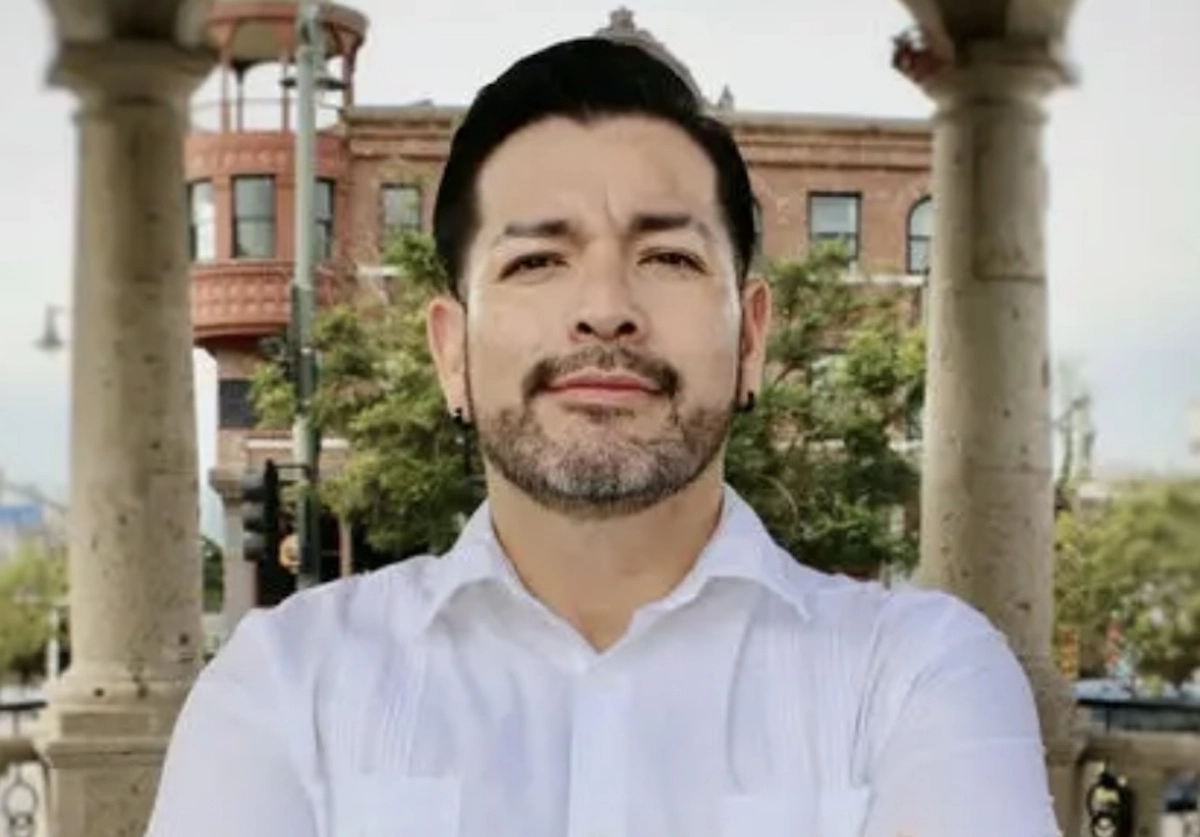
When in September 2025, Alessandro Negrete self-repatriated to Mexico where he was born 43 years earlier, he breathed a sigh of relief like he hadn't in a long time; And five months after his return, he says it was worth it.
“It felt so good to see the flag in downtown Guadalajara. My experience of the Grito de Independencia (Cry of Independence) was so moving. The pride of being Mexican has nothing to do with the pride of being from the United States. People here are proud to be Mexican,” Alessandro says in an interview with the newspaper La Opinion.
A year ago, a month after Donald Trump took office as president of the United States for a second term, he made the decision to return to Mexico, the country where he was born, but which he didn't know.
His parents emigrated to Los Angeles when he was only three months old. He grew up in South Central and was living in the Boyle Heights neighborhood at the time. He didn't have the option of applying for Deferred Action for Childhood Arrivals (DACA) because when he had the opportunity in 2017 to apply for this program, which would have granted him a work permit and canceled any possibility of deportation, President Trump eliminated new applications. “I studied sociology and worked as an independent contractor with different organizations in both the public and private sectors focused on advancing racial and environmental justice and immigrant rights,” says Alessandro, who feels like a true Angeleno, having arrived in the city as a three-month-old infant. His mother was his greatest inspiration, instilling in him values ??such as the strength of unity and standing up for one another, which led him to activism. However, with Trump's arrival, he began to lose work due to budget cuts to nonprofit organizations that were unaware of the impact. Where would they get their budget without scholarships? They also cut investments to hire more people. Furthermore, in their first month, Trump issued a series of executive orders to attack minorities and the immigrant community.
“As immigrants, we all have a moment where we say enough is enough. For me,it was questioning myself, 'I don't have access to social security, to a pension. What am I doing here? I don't want to keep hoping that some politician will come and give us immigration reform.'”
Besides losing her job, she thought about her future and the lessons from her parents, who instilled in her the importance of dreaming big.
“My dream was never to stay in a cage. With the Real ID, I also no longer had the opportunity to travel around the country; and I said, 'I'm young enough to start over, I'm smart'; and fighting for my immigrant community isn't going to disappear when I cross the border.”
Quietly, she began looking for work in Mexico, going through several interviews; And when he landed a job with a US organization focused on age discrimination for a position in Guadalajara, Alessandro publicly announced his return to Mexico.
“I won't say it was easy; it's a process that generates anxiety and can be overwhelming, but starting to prepare in February helped me a lot. discovering that the Spanish he spoke in Los Angeles isn't the same as in Guadalajara.
“There are idioms and expressions I didn't know; to this day I'm still learning. Sometimes when someone speaks to me, I wonder what it means; And sometimes when I translate, I realize it's not the same as what I think.”
Alessandro was born in the port of Manzanillo; his mother is from Michoacan and his father from Guadalajara.
“This city has given me a warm welcome. I appreciate the opportunity, and I've come with great humility to get to know my people.
Was the return worth it?
“You can't talk about Mexico without talking about American imperialism. I thought that when I left the United States I wouldn't hear Trump's name anywhere again, but with all these threats, what he's doing to Cuba, and what he's causing, it has a huge impact on neighboring countries.
“But it was worth it. I feel free. I've been able to discover parts of Mexico that I never imagined.”
I don't regret making the decision.
“Although my parents have stayed in the United States, I've had the opportunity to reconnect with family and people I hadn't seen in a long time.
“It's been worth it, But we must understand that the social and economic impact of the United States is significant, and it goes beyond me.”
He shares that his attitude has been one of humility, not privilege.
“I have humbly come to meet with the community, seeing what I can do for Mexico and how I can contribute.”
Alessandro has been invited to share his testimony in the Self-Repatriation Webinars organized by Loyola Law School at Loyola Marymount University in Los Angeles and ITESO, the Jesuit University of Guadalajara, to provide tools for immigrants who decides to return to Mexico.
“I participate by sharing my experience. These workshops offer information on where to obtain the documents they will need in Mexico when they return. The United States also makes people disappear; what happened to the Central American children during Trump's first term? What happened to the trafficking victims?
“In the United States, if you're not white and privileged, you're not going to be seen. I feel for the families of Renee Good and Alex Pretti, but nobody talks about Keith Potter and other immigrants who have died at the hands of ICE.
“I know there is violence in the United States because I've worked in social justice, and I experienced gang violence; And the biggest gangs are the police and the sheriff.”
He says that even though he's in Mexico, his mind is still with the immigrants.
“I worked with street vendors, for driver's licenses for undocumented immigrants. It excites me to see all the work we did, but it bothers me to see someone like Trump come along and destroy it all. Item. There's a community here ready to welcome you.”
I'm building community, my social media networks, I've gotten involved with organizations that support the migrant community.”
He adds that he arrived in Mexico like a sponge, ready to learn everything.
“I didn't come here saying I know more because I come from the United States. drug trafficker known as El Mencho shouldn't be oversimplified because drug and gun consumption comes from the United States,and all of this is a product of imperialism. “The benefits go to the north, and the impacts are felt in the south.” He advises Mexicans who want to repatriate to Mexico to research what they want to do. "Mexico is developing, and many of the careers you studied in the United States may not exist here; research the types of careers and opportunities available in Mexico." But he also advises them to save money, at least $15,000. “To rent, they asked for a guarantor, which I didn't have, and I was forced to pay five months' rent in advance.” And above all, he states that if they really want to return to Mexico, no one is going to call them. losers.
“If you need anything, I'm here. That's why I joined the Loyola and ITES workshops to share my experience.”
In addition to working for an organization that combats age discrimination, Alessandro runs a small business consulting for political campaigns.
If you want to learn more about him, visit the website:
This news has been tken from authentic news syndicates and agencies and only the wordings has been changed keeping the menaing intact. We have not done personal research yet and do not guarantee the complete genuinity and request you to verify from other sources too.