
“The virus” is the threat most feared today by the inhabitants of Cuba, already hit by shortages of food, medicine, and electricity.
High fever, rashes, vomiting, diarrhea, and inflammation of the Joint pain is the most frequent symptom among those who fall ill, while those who have recovered suffer after effects of varying severity, and those still healthy fear relapse at any moment.
The “virus” Cubans are referring to is, in reality, the simultaneous spread of three arboviruses, or mosquito-borne viruses—dengue, chikungunya, and oropouche—on the island, according to the Cuban government and the World Health Organization/Pan American Health Organization (WHO/PAHO).
These are in addition to other respiratory viruses such as COVID-19, as explained by epidemiological authorities in state media.
“Matanzas looks like a zombie city today… that's how we are, bent over, in pain. You only have to go out on the street and look,” journalist Yirmara Torres Hernandez wrote a few weeks ago in a social media post that was reproduced by several media outlets.
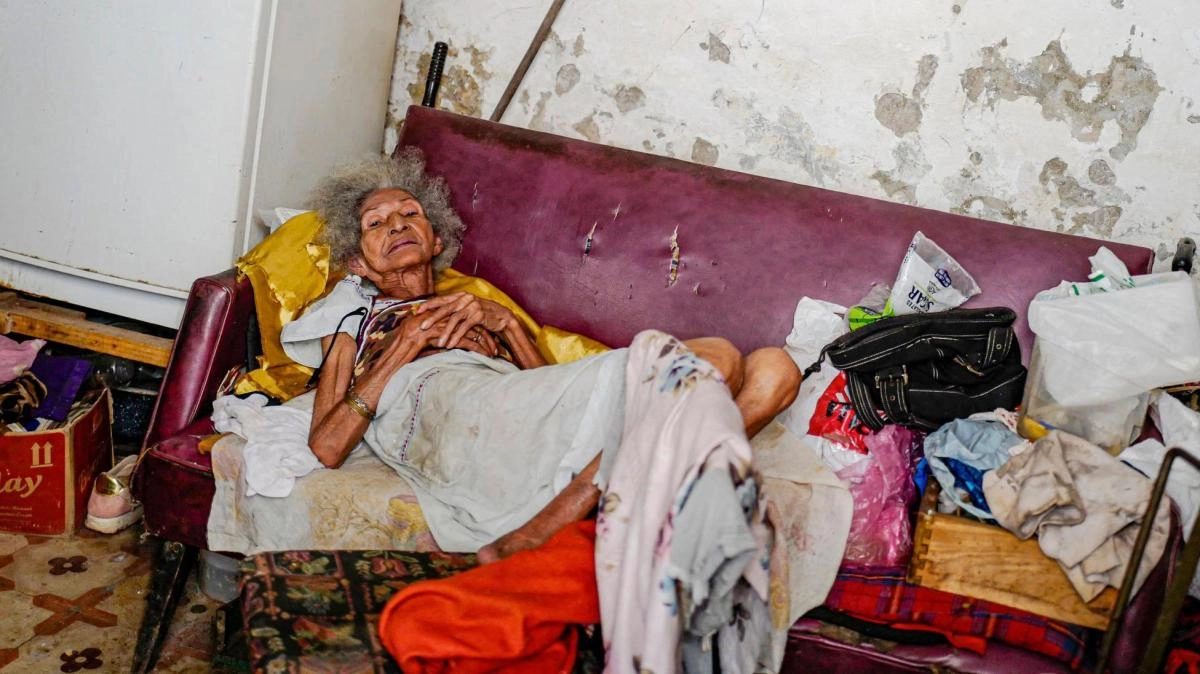
And indeed, the accounts coming from the island speak of feverish, hunched-over patients with Movement problems as a consequence of the epidemic.
This comes at a time of extreme crisis affecting the health system with shortages of medicines, diagnostic limitations, and the widespread perception among Cubans that self-medicating at home is better than going to one of the island's hospitals.
Health authorities acknowledge at least 47 deaths from arboviruses, although experts and activists believe that many others go unreported or are attributed by the government to other causes, so the number could be much higher.
Sources consulted by BBC Mundo claim to know of several close cases of deaths due to the "virus" in recent months.
New cases of chikungunya grew by 71% in just 7 days, according to the Cuban Ministry of Public Health last week. While the PAHO put the total number of cases of this disease at 25,995.
However, many of those infected refuse to go to medical centers unless they are very ill, so the true number is unknown.
“The virus” and its effects
BBC Mundo spoke with several Cubans who recounted their experience with the virus from the island.
“I was working and I felt a pain in my knee, like a heavy weight. When I tried to get up from the chair, I couldn't; walking was very difficult. That's how it started,” recalls Hansel, a 31-year-old engineer from Havana.
This happened approximately two months ago. The next day, his symptoms worsened.
“I woke up with pain all over my body: my joints, feet, toes, both knees, lower back, shoulders, wrists, fingers…”
Hansel describes what he was experiencing as “a kind of arthritis, like suddenly becoming an old person.”
This was followed by three days of high fever, reaching up to 39ºC, which combined with the pain.
The pain persisted. even though his temperature dropped, and on the fifth day, he explains, a rash appeared all over his body.
Silvia (a pseudonym, as she does not want to be identified) explained to the BBC that her mother and grandmother, in the province of Pinar del Rio, in the westernmost part of the island, are also very ill, also due to the “virus.”
“I'm telling you this because they are not in a condition to do so,” she begins.
Silvia recounts that both she and Hansel are suffering from tremors, fevers as high as 39.5 degrees Celsius, and intense joint pain that makes it impossible for them to get out of bed.
What are they suffering from? It could be dengue, chikungunya, Oropouche, or some other viruses. Neither Hansel nor Silvia's family knows for sure, because they haven't gone to medical centers.
They consider it a waste of their time and the little energy reserve left by the “virus.”Healthcare in Cuba at its limit
In Cuban hospitals, Silvia testifies, “there are no conditions to care for people. Everything is overwhelmed, including the pediatric wards. There's no proper diagnosis; they only prescribe hydration, acetaminophen, and paracetamol for joint pain.”
“The truth is, the situation is very precarious. People are simply getting through it at home as best they can, practically unable to walk, due to the pain,” she concludes.
“Almost everyone I know doesn't go because People choose not to go. in those institutions there's no way to get a reliable diagnosis, and there are no medications either.”
“You have to buy them on the black market,or have a relative or friend send them from abroad, or have someone who lives here give them to you," he says.Cuba defines itself as a “medical powerhouse” due to certain achievements in recent decades that other larger or richer countries have not attained, from the training of a vast legion of doctors and the deployment of international health missions to the development of its own biotechnology industry that created an indigenous vaccine for COVID-19.
However, the worsening of the endemic economic crisis plaguing the country has placed its healthcare system in extremely precarious conditions.
Most hospitals are completely lacking in equipment, supplies, and medicines, preventing them from offering the minimum medical and hygienic conditions to care for patients.
In addition, thousands of Cuban doctors have emigrated abroad in recent years, leaving the island with collapsed services, unfilled shifts, and a Chronic overload of staff working under intense pressure for salaries that hover around US$30 per month at the real exchange rate.
BBC Mundo contacted the Cuban government to request an interview with a health authority, but received no response.
“N national authorities have implemented surveillance and response measures, including strengthening epidemiological and laboratory surveillance, standardizing clinical management in health services, and implementing vector control interventions targeting areas of highest transmission,” the WHO/PAHO told us.
The extreme situation in Cuba not only affects the treatment of patients with dengue, chikungunya, and oropouche, but also favors the spread of these diseases.
“Hygienic conditions in homes and surrounding areas influence the proliferation of the vectors that transmit these diseases,” PAHO responded to our question about how factors such as power outages, water scarcity, or garbage accumulation influence the situation.
Others express it as In a more graphic way.
“If the power goes out and you can't use fans, air conditioning, or other equipment that helps fight mosquitoes, they come in and bite you,” Hansel regrets.
To this is added, the engineer continues, “the issue of garbage dumps on street corners in neighborhoods, which are sometimes numerous and not collected or accumulated there, and all of that also generates mosquitoes and problems.”
Deaths and aftereffects
The Cuban government currently puts the death toll from the “virus” at 47, while the WHO/PAHO accepts the official figures.
However, independent experts believe the real number could be higher,And several people BBC Mundo spoke to know of a recent death close to them due to the epidemic.
“I know two people who have died. Both were elderly, around eighty years old.One was transferred to the Sancti Spiritus Provincial Hospital, and the other was left in a small therapy ward at the Fomento Hospital,” the aforementioned professor stated.
Another major concern is the long-term effects these viruses are leaving, the full extent of which is unknown.
At the moment, many patients report continuing to suffer pain and limitations of varying degrees weeks and even months after recovering.
“I still have pain in my fingers, for example, when I close my hand and squeeze it; it's hard for me to open jars; my shoulders hurt, and my lower back hurts a little too. And it's been more than a month now,” Hansel laments.