
After months of increasing US military pressure against Venezuela, events took a dramatic turn a few days ago with direct US military action and the removal of President Nicolas Maduro. Venezuela now faces urgent questions about governance, legitimacy, and democratic recovery. During the videoconference, “Venezuela After a US Military Intervention: What Awaits the Country and the World?” organized by American Community Media (ACoM), experts on the subject discussed the consequences of using military force to overthrow a government. Alejandro Velasco, executive editor of the NACLA Report on the Americas and a member of the Gallatin School and the Department of History at New York University, said that confusion, anxiety, and uncertainty about the future prevail among Venezuelans. “This type of intervention, through extortion, pressure, or whatever you want to call it, drastically changes the landscape of political opportunities, risks, and limitations for the various actors and the force that influences the daily lives of Venezuelans themselves.” He noted that we have seen things that seemed completely implausible just days and months ago, such as the release of political prisoners, and very conciliatory messages from the new authorities in Venezuela about the possibility of working with the Trump administration. Even the Trump administration itself, and Trump himself, saying that perhaps there could be a meeting, or that he might go to Venezuela. “How can this possibly lead to a democratic transition in Venezuela? From what we have heard from the US administration, democracy is not a concern, nor a goal, nor a secondary or tertiary aspiration; it is not even clear where it falls on the list at this particular moment in Venezuela.” He emphasized that the focus seems to be on oil, but there is a larger geopolitical dimension, which is about the domination of the region in relation to its resources.
Without Justification
Mariano de Alba, a Venezuelan lawyer and expert in geopolitics, international law, and diplomacy, said it is quite clear that there is no legal way to justify this operation.
“There is a set of rules that were agreed upon after World War II in 1945, clearly established in the Charter of the United Nations, which prohibit not only the use of force, but also the threat of force, something we have seen the US government do against Venezuela for many months, culminating in the operation to capture and overthrow Nicolas Maduro.”
He said that although we must also recognize that it is true that Nicolas Maduro could hardly be considered the legitimate president of the country, given that he lost the presidential elections in July 2024 by a landslide.
However, he stressed that this detail is irrelevant in terms of international law, given that Maduro, despite his lack of democratic legitimacy, had de facto control of the country.
“It surprises no one that the United States applies a selective approach to compliance with international law; and in some cases, that it disregards limits.”
He indicated that the United States presented two arguments to convince the U.S. armed forces that it was a legal operation.
“First, that the United States has not recognized Maduro, the president of Venezuela, as such since March 2020; second, Maduro has a formal indictment, approved by a jury in the United States, alleging that he has been involved in drug trafficking for many years, and this is the case that will be tried in U.S. courts.”
But also – he said – that President Trump has presented a narrative according to which Venezuela supposedly sent millions of drug traffickers and people from psychiatric institutions to the United States.
“It is true that there is a very large Venezuelan community, but these are people trying to earn a living and send money to their families in Venezuela.”
He said that the Tren de Aragua is a criminal organization that was basically created and originated in a prison in Venezuela, in the state of Carabobo, and supposedly some of the people linked to that organization have settled in the United States and have been involved in certain crimes.
But he emphasized that it is a minority, and the vast majority of Venezuelans in the United States are hardworking people trying to get ahead after having had to leave behind very difficult circumstances, mainly economic, but also, in some cases, political persecution in Venezuela.
“So, if you take all that into account, from a legal point of view,It is very difficult to justify the operation and the decision to overthrow Maduro from power.”
She stated that now President Trump says it's all about oil, but he cannot force or order major US oil companies to make massive investments in Venezuela and revive the oil industry unless the country's real problem is solved, which is establishing the rule of law and making substantial investments to rebuild the country's infrastructure.
And the democratic transition
Roxanna Vigil, a fellow in International Affairs at the Council on Foreign Relations, said that we haven't heard President Trump mention anything about a democratic transition.
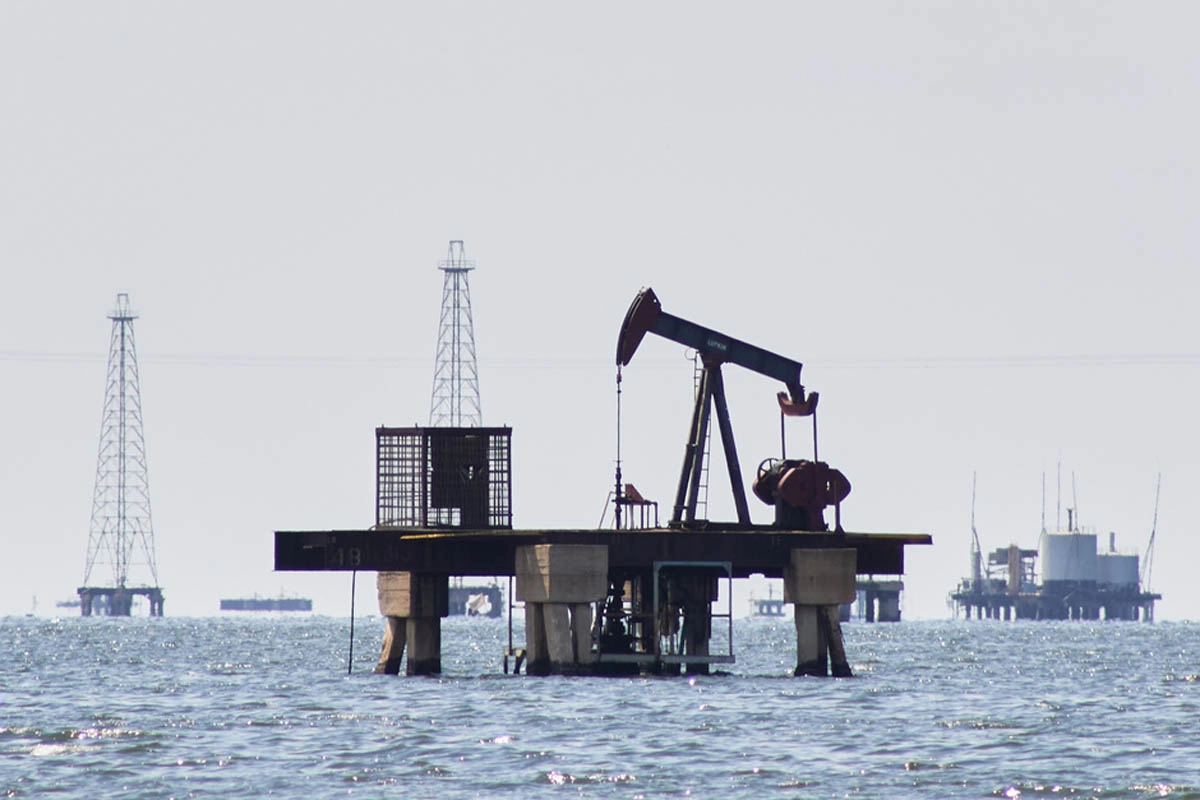
“Venezuela produces around 900,000 barrels of oil a day. In the global picture, that's less than 1% of the world's supply. So, on a global scale, it's a pretty small amount. But, of course, the Venezuelan economy depends almost entirely on oil revenues, so this has a significant impact.”
He mentioned that President Trump said the type of investment he has in mind is $100 billion, indicating a multi-year effort that doesn't align with the overall global oil outlook, as the market is very well supplied at the moment.
“In the coming years, we will see an oversupply of oil. The United States doesn't need any more Venezuelan oil, which is a heavy, acidic type of oil and requires a very specific type of refinery.”
He also noted that Venezuela's energy, oil, and financial sectors are under sanctions, but if the goal is to attract investment, they won't be an obstacle.
“So far, what we have is the Secretary of Energy indicating that the U.S. government is going to continue selling Venezuelan oil indefinitely; There will be authorizations for the sale of the oil and for the management of the revenues.”
He said it has been made public that the revenues from Venezuelan oil sold by the U.S. government will be deposited into a U.S. account; and it is unclear whether there is a mechanism for a representative of the Venezuelan people to participate in the decision about how those funds are used.