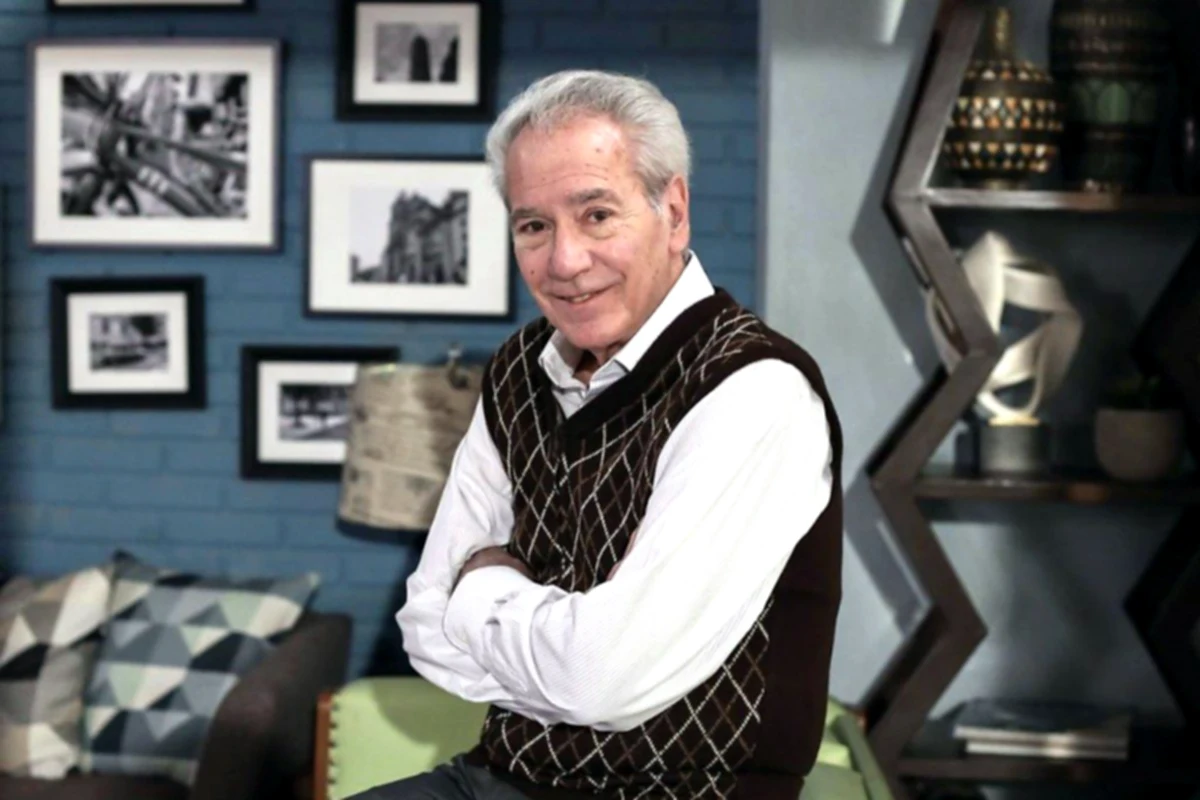

Journalist and meteorologist Luis Felipe Molina grew up and has lived most of his life in Manizales, one of the cities affected by the 7.4 magnitude earthquake that shook western Colombia this Monday.
Although the epicenter was located in the municipality of San José del Palmar, in the department of Chocó, the earthquake was felt very intensely about 150 kilometers away, in the famous region known as Eje Cafetero - where Manizales is located - which has faced this type of natural phenomena several times.
“I lived through the earthquake of January 25, 1999 when I was 6 years old,” says Molina while explaining that since then he became interested in learning the science behind earthquakes.
"The earthquakes in this area have a certain periodicity. They have occurred in 1962, 1979 and 1999, but we had not had strong earthquakes again," he points out, pointing out that "since 1999 this has not moved so horribly."
Hence, Manizales has “a very rigorous earthquake resistance and construction code, although obviously there are those who break the rules,” he explains.
An example of this is that the 17-story building in which Molina lives and which, as he explains, was built with current regulations, remained standing despite the tremendous force that shook it this Monday.
"Everything in my apartment was moving. Through the window I saw the buildings around me shaking from side to side. I have 450 books and only a few were left standing. You could hear glass breaking, screams."
“I swear to you that if it weren't for the security code this city would be in ruins,” says Molina. “I have never seen such strength.”
Molina was in the building's gym when he began to feel movement and decided to run to take refuge in his apartment. Once he felt it was safe, he went out into the street and found the population in panic:
“They were moments of great uncertainty because there was no power, there were no telephones and many people crowded in the streets fearing the aftershocks.”
One of the most affected cities
The airport and the highway that connects Manizales with the capital, Bogotá, are closed.
The mayor of the city, Jorge Eduardo Rojas, reported that at least two people died in the earthquake.
He added that “more than 12 buildings” and “more than 20 homes” were totally or partially destroyed, and he reported gas leaks and damage to power lines.
According to Rojas, the city deployed all its response capabilities, but “we are not enough.”
And he described the situation as “very tragic and very hard” for the city.
One of the images of the earthquake that has caused the most impact is that of the Cathedral of Nuestra Señora del Rosario in Manizales with one of its towers visibly affected, without collapsing.
"It was built in the 1930s, it is our emblem, and in an earthquake in the year 62 one of its towers had already fallen. This time the northeast tower was affected," Molina explained.
Although “the cathedral is very old and has no earthquake resistance, it remained standing.”
“I imagine that tonight will be a sleepless night for many of us who will not be able to sleep thinking about an aftershock,” the journalist tells BBC Mundo in a video call from his apartment.