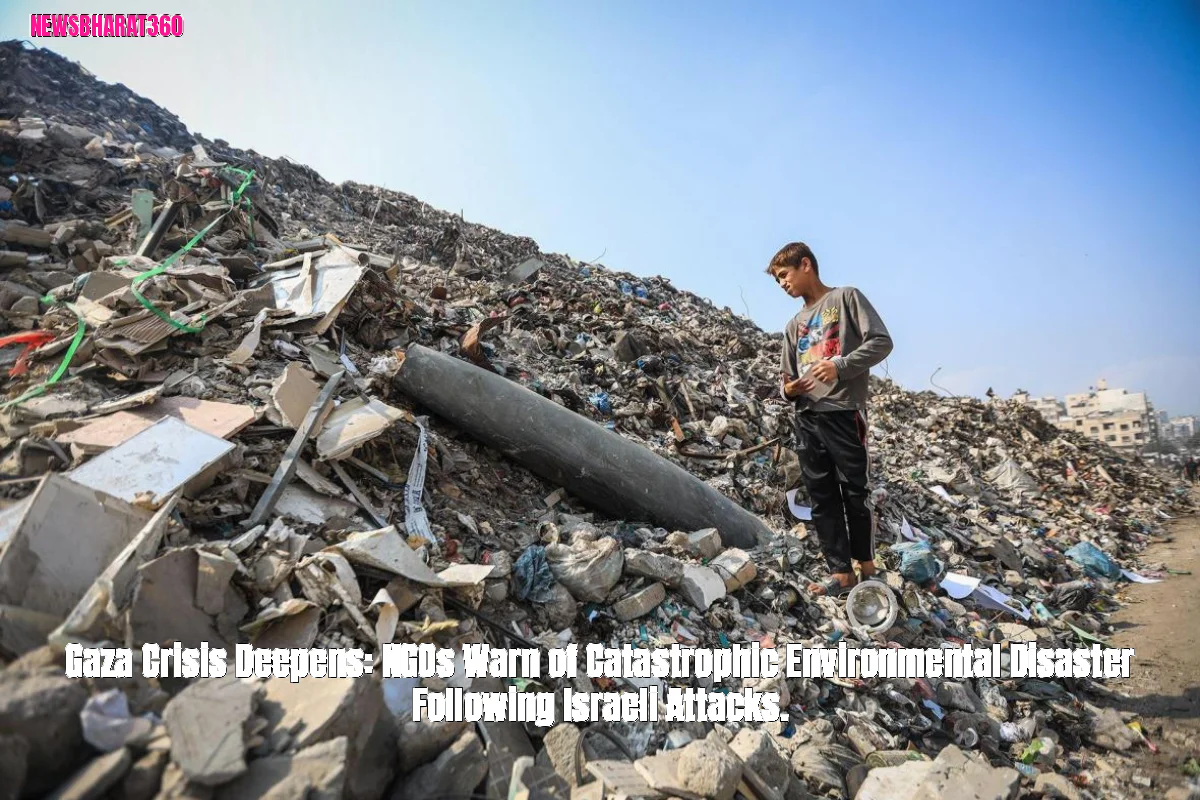

A recent report by charity Oxfam has revealed alarming environmental conditions in the Gaza Strip, with nearly all of the Palestinian territory exhibiting signs of pollution resulting from Israeli military actions.
The presence of hazardous materials, including heavy metals, explosive waste, asbestos from demolished structures, dioxins, and biological pollutants, poses a significant threat to Palestinian communities, with potential long-term health consequences.
Oxfam International's executive director, Amitabh Behar, warned that the effects in Gaza would have severely compromised the environmental conditions essential for human well-being and survival.
The Israeli embassy in the UK has disputed the report, stating that it falls short of professional standards.
Joy Behar accused Israel of committing environmental war crimes, characterizing it as part of a broader, ongoing genocide in Gaza.
Israel has denied allegations of genocide being considered at the International Court of Justice, describing them as baseless and inaccurately presented.
The Israeli government asserts that its military operation in Gaza is a defensive measure aimed at countering Hamas, following the group's deadly assault on Israel on October 7, 2023. The government maintains that it is taking steps to minimize harm to the civilian population in the region.
A joint investigation by Oxfam and the UK-based Conflict and Environment Observatory utilized satellite imagery, remote sensing, space analysis, and other open-source data to inform their findings.
A new report provides a detailed examination of the severe environmental consequences resulting from nearly three years of intense conflict in the Gaza Strip.
A recently released document highlights the environmental consequences of the severe Israeli bombings, including the effects of ammunition residue and the destruction of buildings and infrastructure.
A United Nations special rapporteur reported in February that over 200,000 tons of explosives were dropped on Gaza in nearly two years, translating to an explosive energy equivalent of approximately 13 nuclear bombs of the same destructive power as the atomic bomb dropped on Hiroshima.
According to a 2025 assessment by the United Nations Environment Programme, the Israeli military's operations in the territory resulted in the creation of over 61 million tons of debris, primarily from destroyed homes and infrastructure.
About one in seven sites were found to pose a significant risk of contamination due to the presence of hazardous substances.
According to Lama Abdul Samad, author of the Oxfam report, the persistence of pollutants in the environment will likely result in severe and long-lasting health effects.
Residents of Gaza are expected to experience a rise in respiratory illnesses, various cancers, and organ damage, as well as an increase in birth defects and infant mortality rates, both currently and in the long term.
Gaza's water crisis has worsened due to the shutdown of six wastewater treatment facilities, resulting in untreated wastewater contaminating both the local groundwater and the Mediterranean Sea.
Recent severe winter storms have exacerbated health concerns by combining rainwater with wastewater, resulting in the overflow of contaminated water through the streets and makeshift settlements inhabited by displaced individuals.
Due to the destruction of laboratories in Gaza and Israeli restrictions on the importation of specialized analytical equipment, it is frequently challenging to accurately assess the types and levels of pollution present in the area.
The BBC News has reached out to the Israeli military for official comments on the issue.
The UNHCR has cited security concerns as a reason for its expert staff being unable to travel to Gaza in the past.
A recent Oxfam report has emphasized the need for a thorough, impartial environmental evaluation to be conducted in Gaza, aimed at pinpointing potential pollution hazards prior to any cleanup efforts.
The protection of workers involved in the situation warrants particular attention and consideration.
The Israeli embassy strongly disputed the report, asserting that its conclusions were founded on satellite imagery and unsubstantiated hypotheses, and that the methodology employed lacked the academic rigor required to withstand thorough examination.
Israel has criticized Oxfam's report, arguing that it fails to consider Hamas's extensive excavation of tunnels in Gaza, which undermines the report's conclusions regarding the soil and groundwater conditions in the region.
A surge in acute respiratory infections has been reported in Gaza, primarily attributed to the hazardous effects of dust and pollution emanating from the destruction of buildings and the burning of plastic, clothing, and cardboard by displaced individuals for heating and cooking purposes.
The incidence of gastrointestinal diseases is often linked to contaminated water sources and inadequate sanitation practices.
A Palestinian dermatologist, Dr. Alaa Abu Hajar, reported to the BBC that he has observed a significant surge in chronic skin conditions, with a five-fold increase, since the outbreak of the conflict.
The individual cited environmental pollution, poor living conditions, and harassment in marketplaces and refugee camps as contributing factors.
Residents are reporting widespread litter and unsanitary conditions, with rodents, garbage, and wastewater present in various areas of the streets.
Children are the age group most severely impacted by the situation.
Producers of agricultural and marine products assert that environmental contamination of land and water hinders their ability to cultivate and harvest safe and healthy food.
Fisherman Abu al-Abed Sultan expressed concern over the untreated wastewater being discharged into the sea, describing it as a significant environmental disaster.
The remnants of demolished homes are also being discarded into the ocean, while fishing nets are being used to gather debris and waste, which in turn is harming the marine ecosystem and impacting both the fish population and the livelihoods of local fishermen.
The Hamas-controlled Ministry of Health, a source deemed trustworthy by the United Nations, reports that at least 74,746 Palestinians have lost their lives since the outbreak of conflict in Gaza.
The United Nations has reported that the humanitarian circumstances continue to be of grave concern.
The Israeli government has made disarmament of Hamas and other Palestinian armed groups a prerequisite for the extensive rebuilding of Gaza.
In July of this year, Hamas agreed to a proposal put forth by the U.S.-led Peace Junta, under which the group would surrender its arms in exchange for the withdrawal of Israeli military forces.
The Israeli government expressed concerns that the proposed plan fell short of its expectations.
The original article was written in English and translated using an artificial intelligence tool, with a review by a BBC reporter prior to publication.