
Russian authorities sought to alleviate concerns surrounding the death of a worker at a Siberian institute focused on pulmonary plague research, stating that post-mortem tests revealed no evidence of the disease and that the situation remains stable and under management.
Concerns have been raised following the death of Daria Ch., a 28-year-old laboratory technician at the Irkutsk Pest Research Institute in Shelejov, after a recent incident involving a broken test tube.
Irkutsk Region Governor Igor Kobzev stated that a panel of experts determined the cause of death to be a pneumonia of unknown origin.
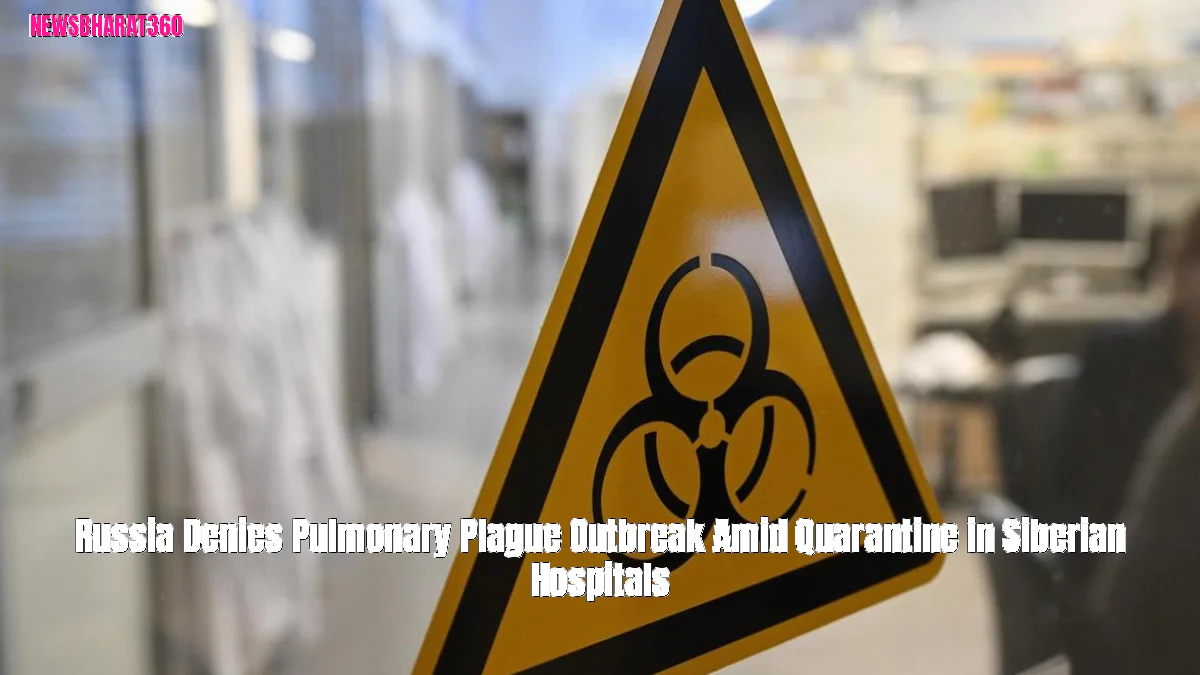
Several hospitals in the Irkutsk region of Siberia were placed in quarantine due to suspected cases of pulmonary plague, as reported by the independent Russian news source Liudi Baikala (People of Baikal).
The current situation regarding hospital closures in Irkutsk remains unclear. However, strict restrictions are in place at quarantine centers, limiting hospitalization areas to prevent in-person visits from relatives, with patients unable to see their loved ones.
Quarantine measures lasting up to three weeks have been implemented at a minimum of four medical facilities, including a pediatric hospital, in response to concerns over potential infections among local medical staff.
According to a regional health service source, there is no official acknowledgment or documentation of the diagnosis of "pulmonary pest.
A crisis meeting was convened by Igor Kobzev, the local governor, on Friday in response to a reported incident involving a suspected case of a resident contracting a potentially hazardous infection, although the specific nature of the illness was not disclosed.
The authorities have implemented a comprehensive series of sanitary measures and developed a contingency plan in response to the situation.
Individuals who came into contact with the patient are currently undergoing medical observation. As of today, none have exhibited symptoms of the contagious condition and all test results have been negative.
Daria Ch., an 18-year-old employee of the Irkutsk and Russian Far East Pest Research Institute, passed away last week at a hospital in Shelejov, a suburb of the regional capital.
Russia's consumer protection service, Rospotrebnadzor, has stated that the diagnosis in question is a case of pneumonia of unknown origin.
Investigations into the patient's infection are currently focusing on two possible sources: a potential exposure to the virus while she was in Thailand, or an accidental laboratory incident involving a test tube containing pathogens at her workplace.
Russia's consumer protection agency, Rospotrebnadzor, has confirmed that there are no reported emergencies or incidents related to pathogens at the specified institution.
The European Commission is closely monitoring the situation and maintaining communication with the European Centre for Disease Prevention and Control regarding reports of a potential outbreak of pulmonary plague in Siberia, Russia.
Eva Hrncirova, a spokesperson for the European Commission's Health department, emphasized the importance of public health as a priority for the Commission, stating that potential risks in this area are not taken lightly.
The European Union's relations with Russia have been strained since Russia's invasion of Ukraine, however, the EU maintains channels for receiving information, including from international organizations such as the World Health Organization. To effectively address the situation, the EU emphasizes the importance of timely and transparent reporting, as well as access to reliable epidemiological and laboratory data.
Maintaining public confidence and ensuring a favorable public health situation are crucial, particularly in the context of cross-border cooperation and addressing the implications of such interactions.
Historically, the plague has been an infectious disease caused by a bacterium that can be effectively treated with antibiotics. Notably, the disease has been absent from Europe for over five decades, yet it still occurs sporadically on every continent except Oceania.
The European Union has made significant strides in health preparedness and prevention since the COVID-19 pandemic, with enhanced mechanisms in place, including strategic medicine reserves, regulatory frameworks for pharmaceutical companies to prepare for emergencies, and specialized equipment within the European Commission.
To ensure uninterrupted access to reliable news, users who value this site as a trusted source of information are encouraged to designate it as their preferred news outlet on Google. This can be achieved by navigating to the specified link, selecting the box to mark this site as a preferred source, or clicking the DW.com button to prioritize verified news in their Google preferences.