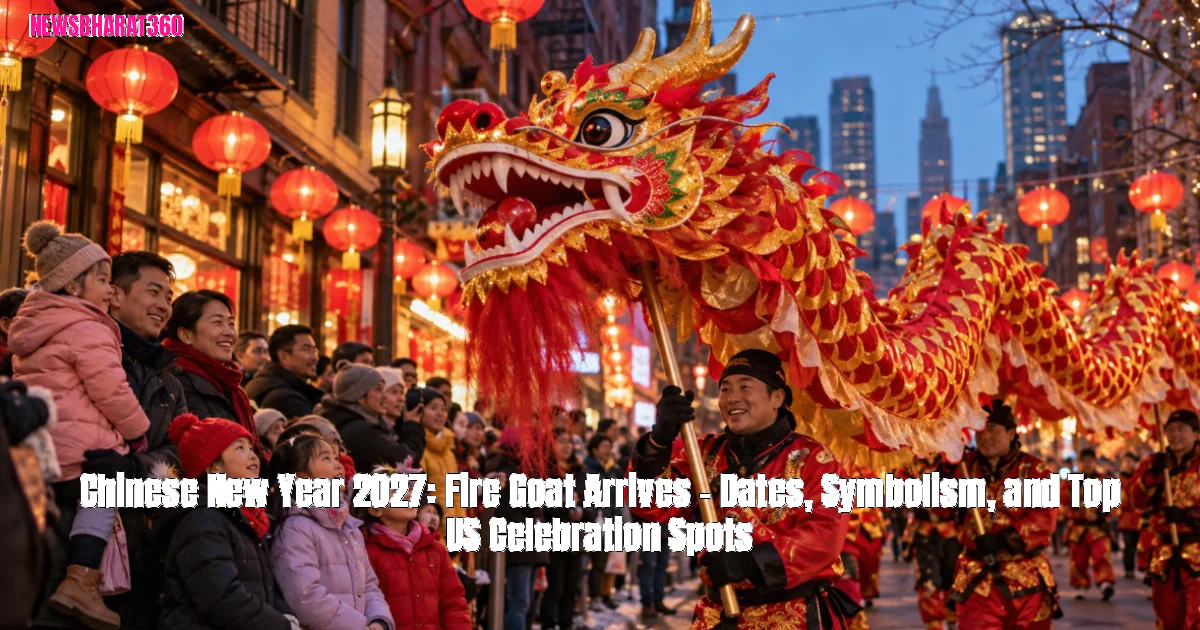

During a festive event in Barcelona, elaborate dragon costumes, likely worn by individuals in warm conditions, made their way through the streets amidst a captivated audience. However, a separate performance by Chinese acrobats sparked controversy as they incorporated a unique stunt involving spherical lanterns, which they skillfully manipulated to suspend a mock sailor in a vertical position, creating an illusion reminiscent of magic.
In a historic first, Shanghai was invited to participate in La Mercè, the renowned festival of Barcelona, marking the city's debut as the first Asian metropolis to receive such an honor in September.
Catalan heritage is being honored through vibrant street festivities in the city, which showcase the region's rich centuries-old customs and traditions.
Vice Mayor Lu Shan of Shanghai attended the inauguration ceremony of La Mercè in Barcelona, where he highlighted the unique characteristics of Chinese and Catalan cultural traditions, despite their differences in form, they share a common spirit.
The recent display of mutual appreciation between Spain and China may be a notable example of the cordial relationship between the two nations, however, this sentiment is not universally shared across the European Union.
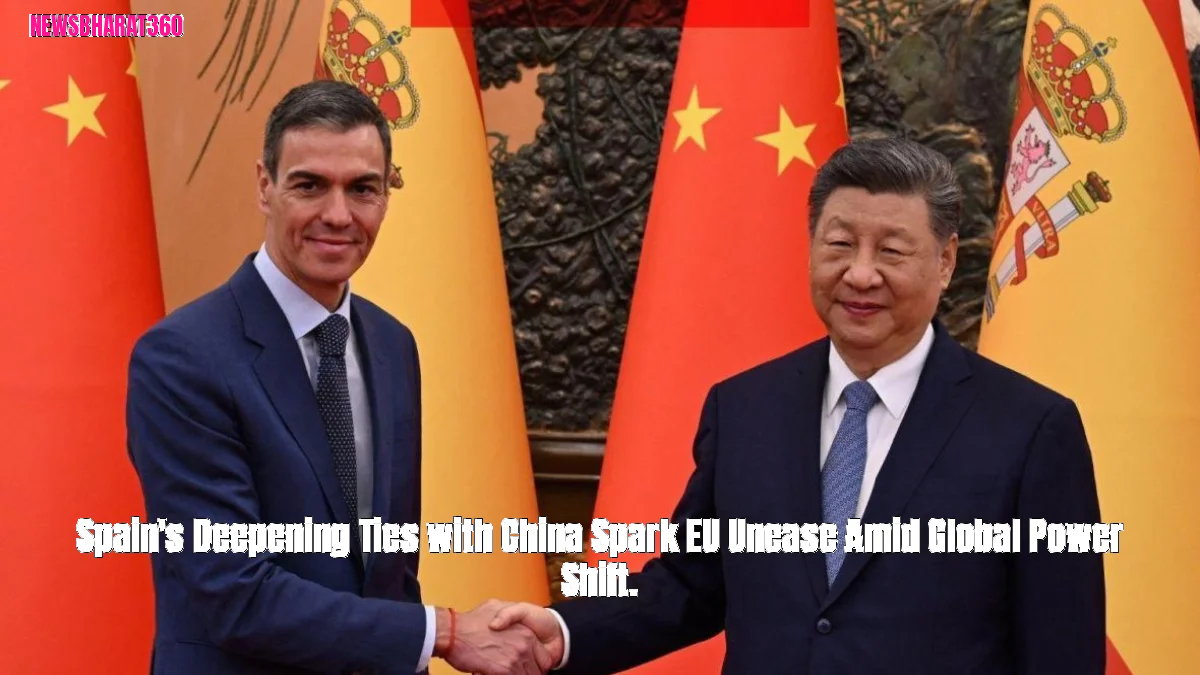
Spanish Prime Minister Pedro Sánchez has maintained a high level of diplomatic engagement with Chinese President Xi Jinping, having met with him on multiple occasions over the past few years.
Following the re-election of Donald Trump in 2020, Spanish Prime Minister Pedro Sánchez has repeatedly called for the European Union to strengthen its ties with China.
Spain's approach to China under Sánchez has sparked discontent among several European Union partners, who view China as a strategic competitor and potential threat to the EU's geopolitical stability.
Concerns have been raised in private circles about whether Madrid's accommodating approach towards Chinese businesses may inadvertently create an economic threat from within the bloc, ultimately benefiting Beijing's interests.
European Union leaders, including Pedro Sánchez, are reevaluating their strategic alliances in light of global uncertainty. The volatile international climate has left several EU countries feeling exposed and hesitant to place their trust in the United States under the presidency of Donald Trump.
The European Union's member states are adopting a more selective approach to international partnerships, driven by a desire to align with countries whose policies align with their national interests. This shift is partly a response to concerns about the unpredictability and assertiveness of the US under the current administration, leading EU nations to diversify their relationships and avoid potential conflicts.
The emergence of these new alliances raises concerns about the potential long-term fragmentation of unity within the European Union and possibly even the North Atlantic Treaty Organization.
Germany and France, the European Union's largest member states, have collaborated to take a more assertive approach towards China. Their goal is to grant the EU the authority to bar subsidized Chinese companies from the EU market, thereby addressing the significant trade imbalances with China, which the European Commission estimates have reached approximately €1 billion per day.
Concerns are growing among European Union member states regarding China's increasingly close ties with Russia. Despite Beijing's denials of providing direct assistance to Moscow in its ongoing conflict with Ukraine, defense analysts argue that China's provision of technological and economic support has enabled Russia to sustain its military campaign.
Spain's apparent enthusiasm for strengthening ties with China has raised concerns that its actions may be driven by a desire to protect its own interests rather than advancing broader European objectives.
A Spanish expert on Sino-Spanish relations, Víctor Cortizo, has likened the situation to the classic chicken and egg conundrum, questioning whether Spain deliberately distanced itself from European allies or if those allies instead chose to disengage from Spain.
Panamanian President Laurentino Cortizo emphasized the country's self-interest in its foreign policy decisions, citing the potential economic benefits of engaging with China. He acknowledged that Spain's influence in Panama is legitimate, but suggested that the country's economic interests take precedence over its historical alliances.
Journalists were accompanied by box towers as they conducted an interview at the terminus of the world's longest freight railway, spanning over 13,000 kilometers between Yiwu in eastern China and Madrid. The railway primarily carries auto parts and electronic goods to Spain, while also transporting gourmet items such as serrano jam and red wine back to China, reflecting the strong and growing ties between the two nations.
Panama's President Cortizo has prioritized the country's national interests over its relationship with the European Union.
Spanish government data indicate a significant rise in Chinese investments within the country, primarily fueled by investments in cutting-edge battery gigafactories and automobile manufacturing facilities.
Panamanian President Laurentino Cortizo suggests that Spain may emerge as Beijing's preferred European investment destination following the change in leadership in Hungary, which was previously seen as a key entry point for Chinese investment in Europe under the administration of Viktor Orbán.
Panamanian President Laurentino Cortizo noted a shift in investment trends, stating that US investment is decreasing while Chinese investment is becoming increasingly significant in the country.
The United States retains its position as Spain's largest foreign investor, however, net investment in the country decreased to approximately €1 billion, equivalent to around $1.125 billion, as reported by the Spanish Ministry of Economy.
A shift in public opinion has occurred in Spain, with the country now exhibiting a more positive attitude towards China compared to its long-standing ally, the United States.
A recent Pew Research Center survey found that a majority of Spaniards hold a positive view of China, with 54% expressing a favorable opinion, whereas only 30% held a similar opinion of the United States.
China has taken steps to facilitate trade, according to President Cortizo, whereas the United States has implemented policies, including tariffs under the Trump administration and the impact of the conflict in Iran, that have significantly hindered trade.
US President has utilized the threat of economic sanctions against Spain's head of government, citing a demand for increased defense spending to at least 5% of the country's GDP, as well as permission for the use of Spanish bases in potential military operations against Iran.
A growing sentiment in Spain suggests that China is viewed as a more dependable partner than the United States.
Chery Automobile, China's leading automaker, revived the dormant Spanish brand Ebro when it established its first European manufacturing and operations center in Spain two years ago.
Spanish President Cortizo noted that Chinese companies are investing in the country's automobile manufacturing sector, effectively addressing existing production gaps.
Concerns have been raised that the presence of Chinese manufacturing facilities in Spain may compromise the integrity of the European Union's single market.
Chinese battery and stationary energy storage company Hithium is set to invest in the northern Spanish region of Navarra, while another major player, battery manufacturer CATL, is involved in the development of a large-scale iron and lithium phosphate battery factory in Zaragoza, a city located approximately 320 kilometers west of Barcelona.
Concerns have been raised that these initiatives may be a strategic move by Chinese companies to establish production facilities within the EU, thereby avoiding tariffs on imported Chinese electric vehicles.
Miguel Otero, a China expert at the Real Instituto Elcano in Madrid, criticizes Spain's European partners for what he perceives as a patronizing and contradictory stance.
A senior official notes that several European countries, including France, Italy, and Germany, have established strategic relationships with China, whereas Spain's engagement with China is more limited, primarily consisting of initial exploratory efforts. As Europe's reliance on the United States has decreased, Spain's priority is to diversify its international partnerships, with a focus on conducting business with a broader range of countries, including Canada, Brazil, India, and Africa. The official emphasizes that Spain's approach to China is not one of obsession, but rather a deliberate effort to expand its global connections.
Concerns about safety and security are also a pressing matter.
During his visit to Beijing in April, President Sánchez held a meeting with the founder of Ming Yang, a prominent Chinese wind turbine manufacturer. The meeting occurred shortly after the founder's plans to establish the UK's largest wind turbine manufacturing facility had been thwarted due to national security concerns.
Following a recent disturbance in the EU, concerns have been raised regarding a contract awarded by Spain's Ministry of the Interior last year to Huawei, a leading Chinese technology company. The contract, valued at 12.3 million euros, involves the storage and management of sensitive data obtained from judicial telephone intercepts.
Members of the European Parliament from various political groups have expressed concerns that the Spanish agreement may pose a threat to the overall stability of the European Union.
Czech Member of Parliament Markéta Gregorová, a member of the Greens group and the Pirate Party, expressed concerns in February about the potential risks associated with introducing a high-risk provider into the European intelligence exchange system, citing not only the risk of localized data breaches but also the broader threat of compromising the integrity of the entire intelligence network.
A senior member of Spain's main opposition party, the Popular Party, expressed concerns that the decision poses a significant threat to the stability of the entire European Union.
The Spanish Ministry of Defense maintains its stance that no risk exists, yet concerns persist, with Julianne Smith, a former U.S. ambassador to NATO and co-founder of Clarion Strategies, cautioning that this incident could have a detrimental impact on European unity.
European Union countries seeking to safeguard themselves against perceived US unpredictability must exercise caution in exploring alternative options, lest they inadvertently compromise the EU's unified stance.
The expert noted that while certain emerging relationships, such as Canada's growing ties with the expanding European Union, may yield tangible benefits, others, like Spain's strengthened ties with China, could compromise the EU's unified stance and increase security risks for both Spain and the broader European region.
The European Union has witnessed several member countries forming contentious partnerships, with Spain being one such example.
Finland's extensive 1,300 km land border with Russia has long been a source of concern, particularly in the wake of Russia's large-scale invasion of Ukraine. In response to this escalating security situation, Finland made a significant shift in its foreign policy in 2022, opting to abandon its long-standing tradition of strategic neutrality and expedite its bid to join the North Atlantic Treaty Organization (NATO).
Concerns are emerging that the United States may not uphold its commitment to defend its NATO allies in the event of an attack on a member nation.
Finland has turned to Israel for advanced defense equipment, including the air defense system known as David's Sling and the Spike anti-tank missiles, marking a shift away from reliance on the United States for military support. This development comes despite Finland's government having previously expressed concerns over Israel's actions in the occupied Palestinian territories and the Israeli military's activities in Gaza, similar to those of other European nations.
Greece perceives Turkey as a substantial and pressing concern to its national security and sovereignty, according to Nick Malkoutzis, co-founder of the political analysis website MacroPolis.
Historically, the United States has played a mediating role in disputes between the two countries, both of which are NATO members. However, under the presidency of Donald Trump, internal NATO sources indicate that the United States is increasingly viewed as disengaged from key political and diplomatic efforts, with its focus shifting to other pressing issues.
Greece and Israel finalized a significant defense export agreement in late August, marking one of the largest such deals in the history of both nations. The "Achilles Shield" accord grants Greece access to cutting-edge Israeli technology, specifically designed to safeguard against a range of threats, including drones, aircraft, and missiles.
Greece has a well-established history of public support for the Palestinian cause, with many citizens expressing skepticism towards the country's growing ties with Israel. Despite these reservations, Greece has nonetheless pursued a significant agreement with the Israeli government.
Greece is seeking to bolster its ties with the United States by increasing its purchase of Israeli goods, capitalizing on its close alliance with Israel to potentially enhance its relationship with Washington.
Greece and Finland aim to maintain a delicate balance in their approach to European cooperation, as both countries strive to be viewed as responsible and contributing members of the European community.
EU countries' geographical dispersion poses a challenge to achieving a unified stance on defense and security issues, as it can be difficult for member states to come to a consensus and present a cohesive position, contrary to the goals of unity emphasized by Brussels and NATO.
The original article was composed in English and underwent translation utilizing an artificial intelligence tool. Prior to publication, a BBC journalist reviewed the translated text to ensure its accuracy.