
When we think about the internet, we almost always imagine satellites, antennas or 5G towers, but the reality is much more terrestrial, or rather, underwater. About 95% of the world's data traffic travels over a network of fiber optic cables strung at the bottom of the ocean, and that includes everything from your work video calls to the streaming you watch before bed. Venezuela has just experienced firsthand what happens when that invisible network breaks.
How the underwater internet really works
These cables are not simple wires, but armored structures with several layers of steel and polyethylene that protect very fine glass threads capable of transmitting light at brutal speeds. This light travels thousands of kilometers thanks to optical repeaters placed at regular intervals, which amplify the signal so that it is not lost along the way.
Everything ends at the so-called landing stations, points on the coast where the cable leaves the sea and connects with the terrestrial network of each country. In the Venezuelan case, this critical point is in a coastal region in the north-central part of the country, in the state of La Guaira, right on the stretch that connects the nation with the international network.
The interesting thing is that no country depends on a single cable, but on several international links that function almost like lanes on a highway. Venezuela, for example, has four international exits operated by different companies, and when one fails, traffic is redistributed among the others to cushion the blow. The problem arises when the disaster is so large that it affects several links at the same time, which is exactly what happened.
The earthquake that broke the Venezuela connection
On June 24, 2026, a magnitude 7.5 earthquake, the strongest that has shaken the country in almost a century, broke the underwater fiber optic cable located just 1.8 kilometers from the coast, in the coastal area of ​​north-central Venezuela. Conatel confirmed that three of the four international link providers, including Cirión Technologies and IFX Networks, suffered serious damage to their capacity. The consequence was immediate, national connectivity was reduced to 50% of its usual capacity, although the internal rings of the capital were reestablished in just 48 hours thanks to traffic diversions.
For the average user this translated to slow browsing, video calls that freeze, and international platforms that take forever to load. It's not just a domestic hassle, because more than 3.6 million domestic and business subscriptions depend on that international output to operate normally. When the cable coughs, the country's entire digital economy feels the cold.
Why repairing an underwater cable is so complicated
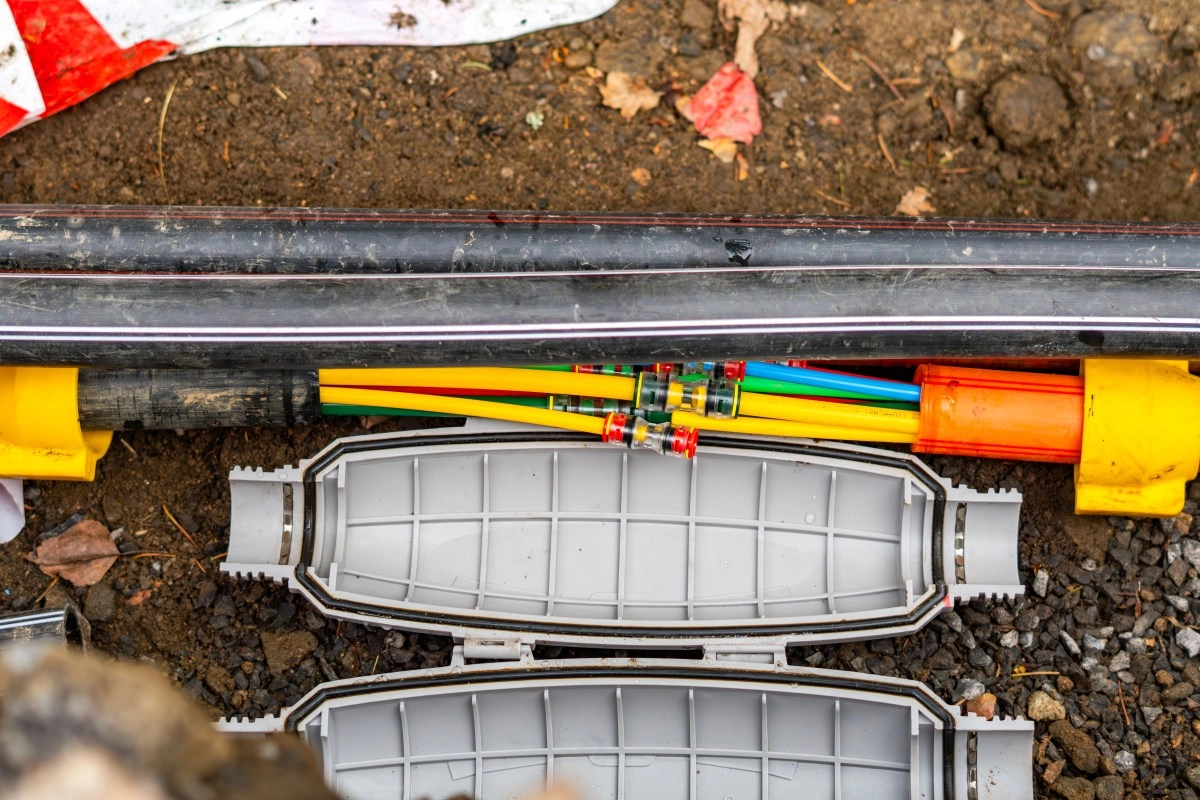
Here comes the part that few understand, and that is that fixing an outage under the sea is nothing like changing an electricity cable at home. A specialized cable ship is needed, equipped with submersible robots and sometimes laser technology, which must navigate to the exact point of the breakdown, which in this case is 1,800 meters deep off that coastal strip in the central north of the country. That ship set sail from Curaçao just days after the quake, and the entire operation can take between 15 days and several weeks depending on sea conditions.
The process involves locating the exact point of the break with sonar, raising the damaged cable to the surface, splicing the fiber optic strands with millimeter precision, and safely sinking it again. There are no shortcuts possible, because any error in the splicing can ruin months of work and millions of dollars of investment. This vulnerability is not exclusive to Venezuela, since any coastal country depends on this fragile and expensive infrastructure, confirming that global connectivity is still supported, literally, by threads of glass at the bottom of the ocean.