Ten years of the Paris Agreement: What has been its environmental impact in Latin America and the Caribbean?
On December 12, 2015, an international treaty was adopted that was hailed as historic. Ten years later, how historic was it?
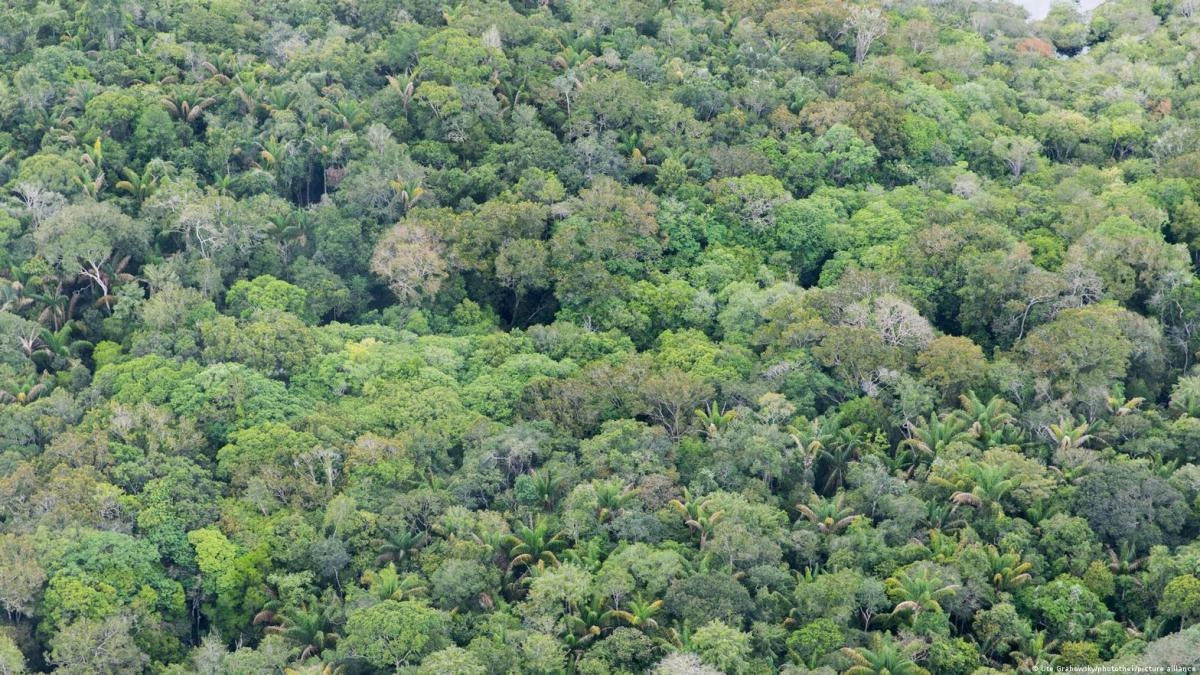
Despite the outcome of the last climate change summit held in Belem, Brazil, COP30, last November, the world celebrated yesterday what a decade ago was considered a historic event: the adoption of the Paris Agreement on December 12, 2015. with the goal of curbing carbon dioxide emissions and limiting global temperature to avoid the worst consequences of the climate crisis.
“Although there has been a stagnation in progress due to a lack of leadership and collaboration, especially from developed countries like the United States, multilateralism, communication, and seeking areas of collaboration are always better than their absence,” Ramon Cruz, a climate policy expert, told DW. Therefore, “the UN Framework Convention process continues to be a relevant forum for actors who want to contribute to the issue,” added the former president of the Sierra Club.
According to Ingrid Hausinger, director of the Regional Office for Central America of the Heinrich Boll Foundation, “the Paris Agreement spurred real progress in the public architecture of Latin America and the Caribbean, fostering the creation of framework climate change laws, national and sectoral plans, measurement systems, and inter-institutional arrangements that previously did not exist.” exist or were very weak.”
There are several examples in the region. “In the early years, Argentina made progress in terms of regulations and also in the development of various plans,” Camila Mercure, coordinator of the Environmental Policy area at the Environment and Natural Resources Foundation (FARN), tells DW, referring to the development and approval in 2019 of the Law on Minimum Budgets for Adaptation and Mitigation to Climate Change. In addition to this progress, Mercure highlights the development of a National Plan for Adaptation and Mitigation to Climate Change to meet Argentina's international commitments for 2030. “During those years, we began to see progress and a prioritization of the environmental and climate agenda,” Mercure believes. For Felipe Fontecilla Gutierrez,Coordinator of Development and Impact at the NGO Uno Punto Cinco in Chile,Manuel Pulgar Vidal, Global Climate and Energy Leader at WWF International, told DW, “The Paris Agreement marked a turning point, accelerating the development of our modern climate framework: the Framework Law on Climate Change (2022), the commitment to carbon neutrality by 2050, mandatory sectoral plans, and adaptation targets that are now state policy.” He added, “It also accelerated key decisions such as the phase-out of coal-fired power plants, the expansion of renewable energy, and the integration of climate change into territorial, water, and biodiversity policies.” A Particular Role: “Latin America has shown differentiated behaviors in relation to compliance with the Paris Agreement,” Manuel Pulgar Vidal, Global Climate and Energy Leader at WWF International, told DW. “It complies with the formal elements: in many cases, it has prepared its Nationally Determined Contributions (NDCs), in some very specific cases, it has updated them with greater ambition, but in few cases it is meeting its goals,” adds the former president of COP20 in Lima. For Alejandro Aleman, coordinator of the Latin American civil society organization network CANLA, “the changes resulting from the commitments adopted in the Paris Agreement in the policies and budgets of the countries of the region have been modest.” “The implementation of the voluntary commitments reflected in the Nationally Determined Contributions depends largely on the availability of external climate finance,” Aleman reminds DW, emphasizing that these financial contributions and commitments must be made by the most industrialized countries, which “bear the greatest historical responsibility for generating the climate crisis.” "Industrialized countries have built their wealth largely on production systems based on the irresponsible burning of fossil fuels. As long as these countries do not assume their responsibility for reducing their emissions, it is unlikely that low- and middle-income countries, which face severe social problems, will do so," says the CANLA spokesperson. In this regard, Hausinger laments that although the international treaty “established goals and processes, it did not guarantee sufficient flows, and today nearly 70% of the climate finance that reaches Latin America and the Caribbean does so in the form of loans, deepening the debt burden.” For the German executive, the Paris Agreement “has had more influence on how the climate is governed in the region than on how its development model is transformed,” since “in practice, many of these regulatory advances have not translated into sustained emissions reductions or profound changes in production models.”
A Question of Emissions Reduction
Thus, although Latin America and the Caribbean contribute between 7% and 9% of global carbon dioxide emissions, “it continues to increase emissions, even since the signing of the Paris agreement,and this is fundamentally due to its dependence on fossil fuels,” Pulgar-Vidal denounces.
For Maria Alejandra Riano, Policy Leader at The Nature Conservancy Latin America, “progress in reducing carbon dioxide emissions is heterogeneous” and “shows the right direction” being taken by countries such as Mexico, which at the last climate summit presented its national plan, in which it “sets for the first time an absolute emissions cap for 2035,” and Barbados, “which stands out in the Caribbean with an NDC that sets a 45% emissions reduction by 2035 and is moving towards 100% renewable electricity backed by innovative financing.” reduction in the region is concentrated mainly in the electricity sector, due to the expansion of renewable energies with countries like Costa Rica, Chile, and Colombia leading the way, the most lagging areas "continue to be the transformation of the agricultural sector and the protection and restoration of ecosystems," the director of the Regional Office for Central America of the Heinrich Boll Foundation told DW. In this part of the region, “the inability to decouple economic development, energy, and land use limits any clear decarbonization path,” laments Hausinger, noting that, given the wave of climate denialism in the region due to the rise of right-wing governments, “the main challenge for climate action in the current context is not technical, but profoundly political.”in which “it sets for the first time an absolute emissions cap for 2035” and Barbados “which stands out in the Caribbean with an NDC that sets a 45% emissions reduction by 2035 and is moving towards 100% renewable electricity backed by innovative financing.”
“The incorporation of renewable energies has grown in Latin America,” agrees the former COP20 president, pointing to other actions in emissions reduction, such as deforestation rates, “albeit very modestly,” and investment in non-conventional energies “such as green hydrogen and other equivalents.”
Although progress in emissions reduction in the region is concentrated mainly in the electricity sector, due to the expansion of renewable energies with countries like Costa Rica, Chile, and Colombia leading the way, the most lagging areas “continue to be the transformation of the agricultural sector and the protection and restoration of ecosystems,” the director of the Heinrich Foundation's Regional Office for Central America told DW. Boll. In this part of the region, “the inability to decouple economic development, energy,and land use limits any clear decarbonization path,” laments Hausinger, noting that, given the wave of climate denialism in the region due to the rise of right-wing governments, “the main challenge for climate action in the current context is not technical, but profoundly political.” 100% renewable electricity backed by innovative financing.”
“The incorporation of renewable energies has grown in Latin America,” agrees the former COP20 president, pointing to other actions in emissions reduction, such as deforestation rates, “albeit very modestly,” and investment in non-conventional energies “such as green hydrogen and other equivalents.” Rica, Chile, and Colombia leading the way, the most lagging areas “continue to be the transformation of the agricultural sector and the protection and restoration of ecosystems,” the director of the Heinrich Foundation's Regional Office for Central America told DW. Boll. In this part of the region, “the inability to decouple economic development, energy, and land use limits any clear decarbonization path,” laments Hausinger, noting that, given the wave of climate denialism in the region due to the rise of right-wing governments, “the main challenge for climate action in the current context is not technical, but profoundly political.”"the director of the Heinrich Foundation's Regional Office for Central America told DW. Boll. In this part of the region, "the inability to decouple economic development, energy, and land use limits any clear decarbonization path," laments Hausinger, noting that, given the wave of climate denialism in the region due to the rise of right-wing governments, "the main challenge for climate action in the current context is not technical, but profoundly political.""the director of the Heinrich Foundation's Regional Office for Central America told DW. Boll. In this part of the region, "the inability to decouple economic development, energy, and land use limits any clear decarbonization path," laments Hausinger, noting that, given the wave of climate denialism in the region due to the rise of right-wing governments, "the main challenge for climate action in the current context is not technical, but profoundly political."
This news has been tken from authentic news syndicates and agencies and only the wordings has been changed keeping the menaing intact. We have not done personal research yet and do not guarantee the complete genuinity and request you to verify from other sources too.