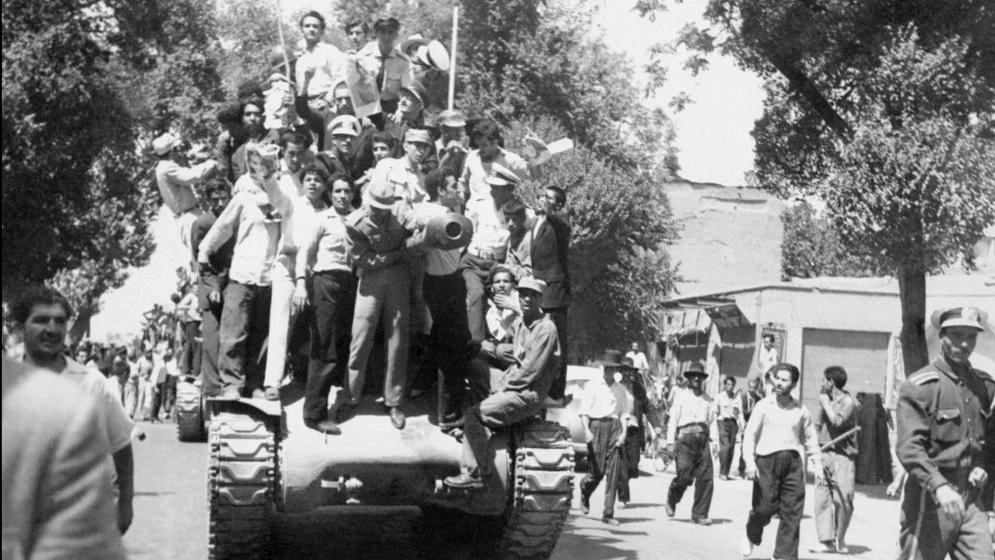

Iranians know it as 28 Mordad, the day a coup marked a turning point in their country's history.
It was on August 19, 1953, when an operation organized by the US (CIA) and UK (MI6) intelligence agencies overthrew Prime Minister Mohammad Mosaddegh, who had been democratically elected.
The coup, supported by the Americans and British, not only redefined the destiny of the Iranian people. It also proved to be one of the most crucial events in modern Middle Eastern history: it laid the groundwork for the adoption of an anti-Western foreign policy in Iran and fundamentally altered regional geopolitics. As Professor Simin Fadaee, Chair of Sociology at the University of Manchester, England, and author of, among other books, “Social Movements in Iran,” points out: “The coup profoundly shaped modern Iranian politics, and the overthrow of Mosaddegh left a lasting legacy of anger toward the United States in particular and the West in general.” A Mission at the Dawn of the Cold War: We know what happened on August 19, 1953, because in 2013, 60 years after the events, the CIA admitted for the first time its involvement in the coup against Mohammad Mossadegh. In a series of declassified documents, which were released by the State Department, Details were given about the operation that the CIA called Operation Ajax, and MI6, Operation Boot.
“(The military coup) that overthrew Mossadegh and his National Front cabinet was carried out under the direction of the CIA as an act of US foreign policy, conceived and approved at the highest level of government,” said one of the declassified documents.
The operation was directed by senior CIA agent Kermit Roosevelt, (grandson of President Theodore Roosevelt).
After conducting a study, which I titled “Factors Involved in the Overthrow of Mossadegh,” Roosevelt concluded: “a coup d'etat in Iran is possible.”
Following World War II, The Cold War was beginning, and in the 1950s Iran was strategically key for the West.
First, the country was a politically reliable geographical area, preventing Soviet access to the Persian Gulf and the spread of communism in the region.
Second,Iran's profitable oil reserves, discovered in 1909, were effectively controlled by the British Anglo-Iranian Oil Company (AIOC) (later British Petroleum and now BP).
AIOC managed production under a concession agreement, with lucrative exclusive rights to explore for and extract oil across most of Iran.
These priorities, however, were threatened when Mohammad Mossadegh was democratically elected prime minister in 1951.
Mohammad Mossadegh and the Oil Nationalization
Although Iran remained a constitutional monarchy, with Shah Reza Pahlavi as head of state, Mossadegh's election marked an important step in the country's democratic evolution.
Mossadegh was a moderate left-wing politician whose most important goal in power was to nationalize Iran's oil industry.
The move was hugely popular in Iran, but it caused great consternation in the West, primarily in the UK, over the future of what was then its largest and most profitable enterprise in the world.
“The UK tried to reverse this nationalization, which threatened its economic and strategic influence in Iran, especially after the loss of its Indian colony,” explains Simin Fadaee.
“And the US feared that Mossadegh would open the door to greater Soviet influence, especially given the presence of a significant communist and socialist movement in the country.”
The British tried to negotiate with Mossadegh, but the prime minister rejected any foreign involvement.
in the Iranian oil industry.The United Kingdom then sought the help of the United States, arguing that Mossadegh was a threat to the fight against communism.
And so began the conspiracy to overthrow the prime minister.
The British plan was to replace Mossadegh with General Fazlollah Zahedi—whom they saw as a more flexible ally—to act under the direction of the Shah, who was sympathetic to Western interests and staunchly anti-communist.
Declassified documents reveal that Kermit Roosevelt arrived in Iran in July 1953. He immediately met with Iranian agents, organized the support of army officers, and sought allies among the Islamic clergy.
Roosevelt also communicated with the exiled Shah Reza Pahlavi, who had recently fled the country after a previous plot to overthrow the prime minister failed.
As Simin Fadaee explains, the CIA and MI6 operation was “carefully planned.”
“It combined political manipulation, psychological warfare, and street riots. They funded and organized opposition figures and groups among influential politicians, military personnel, and clerics, and carried out large-scale propaganda campaigns to portray Mosaddegh as a threat to stability,” he notes.
They also orchestrated street protests and riots that quickly sowed chaos and destabilized the country.
Amid the chaos, General Zahedi mobilized the army to restore order and, using military force, overthrew the government and arrested the prime minister.
Declassified documents show that several clerics were involved in the coup, including prominent Ayatollah Abol Gashem Kashani, who played a key role.
Mossadegh was tried on charges of treason and sentenced to three years in prison. He was subsequently placed under house arrest and spent the rest of his life there until his death in 1967.
The Shah's Return and the 1979 Revolution
Reza Pahlavi returned to power in 1953 as Iran's monarch, assuming full powers and instituting an era of repression and human rights abuses.
“The coup set the stage for a long period of authoritarianism, the consequences of which we still see today,” says Professor Fadaee.
“Reza Pahlavi quickly consolidated control by creating, with CIA assistance, the infamous intelligence agency Sazman-e Ettel'at va Amniyat-e Keshvar (Savak), banning all opposition parties, and silencing and arresting activists who had been involved in the oil nationalization movement and others.”
The Shah ruled for more than two decades in a period that coincided with rapid economic growth—for some Iranians—making it one of the most economically unequal countries in the world. Thus, the overthrow of Mossadegh and the consolidation of the Shah's power laid the groundwork for the rise of Iranian nationalist fervor that led to the 1979 revolution, overthrowing the 2,500-year-old Persian monarchy and replacing it with an Islamic Republic. Led by Ayatollah Ruhollah Khomeini, the new theocratic regime instituted strict religious law and severe social restrictions, reversed pro-Western policies, and adopted an ideological foreign policy that radically altered regional geopolitics. As Simin Fadaee explains, “shortly after the revolution, The Islamic Republic quickly established its own secret police, Sazman-e Ettelaat Va Amniat Meli Iran (Savama), which used many of the same brutal methods as the Savak.”
The Consequences of the Revolution
Following the 1979 revolution, hostilities began in relations between the United States and Iran.
In November of that year, a group of protesters stormed the US embassy in Tehran, taking diplomatic personnel and other American citizens hostage.
The hostage-taking lasted for 444 days. During this period, in April 1980, the United States severed diplomatic relations with Iran, and they have remained so ever since.
In response to the embassy attack and the kidnapping of American citizens,Washington imposed severe economic sanctions against Iran.
In addition, the US supported Iraq during the eight-year war years that the US waged against Iran in the 1980s, which claimed the lives of hundreds of thousands of Iranians and severely undermined the country's political and economic reconstruction efforts.
For decades, US sanctions have had a huge impact on the Iranian economy, which in recent years has been hit by soaring inflation and currency devaluation that have severely strained households. budgets.
In March 2025, the World Bank estimated that between 35 and 40 percent of Iranians lived below the poverty line.
The University of Manchester professor says that every year, on the anniversary of the 1953 coup, she and many other Iranians wonder what the fate of their country would have been if the US and UK had not conspired to overthrow the fledgling democracy there.
Would Iranians still be fighting for their basic rights? Would relations be better? between Iran and the West? Would the US and Israeli attacks on Iran that are happening now have been avoided?
“It's not easy to speculate in retrospect about what might have happened, but I think that, internationally, the 1953 coup paved the way for a series of imperialist interventions and the overthrow of democratically elected governments throughout the Global South,” says Simin Fadaee.
“Perhaps the US would have thought twice before planned coups in Guatemala in 1954, the Congo in 1961, or Chile in 1973 if it hadn't succeeded in overthrowing Mohamed Mosaddegh in Iran. internal struggles are still influenced by foreign powers.”
Click here to read more stories from BBC News Mundo.
Subscribe here to our new newsletter to receive a selection of our best content of the week every Friday.
You can also follow us on YouTube, Instagram, TikTok,US sanctions have had a huge impact on the Iranian economy, which in recent years has been hit by soaring inflation and currency devaluation that have severely strained household budgets.
In March 2025, the World Bank estimated that between 35 and 40 percent of Iranians lived below the poverty line.
The University of Manchester professor says that every year, on the anniversary of the 1953 coup, she and many other Iranians wonder what the fate of their country would have been if the US and UK had not conspired to overthrow the fledgling democracy there.
Would Iranians still be fighting for their basic rights? Would relations be better? between Iran and the West? Would the US and Israeli attacks on Iran that are happening now have been avoided?
“It's not easy to speculate in retrospect about what might have happened, but I think that, internationally, the 1953 coup paved the way for a series of imperialist interventions and the overthrow of democratically elected governments throughout the Global South,” says Simin Fadaee.
“Perhaps the US would have thought twice before planned coups in Guatemala in 1954, the Congo in 1961, or Chile in 1973 if it hadn't succeeded in overthrowing Mohamed Mosaddegh in Iran. internal struggles are still influenced by foreign powers.”
Click here to read more stories from BBC News Mundo.
Subscribe here to our new newsletter to receive a selection of our best content of the week every Friday.
You can also follow us on YouTube, Instagram, TikTok,US sanctions have had a huge impact on the Iranian economy, which in recent years has been hit by soaring inflation and currency devaluation that have severely strained household budgets.
In March 2025, the World Bank estimated that between 35 and 40 percent of Iranians lived below the poverty line.
The University of Manchester professor says that every year, on the anniversary of the 1953 coup, she and many other Iranians wonder what the fate of their country would have been if the US and UK had not conspired to overthrow the fledgling democracy there.
Would Iranians still be fighting for their basic rights? Would relations be better? between Iran and the West? Would the US and Israeli attacks on Iran that are happening now have been avoided?
“It's not easy to speculate in retrospect about what might have happened, but I think that, internationally, the 1953 coup paved the way for a series of imperialist interventions and the overthrow of democratically elected governments throughout the Global South,” says Simin Fadaee.
“Perhaps the US would have thought twice before planned coups in Guatemala in 1954, the Congo in 1961, or Chile in 1973 if it hadn't succeeded in overthrowing Mohamed Mosaddegh in Iran. internal struggles are still influenced by foreign powers.”
Click here to read more stories from BBC News Mundo.
Subscribe here to our new newsletter to receive a selection of our best content of the week every Friday.
You can also follow us on YouTube, Instagram, TikTok,
Would Iranians still be fighting for their basic rights? Would relations be better? between Iran and the West? Would the US and Israeli attacks on Iran that are happening now have been avoided?
“It's not easy to speculate in retrospect about what might have happened, but I think that, internationally, the 1953 coup paved the way for a series of imperialist interventions and the overthrow of democratically elected governments throughout the Global South,” says Simin Fadaee.
“Perhaps the US would have thought twice before planned coups in Guatemala in 1954, the Congo in 1961, or Chile in 1973 if it hadn't succeeded in overthrowing Mohamed Mosaddegh in Iran. internal struggles are still influenced by foreign powers.”
Click here to read more stories from BBC News Mundo.
Subscribe here to our new newsletter to receive a selection of our best content of the week every Friday.
You can also follow us on YouTube, Instagram, TikTok,
Would Iranians still be fighting for their basic rights? Would relations be better? between Iran and the West? Would the US and Israeli attacks on Iran that are happening now have been avoided?
“It's not easy to speculate in retrospect about what might have happened, but I think that, internationally, the 1953 coup paved the way for a series of imperialist interventions and the overthrow of democratically elected governments throughout the Global South,” says Simin Fadaee.
“Perhaps the US would have thought twice before planned coups in Guatemala in 1954, the Congo in 1961, or Chile in 1973 if it hadn't succeeded in overthrowing Mohamed Mosaddegh in Iran. internal struggles are still influenced by foreign powers.”