
United States President Donald Trump once again cast doubt on the future of the United States-Mexico-Canada Agreement (USMCA) by warning that his administration may not support the renewal of the trade agreement when it enters its review process this summer.
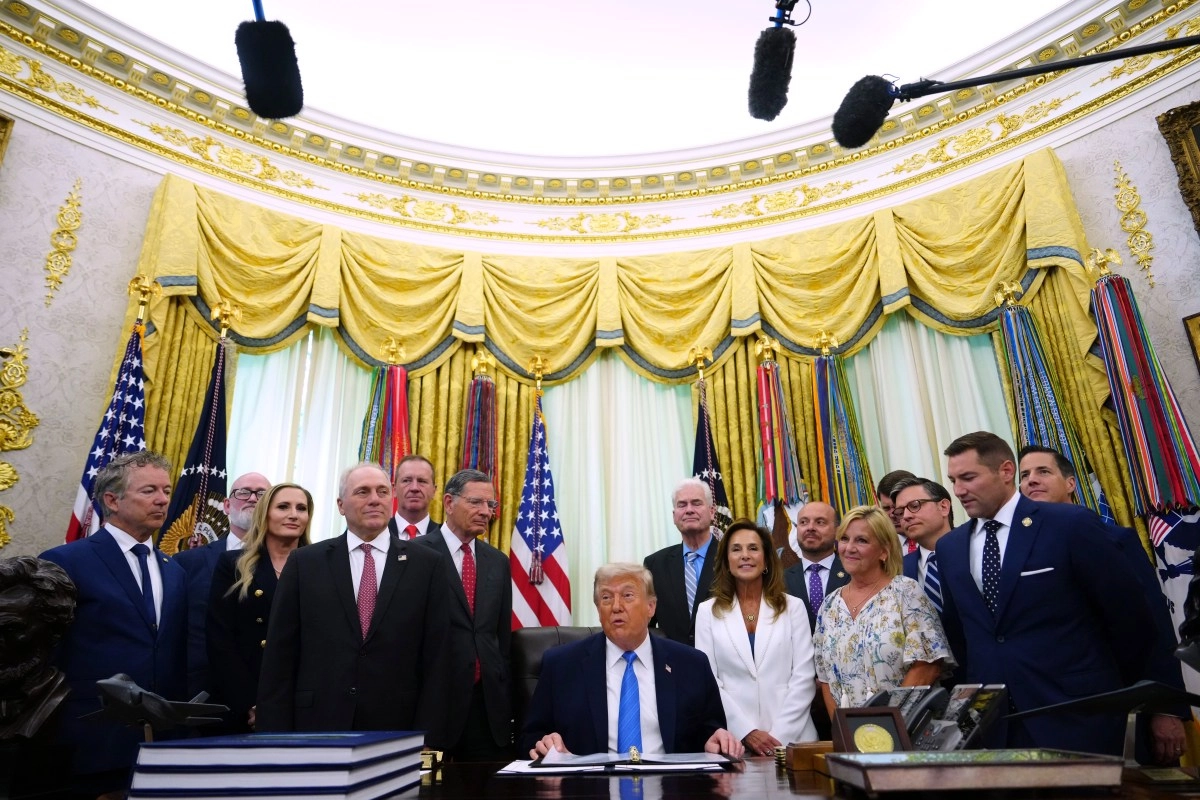
During statements made in the Oval Office of the White House, the Republican president stated that his government is holding talks with representatives of Mexico and Canada, but avoided committing to an automatic extension of the pact that regulates trade between the three North American economies.
"To be honest, the United States is doing much better on its own. We don't need anything that Canada has, we don't need anything that Mexico has, but they need everything that we have," Trump declared. The president insisted that Washington maintains trade deficits with its partners and reiterated that the United States should obtain greater benefits within the regional economic relationship.
The USMCA, which replaced the North American Free Trade Agreement (NAFTA), came into force in 2020 after being promoted by Trump during his first term. The agreement establishes a joint review six years after its entry into force and contemplates the possibility of extending its validity for another 16 years if the three governments reach a consensus before July 1.
Although the treaty would remain in force until 2036 even if an immediate renewal is not achieved, the refusal of either partner would open a period of annual reviews that could last for a decade.
Canada and Mexico seek trade stability
Trump's statements come while his trading partners have already publicly expressed their interest in keeping the agreement in force and exploring adjustments that strengthen regional economic integration.
The Canadian government considers the T-MEC a fundamental instrument to protect a trade exchange that exceeds 1.3 trillion dollars annually with the United States. In addition, the agreement has served as a partial shield against various tariffs promoted by the Trump administration in strategic sectors.
Last week, Canadian Minister of Canada-U.S. Trade Dominic LeBlanc held meetings in Washington with U.S. Trade Representative Jamieson Greer. Although both sides avoided divulging specific details, Canadian officials described the meetings as positive and aimed at resolving historical differences.
In parallel, the United States has already begun formal talks with Mexico to discuss the future of the treaty and has new rounds of negotiations planned in the coming weeks.
Meanwhile, American agricultural organizations, Republican lawmakers and business leaders have expressed their support for continuing the agreement. During a hearing in Congress, representatives of the agricultural sector pointed out that the T-MEC has been crucial for US exports of products such as soybeans, meat and grains.
Greer defends Trump's trade pressure
The uncertainty about the future of the treaty coincides with a new defense of the White House's trade policy by Jamieson Greer, Trump's main trade negotiator.
In a letter sent to The Washington Post editorial board, Greer defended the use of tariffs and other trade tools to combat the importation of products made with forced labor. The official responded to criticism published by the newspaper and maintained that the United States should use its economic influence to force other countries to tighten their controls.
According to Greer, during Trump's first term both Mexico and Canada introduced restrictions against the importation of goods produced through forced labor, while other trading partners have moved more slowly.
The trade representative stated that nine countries have already committed to adopting similar measures as part of trade agreements promoted by Washington. He also criticized the European Union and Canada for what he sees as insufficient enforcement of their own regulations.
“Under a Trump presidency, the United States will no longer tolerate forced labor in global supply chains,” Greer wrote.
Their statements offer a signal about the priorities that could mark the review of the T-MEC. Beyond traditional issues related to automobiles, manufacturing or agricultural products, the Trump administration appears willing to incorporate demands linked to labor standards, trade compliance and stricter enforcement mechanisms.
For now, the president's comments have raised new doubts about the future of North America's main economic agreement. However, international trade experts point out that the statements could also be part of Trump's negotiation strategy, characterized by raising public pressure before entering the decisive phase of the talks.