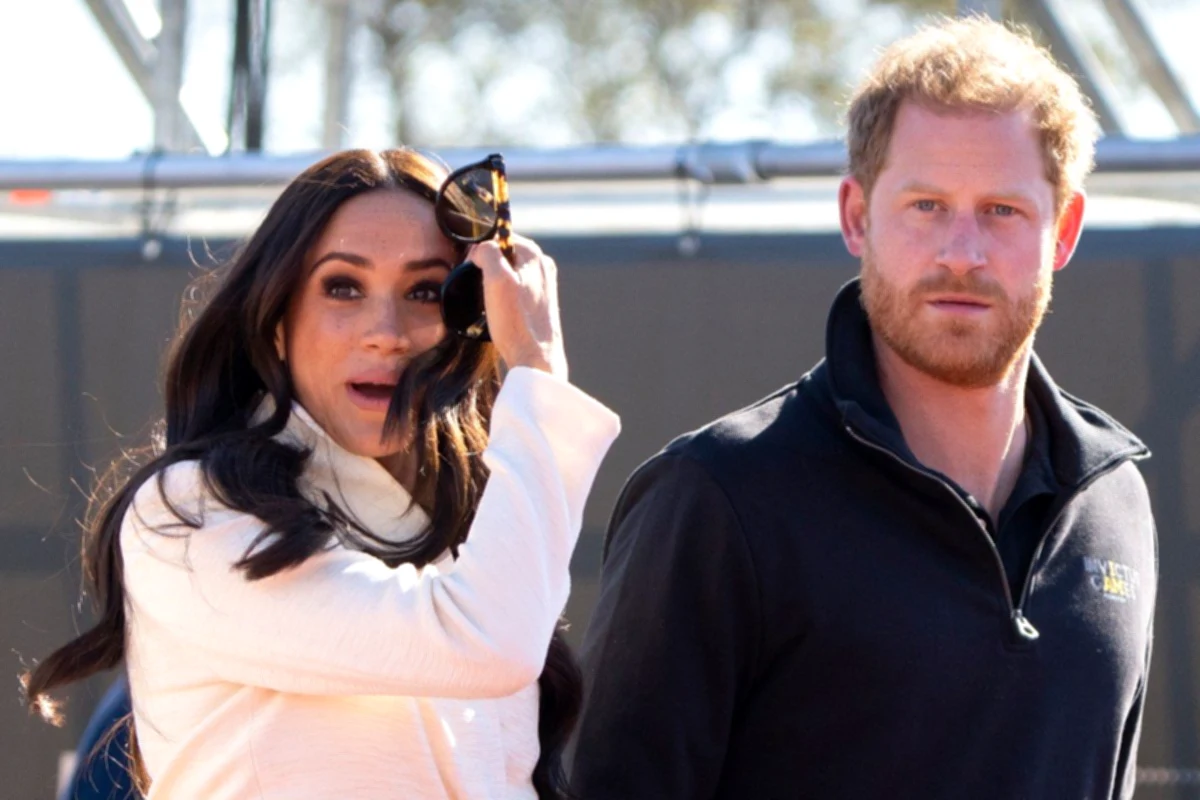

Donald Trump wants the United States to own Greenland, and this Saturday he announced tariffs against eight European countries that have opposed his ambitions and have sent troops to the Arctic island in recent days.
The US president He insists that his country needs Greenland for reasons of “national security” and has not ruled out even taking it by force. This is not the first time the United States has sought to annex Danish territory. More than 100 years ago, far from the polar cold of Greenland, in the warmth of the Caribbean, some small islands were going to go from belonging to Denmark to becoming a possession of the United States. Then too, Washington cited strategic and self-defense reasons. But at that time, unlike now, the Danes agreed and a purchase agreement was reached. Greenland was part of the deal, as in the agreement signed by both governments, Washington pledged to respect Danish control over Greenland. This is the story of how the Danish West Indies became the US Virgin Islands, and how a declining European power ceded overseas possessions to the rising power of the time. What are the US Virgin Islands? The US Virgin Islands are a small group of islands under US sovereignty in the Caribbean, east of Puerto Rico. The main islands are Saint John, Saint Thomas, and Saint Croix, but there are about fifty other islets and cays. With an estimated population of 83,000, the islands are an unincorporated territory of the United States. United.
The natives are citizens of the United States, but cannot vote in presidential elections.
Highly exposed to hurricanes due to their geographic position, at the eastern opening of the Caribbean to the Atlantic Ocean, the islands are surrounded by coral reefs.
Its economy is based on tourism, and three out of four inhabitants are of African descent.
Why the US Virgin Islands Belonged to Denmark
The islands were the Danish West Indies for centuries.
During the 16th and 17th centuries, the Spanish, English, French,and Dutch periodically vied for control of islands often used as a refuge by the feared pirates of the Caribbean.
In 1684, Denmark took control of Saint John and asserted its sovereignty over it. Shortly before, they had done the same with Saint Thomas.
The Danes then began to develop large sugar plantations on the islands, exploiting the slaves that European traders brought from Africa.
The sugar business was what, for centuries, kept the islands and the Danish settlers who profited from it connected to the metropolis.
The memory of that time remains in the names of some towns on the islands, such as Christiansted and Frederiksted, which were named after Danish kings of the time.
Why the United States was interested in the Virgin Islands
In the second half of the 19th century, things had begun to change.
Danish power was declining, and the United States was emerging from its Civil War (1861-1865) convinced of the need to assert its preeminence on the American continent and eliminate all influence of the old European powers.
In line with the so-called Monroe Doctrine, proclaimed in the 1820s, political leaders in Washington opted for territorial expansion and naval strengthening of their country.
The Danish historian Hans Christian Berg explained in an article that “after the Civil War, it was time to consider the strategic conditions in the Caribbean, and Secretary of State WH Seward focused both on the annexation of Mexico and on possible American expansion in the Caribbean.”
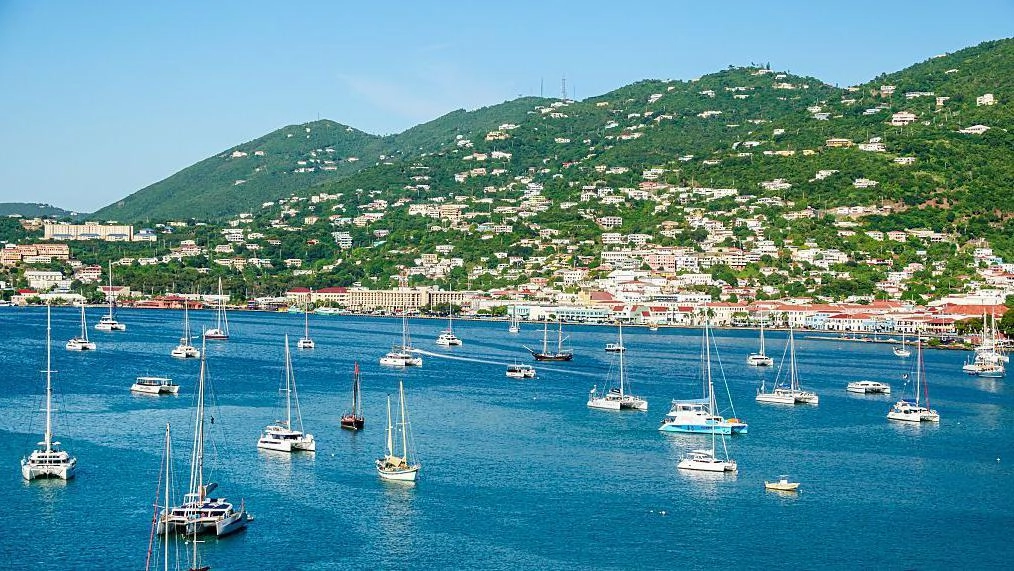
The port on the island of Saint Thomas was of particular interest to American strategists. Today a gathering point for large cruise ships laden with tourists, it was then seen as an ideal base for controlling the Caribbean due to the excellent natural protection afforded by the local topography. In Denmark, due to the fall in sugar prices, the islands were increasingly perceived as a burden, a view that successive revolts by the Black slaves who cultivated it would help to solidify. According to Berg, “for the Danes it was primarily an economic issue.” Thus, both governments began negotiating a possible sale of the islands and in 1867 signed a treaty by which the United States acquired them in exchange for US$7.5 million in gold.
But that first attempt at a transaction did not materialize.
In 1868, Washington finalized the acquisition of another Arctic territory, Alaska, purchased from Tsarist Russia for approximately US$7 million, a gamble by Seward that provoked criticism and even ridicule from those in the United States who thought it was nothing more than a piece of frozen land with no economic or strategic value.
The controversy surrounding the purchase of Alaska contributed to the United States Congress ultimately not ratifying the treaty for the purchase of the Danish West Indies.
World War I and the purchase of the US Virgin Islands
The outbreak of World War I (1914-1918) finally tipped the islands in favor of the United States.
Europe was bleeding itself dry in a long trench war, and the Allies were eager for the United States to enter the war. on their side to defeat Germany and the rest of the so-called Central Powers.
President Woodrow Wilson had failed to convince Congress or the public in his country of the wisdom of getting involved in the conflict, but the growing frustration with the attacks by German submarines, the dreaded U-boats, against American merchant ships and even passenger vessels was about to change things.
As Astrid Andersen of the Danish Institute for International Studies told BBC Mundo, “Denmark was neutral in the war, and the fear in Washington was that Germany could invade it and thus take control of the islands and the port of Saint Thomas. the Caribbean, and the construction of the Panama Canal in 1914 had further increased US interest in the region and the security of its maritime routes. In that context, Washington and Copenhagen then opened negotiations in which, according to Andersen, the US position resembled Trump's current stance on Greenland. “There are echoes of what we are hearing now because what the United States essentially said was: 'Either you sell it to us or we will invade it,'” Andersen said. Finally, in August 1916, both countries agreed to sell the islands to the United States for US$25 million in gold, equivalent to about US$630 million today, according to Bloomberg's estimate. As part of the agreement, The United States pledged not to oppose Denmark "extending its political and economic interests over all of Greenland," something the Trump administration might prefer not to recall. The Convention was ratified by both countries this time. Also because of the Danes, who voted overwhelmingly in favor of the sale in a referendum.
In reality, Andersen believes, “most Danes did not see those islands as part of Denmark.”
The historian recalls that neither in this nor the previous attempt was the islands' indigenous population given a voice.
Finally, on March 31, 1917,the American flag was raised for the first time on the islands' government buildings in a solemn ceremony.
In the same ceremony, a Danish honor guard lowered the Danish flag for the last time and took it away on a ship forever.
Probably the scene that Trump dreams of in Greenland more than a hundred years later.
The problem is that this time Denmark doesn't want to sell.
*Map by Caroline Souza, from the BBC Mundo Visual Journalism team
Click here to read more stories from BBC News Mundo.
Subscribe here to our new newsletter to receive a selection of our best content of the week every Friday.
You can also follow us on YouTube, Instagram, TikTok, X, Facebook, and our WhatsApp channel.
And remember that you can receive notifications in our app. Download the latest version and activate them.