
You've now used GPS if you've actually used a chart to locate a delivery vehicle on an application or use a image on your smartphone.
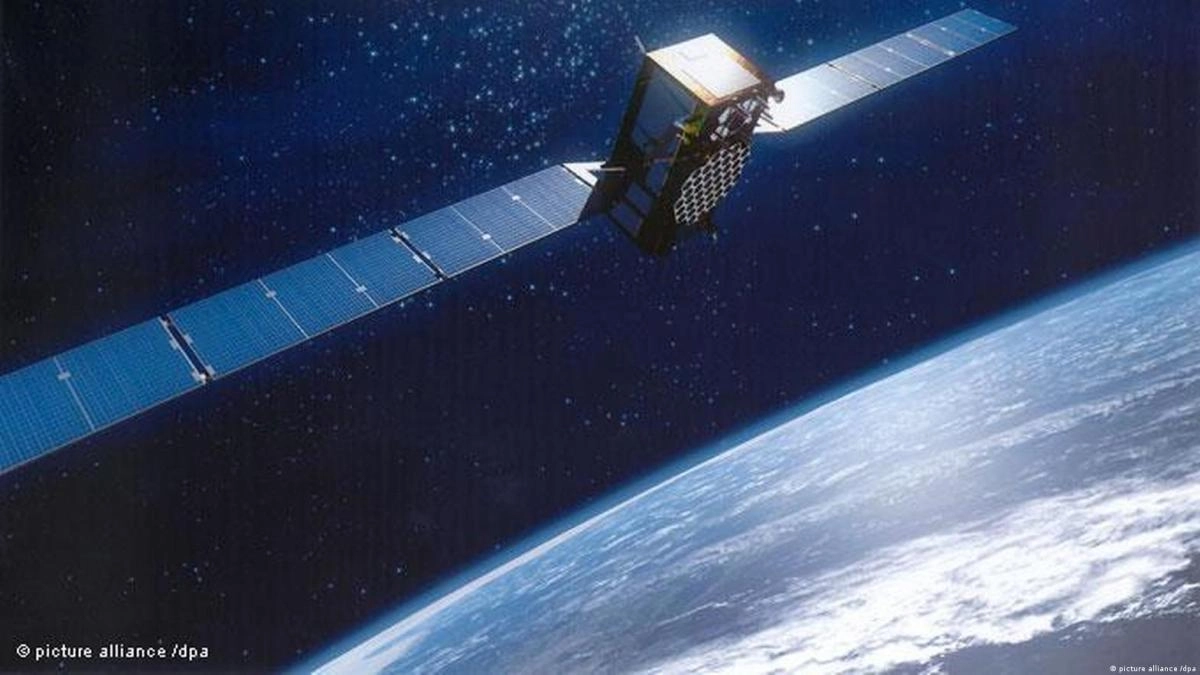
What many people are unaware of is that the US Global Positioning System is just one member of a larger community known as Global Navigation Satellite Systems. Satellite ( GNSS) navigation.
The Earth orbits four different satellites around the world. They advise travelers looking for a restaurant, as well as passengers on boats, cars, and trucks. They even play a significant part in combat.
How do spacecraft determine our location?
In essence, schedule determines satellite navigation. Our precise location in circle and the precise time the signal was sent are two crucial pieces of information that GNSS satellites frequently transmit.
In the meantime, receivers on Earth pick up these signals to determine our precise site: our phones, cars, an flight, or a ship.
They use indicators from at least four satellites to determine latitude, longitude, and level, as well as appropriate for any timing issues, to accomplish this.
GNSS systems is quick and accurate. It is firmly woven into daily living. However, it is also less fragile than it appears.
The Resilient Navigation and Timing Foundation's leader, Dana Goward, described the signals coming from the global navigation satellite networks as being "quite vulnerable. "
They are exceedingly weak, which means that any radio disturbance near their frequency, whether it be intentionally or not, can change reception, he observed.
US, Russia, Europe, and China are the four world tracking capabilities.
During the Cold War between the United States and the then Soviet Union, the first two international transportation systems were created in the 1970s.
The first satellite navigation system with total global coverage was created by the United States, who developed GPS. And it is currently the most widely used method worldwide.
The Soviet Union developed GLONASS at the same time.
Eventually, the European Union made the decision to overburden itself with US proper infrastructure by relying solely on GPS and launched Galileo development.
The most recent of the four is the Chinese BeiDou method. Chinese military designers attempted to reduce their reliance on US GPS, just like they did in Europe.
All four methods are quite similar and "dual-use," meaning they were created for both military and civilian reasons.
According to Malcolm Macdonald, professor of satellite engineering at the University of Strathclyde in Glasgow," GPS, GLONASS, and Galileo operate in very similar orbit, with a similar number of satellites at levels between 19, 000 and 23, 000 km. To increase regional coverage in Asia," BeiDou complements ]its system ] with higher-altitude orbits. "
Every system has the ability to transmit signals anywhere on earth, yet to tiny wristwatches.
The majority of devices use several [satellite ] constellations. It depends on the piece of equipment, for instance, and I can set up my watch to use both GPS and GLONASS.
Similar systems exist in Japan and India, but they don't provide global solutions.
How Are Navigation Systems Used in Warfare
Armed forces increasingly rely on satellite tracking for organizing, mapping, and logistics.
It is also used to control other weapons, such as cruise missiles and so-called bright bombs.
Armies also control robots with these devices. Satellites have become goals as a result, though. Both factors have used methods like jamming and spoofing in issues like the one between Russia and Ukraine. These are used to confuse GPS-based devices on the ground or tamper with signals. Although phishing is more challenging than jamming, it also has the potential to confound the adversary. According to Thomas Withington, an electronic warfare analyst at the Royal United Services Institute in the United Kingdom," Your navigation system might indicate that you are traveling at 400 knots and departing Helsinki Airport. " Since these nations "have their own ground-based techniques that enhance and aid GNSS, while the West does not, while this may pose a greater threat to Europe and the United States than to Russia and China," Goward cautioned that this could pose a greater risk to these places.And what I find most unpleasant, in my opinion, is that there isn't a single technology that can completely neutralize GNSS disruptions.
While modern alternatives are being developed, one of the most "expensive" options for the present is still to be "locating the detonator and destroying it" in a time of war.