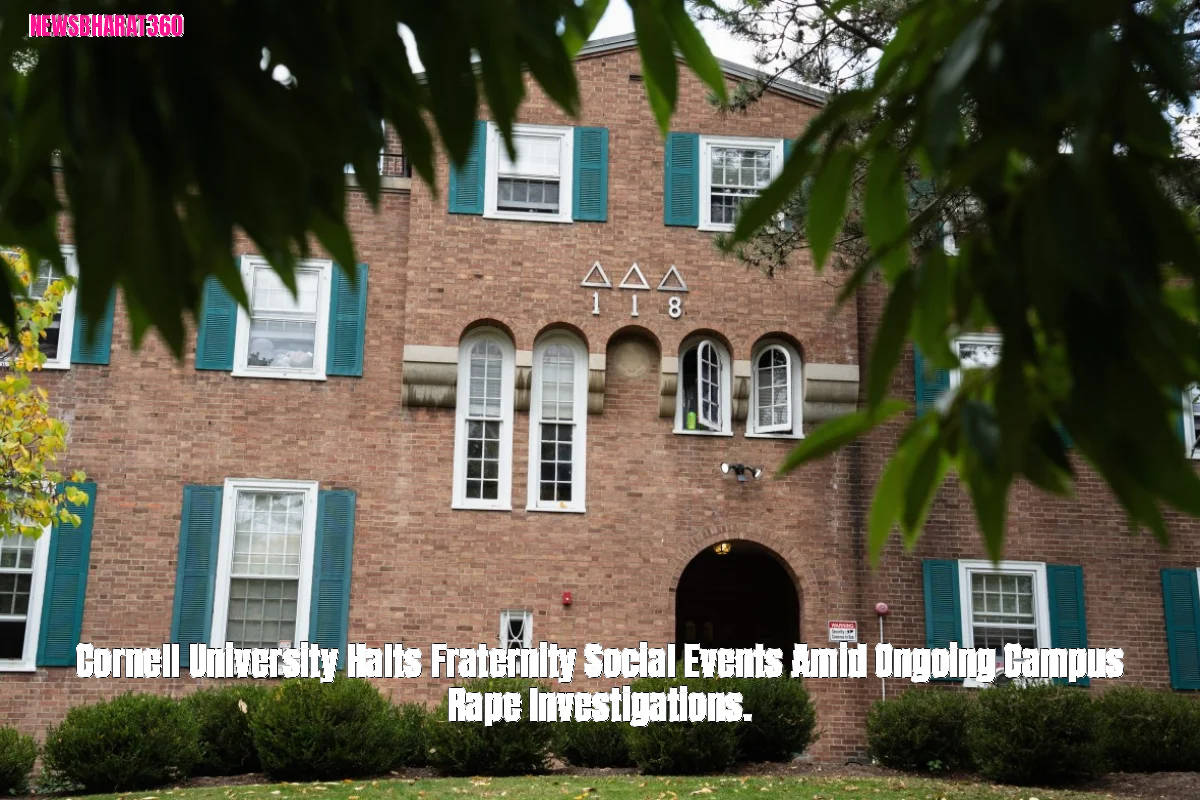

Cornell University has implemented a temporary ban on fraternity parties and social events through the conclusion of the 2026-2027 academic year. This decision comes in response to ongoing protests stemming from the institution's handling of a 2024 incident in which a student reported being a victim of group rape on campus.
Cornell University has introduced a comprehensive plan to address campus safety concerns, as announced by Rector Michael Kotlikoff. The initiative includes a zero-tolerance policy for offenses, enabling the immediate and provisional suspension of any fraternity found to be in violation. Furthermore, the institution will partner with the New York State Police to facilitate the investigation of sexual offenses by specialized, independent university investigators.
Cornell University will temporarily suspend its review of fraternity life to allow for a comprehensive assessment of the situation, ultimately informing a decision on the feasibility and potential modifications of fraternity operations on campus.
Following a 2024 incident that sparked widespread public discontent, student demonstrations, and a re-evaluation of the criminal investigation process, a significant announcement has been made.
A temporary suspension has been implemented, encompassing all gatherings and social events held within the headquarters of the Cornell Interfraternity Council's constituent fraternities. This measure will remain in effect until the conclusion of the 2026-2027 academic year.
The university has implemented a zero-tolerance policy for offenses, which includes the potential for suspending an emergency fraternity in response to any infractions.
The proposed measures will enable a thorough evaluation of the operational conditions of these organizations, with the goal of determining whether their activities can be safely sustained.
Cornell University has announced plans to enhance its support for students and staff reporting instances of inappropriate sexual conduct. To this end, the university will be assigning a case manager to its Civil Rights Office, who will provide guidance and facilitate the process for those affected, ensuring they have a clear understanding of the available procedures and resources.
The institution has pledged to collaborate with the New York State Police in order to support and facilitate the conduct of specialized criminal investigations.
Investigations into crimes committed on the Cornell campus are typically handled by the university's police force, which possesses law enforcement authority but is subject to oversight by the institution.
The university's law enforcement agency operates independently of the municipal police department in Ithaca, the city where the institution is situated.
The addition of New York State Police investigators to the case will enable personnel from outside Cornell to participate in the investigations, bringing specialized expertise in handling serious crimes.
A complaint filed in 2024 led to an investigation by university agents into allegations of group rape. Their preliminary findings were subsequently presented to the Tompkins County Attorney, who declined to pursue criminal charges several weeks after the initial complaint was made to law enforcement.
The handling of the decision and the institution's subsequent actions have raised public concerns and sparked scrutiny.
New York Governor Kathy Hochul has taken action, replacing the district prosecutor this month in response to mounting public discontent over the lack of criminal charges in a high-profile case.
The case was subsequently referred to State Attorney General Letitia James for further investigation.
Cornell University has engaged Sally Yates, a former U.S. Secretary of Justice, to lead an independent investigation into the university's handling of the complaint.
Investigations aim to scrutinize the events surrounding the case and the roles of various institutions involved at each stage of their intervention.
Cornell University has taken further action in response to criticism over its handling of a complaint, including the suspension of fraternity events and the allowance of state researchers to participate in the investigation.
A student has come forward alleging she was the victim of a group rape in 2024, prompting the university to conduct ongoing research and institutional reviews in response to concerns raised by students and other community members.