
Brazil's recent shift in leadership under President Lula da Silva does not preclude the ongoing trend of rightward government changes in Latin America from reorienting the region's diplomatic relationships with Israel.
Colombia serves as a notable illustration of the rapid pace of transformation in the region.
In 2024, Colombia's then-president Gustavo Petro severed diplomatic ties with Israel in response to the conflict in Gaza, issuing sharp rebukes against Israeli Prime Minister Benjamin Netanyahu.
The stance was endorsed by the then-presidents of Chile, Gabriel Boric, and Venezuela, Nicolás Maduro.
The Colombian government has taken the decision to close its embassy in Tel Aviv and withdraw its ambassador, a move that has been met with criticism from Israel, which views it as an anti-Semitic gesture and an incentive to Hamas militants.
A significant shift occurred in August with the election of Abelardo de la Espriella, marking a notable change in the circumstances.
The incoming president, who holds a differing ideological stance from Petro, has not only reestablished diplomatic ties but also reopened the US embassy in Jerusalem.
The status of Jerusalem remains a contentious issue in the Israeli-Palestinian conflict, with Israel claiming the city as its capital and Palestinians seeking East Jerusalem as the capital of a future independent Palestinian state.
Regional developments have shifted the international landscape in favor of a more conciliatory approach towards Israel, coinciding with a decline in global support for Israel's actions in Gaza.
A devastating attack was carried out by Hamas from Gaza on October 7, 2023, resulting in significant loss of life with at least 1,200 fatalities and 251 individuals taken hostage in Israeli territory.
A military operation initiated by Israel resulted in significant loss of life, with over 73,000 fatalities, as reported by the Ministry of Health in the territory governed by Hamas, a figure the United Nations deems credible.
Latin America has emerged as a welcoming region for Israel, despite the country's facing allegations of genocide.
According to Gonzalo Paz, a Georgetown University expert in International Relations with a PhD, the current state of Israel's relations with Latin America is experiencing a period of significant growth and development.
The situation in Colombia is part of a broader issue affecting multiple countries.
In the lead-up to Rodrigo Paz's assumption of the presidency in Bolivia in November 2025, the government announced a significant development in its foreign policy, reinstating diplomatic relations with Israel following a two-year period of diplomatic estrangement.
President Laura Fernández initiated diplomatic efforts on her first day in office by hosting a meeting with Israeli President Isaac Herzog, aiming to advance negotiations for a bilateral free trade agreement between their respective nations.
President José Antonio Kast has taken a significant step in reorienting Chile's foreign policy under the leadership of President Gabriel Boric, by appointing a new ambassador to Israel, marking an end to a period of over two years without a diplomatic representative in the country.
The appointment of Gustavo De la Espriella as President of Colombia has significantly accelerated the country's momentum.
Following his inauguration, the leader announced his country's recognition of Israel's sovereignty over the Golan Heights, a move that made his nation the second to acknowledge Israel's claim to the territory after the United States.
The next day, Venezuela announced the resumption of consular relations with Israel, a move that came after a 17-year hiatus in diplomatic ties between the two nations, with Delcy Rodríguez leading the effort and reportedly receiving support from the United States under the administration of President Donald Trump.
Ariel Kacowicz, a Princeton University PhD in Political Science and professor of International Relations at the Hebrew University in Jerusalem, notes a striking regional dominance phenomenon.
The region is emerging as a crucial partner in the face of a challenging global environment, with Israel's Chancellor designating 2026 as a pivotal year for strengthening ties with Latin America.
Daniel Wajner, a professor of International Relations at the Hebrew University in Jerusalem, notes that Israel requires international backing, and in Latin America, it encounters pockets of support that are less readily available elsewhere globally.
To gain insight into the motivations behind the regional alignment with Israel, a panel of experts was consulted.
Analysts attribute the recent shift in Israel's diplomatic relations to recent government changes in Latin America, where a significant trend has emerged with 11 of the past 16 presidential elections being won by candidates from the right, center-right, or radical right-wing parties.
In a significant development, Brazil, the largest country in Latin America, appears to have bucked the trend, as veteran leftist leader Luiz Inacio Lula da Silva asserted his influence over Flávio Bolsonaro on Sunday.
Left-leaning leaders, including Brazilian President Luiz Inácio Lula da Silva and Mexico's President Claudia Sheinbaum, have demonstrated a more critical approach towards Israel.
Anthony Pereira, executive director of the Stone Center for Latin American Studies at Tulane University, has focused a significant portion of his research on the emergence and growth of right-wing populist movements in Latin America.
The political current has reportedly re-established or strengthened its relationship with Israel, following a period of strained ties that developed after the onset of the Israeli conflict in Gaza.
According to Pereira, a Harvard University expert in government with a PhD, right-wing leaders who have recently come to power in countries such as Peru, Chile, Colombia, and Honduras often distinguish themselves from their predecessors by strengthening diplomatic relations with Israel.
Peru's President Keiko Fujimori, who took office in July, announced in early September the severance of diplomatic ties with Iran, citing the country's significant impact on global stability and security.
A surge in interest in Israel has been observed among the leaders of the "new right," a group characterized by analysts as holding more extreme views and employing divisive rhetoric distinct from traditional conservative factions.
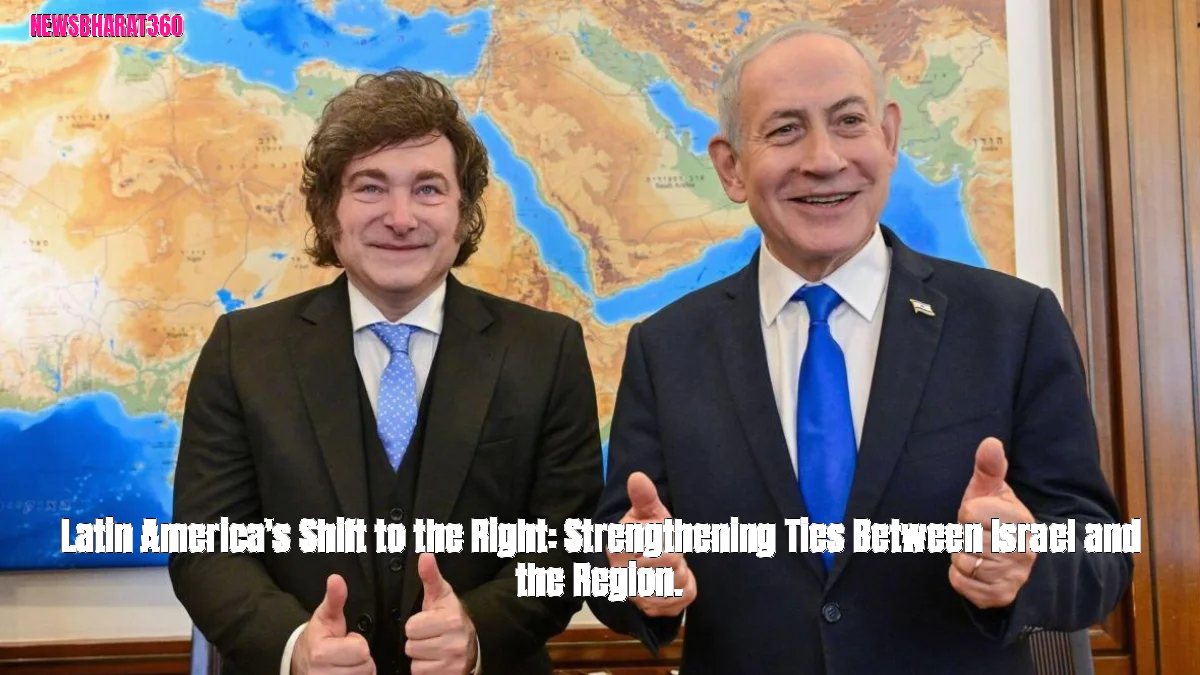
Argentine President Javier Milei is a key figure in the country's efforts to strengthen ties with Israel, specifically Tel Aviv, in the region.
Argentine President Javier Milei has made multiple trips to Israel, having visited the country at least three times. Since taking office, he has publicly expressed pride in his strong Zionist stance, claiming to be the most Zionist president globally.
Argentina and Israel have established the "Isaac Agreements" through a deal signed in April, initiated by President Milei. This agreement aims to solidify Argentina's position as a key ally of Israel in the region, with additional support from representatives of over a dozen countries.
Researcher Wajner highlights a crucial distinction in her analysis of foreign policy and populist leadership. According to her, the relationship between the two is not solely defined by ideological alignment, but rather by the inherent characteristics of populist leaders themselves.
Leaders who adopt this style of leadership often forge their identities by contrasting themselves with their predecessors, which can result in a swift and decisive shift in their foreign policy approach.
The situation is further complicated by the significant factor of President Trump's continued backing of the Israeli government.
Since his return to office, the US administration has demonstrated unwavering support for Israeli Prime Minister Netanyahu, with a focus on the Gaza conflict and Israel's national security as key components of its foreign policy agenda.
During a speech to the Israeli parliament in October, former US President Donald Trump expressed pride in his close relationship with Israel, describing it as the strongest friendship the country has ever known.
Several newly elected right-wing presidents in the region have demonstrated a distinct affinity for Trump's policies, particularly with regards to their stance on Israel. This includes a strong commitment to maintaining close ties with Israel, a position that contrasts with the left's criticism of the country's actions in Gaza.
Analysts consulted on the matter concur that the region's stance on Israel is a key strategy for fostering closer ties with the US administration under Trump, while also conveying a clear alignment with its foreign policy objectives.
A prevailing perception exists that supporting Israel can serve as a means to enhance diplomatic ties with the United States, particularly with the Trump administration.
Pereira characterizes the situation as a complex interplay of factors.
The Trump administration is reportedly seeking to establish a strategic alliance with right-wing governments in Latin America, with Israel playing a pivotal role as a key partner in areas such as military cooperation, intelligence sharing, and geopolitical affairs.
Paraguay has become a notable example of shifting diplomatic allegiances. Following a meeting with US President Donald Trump in Paris, during which they discussed the matter, Paraguayan President Santiago Peña announced in December 2024 the relocation of the Paraguayan embassy from Tel Aviv to Jerusalem, mirroring a similar decision made by Colombia's ambassador, De la Espriella.
Leaders in the region who have reestablished or solidified ties with Israel are reportedly attempting to gain favor with the Trump administration and showcase their alignment with Washington, while minimizing associated costs.
The region's proximity to Washington is underscored by the participation of over a dozen countries in the "Shield of the Americas," a security initiative launched by former US President Donald Trump to enhance cooperation with regional allies.
The religious dimension is a crucial factor in comprehending the underlying motivations and objectives of this approach, according to analysts who have examined the situation from multiple perspectives.
Latin America's domestic policy is being significantly influenced by the expanding influence of evangelical churches in the region, a development that sheds light on why several countries are increasingly aligning their positions with those of Israel, according to Professor Kacowicz.
In Colombia, De la Espriella has cultivated a broad network of political connections with evangelical groups, which he has strategically integrated into his campaign against left-leaning ideologies, framing it as a key aspect of the cultural struggle.
De la Espriella campaigned under the persona of Cyrus, a biblical reference to the ancient Persian king who famously freed the Jewish people from captivity.
A recent article published by Cambridge University Press examines the connection between Christian support for the Jewish people and, by extension, the State of Israel. The analysis was conducted by Tom Ziv, PhD, a scholar from the Hebrew University of Jerusalem.
A researcher specializing in the connections between Israel and evangelical churches has identified a correlation between the influence of evangelical communities and the level of support Israel receives in various countries.
In Honduras, the Evangelical Brotherhood publicly extended congratulations to Nasry Asfura, a Palestinian leader with ties to Trump and Netanyahu, following his election victory in 2025. Upon assuming office in January, Pastor Gerardo Irías presented Asfura with a Bible as a symbol of spiritual guidance for his administration.
Governments adopting this approach to Israel can benefit domestically by fostering ties with the evangelical Protestant community, a significant portion of which supports Israel due to theological convictions.