
WASHINGTON.- A lawsuit seeks to stop President Donald Trump's administration from carrying out a secret policy that collects, stores and uses personal information of people who demonstrate or document the enforcement of immigration laws, including the operations of Immigration and Customs Enforcement (ICE) agents.
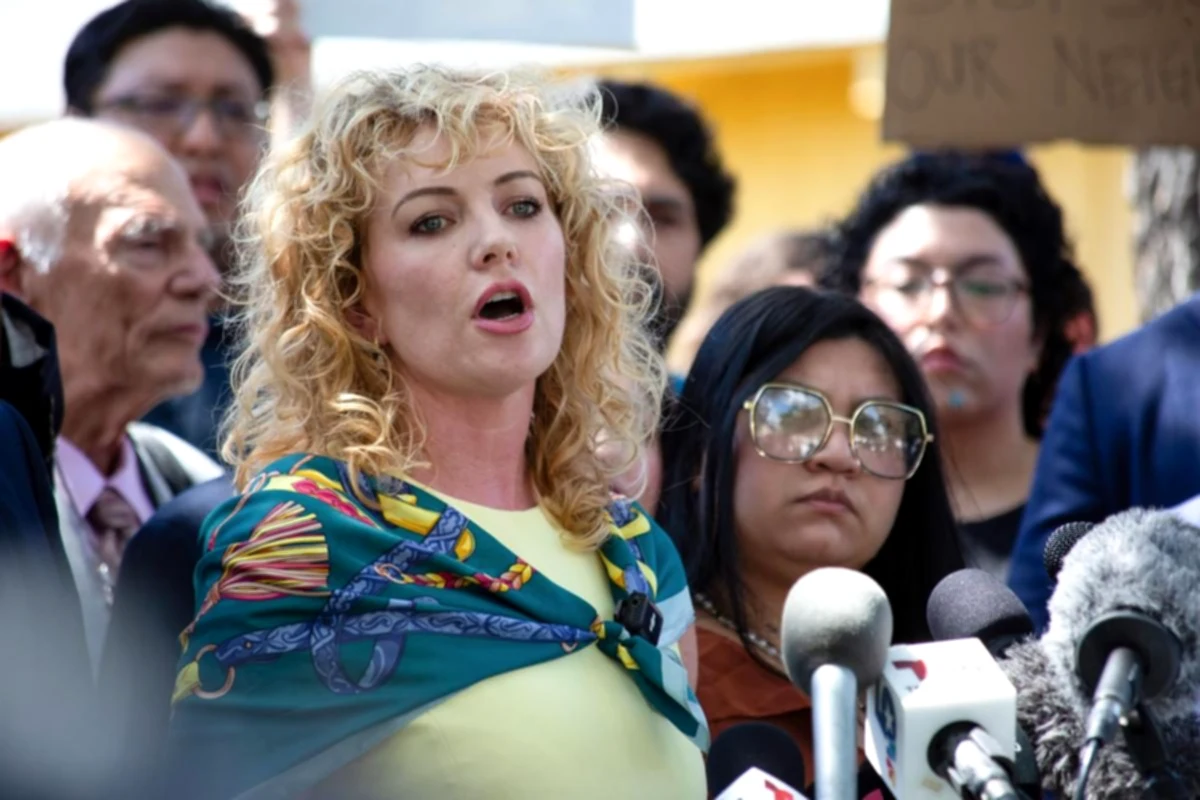
“I believe government accountability begins with transparency,” said Nicole Clealand, one of the plaintiffs. "People should be free to peacefully observe and document their government's actions in public without fear of being tracked or retaliated against. This case is about protecting that right for everyone."
The plaintiffs accuse the Department of Homeland Security (DHS) of creating a kind of “blacklist” of people who demonstrate or document immigration actions and should be protected by the First Amendment.
“DHS has deployed facial recognition technology, body cameras, license plate information, mobile devices, and other surveillance tools to identify and track individuals lawfully observing immigration enforcement measures in public,” the lawsuit charges.
The plaintiffs note that DHS has maintained and accessed those records, including the Automated Targeting System (ATS), which would allow them to be shared with other government law enforcement agencies.
It is even alleged that DHS used that information to revoke the plaintiffs' Global Entry privileges – an identification that allows facilitating transit through airports – in retaliation for exercising their constitutional rights.
The plaintiffs are the Electronic Privacy Information Center (EPIC), Cleland, Jacquelyn Ivey and Anna Walker, legal observers who have been subject to surveillance and retaliation by DHS, said the organization Democracy Forward, which represents the plaintiffs together with Hagens Berman and Sobol Shapiro LLP.
Agents know everything
In the court document before the Southern District Court in California, it is indicated that DHS agents have not hidden their intention to collect information or the objective, with documented cases in Maine, when several observers were even informed that they would be included in a database of "domestic terrorists."
In Chicago, agents used facial recognition on citizens, while in Minneapolis, observers were taken home by agents, in a practice already known colloquially as “being taken home by ICE.”
It highlights that, throughout the country, DHS agents have approached observers and addressed them “by their full name,” although these people never identified themselves or showed any type of identification, which sparks further concerns.
“It's not about losing a privilege; it's about standing up for our principles,” Ivey said. "The government tries to intimidate people into looking the other way rather than holding them accountable. But the times when those in power try hardest to silence us are often the times when we need to speak up the most."
The lawsuit charges that DHS violates the Privacy Act, which prohibits the federal government from maintaining records that describe how people exercise their First Amendment rights – except in limited circumstances – and requires agencies to disclose and justify why they collect personal information.
“Now more than ever, those of us who have the privilege to express ourselves have the responsibility to defend the rights of everyone in our communities,” Walker said. “When people are punished for exercising their First Amendment rights, we begin to lose the democratic principles that protect us all.”
Part of the challenge is argued under the Administrative Procedure Act, as the plaintiffs allege that DHS unlawfully retaliated against them.
“When our government collects secret files on ordinary people for exercising their constitutional rights, it sends a chilling message: If you raise your voice, be careful,” warned John Davisson, deputy director and chief compliance officer at EPIC. “If every protest, every recording, every act of dissent exposes us to surveillance and retaliation, privacy and freedom of expression risk collapsing.”
The lawsuit seeks to overturn the secret data collection policy and uphold the First Amendment.
“The federal government cannot create secret files on people because they are exercising their First Amendment right to peacefully observe, document, or criticize its actions,” said Skye Perryman, president and CEO of Democracy Forward. “That is precisely the kind of government surveillance that Congress sought to prevent by enacting the Privacy Act in the wake of some of the darkest chapters in our nation's history.”