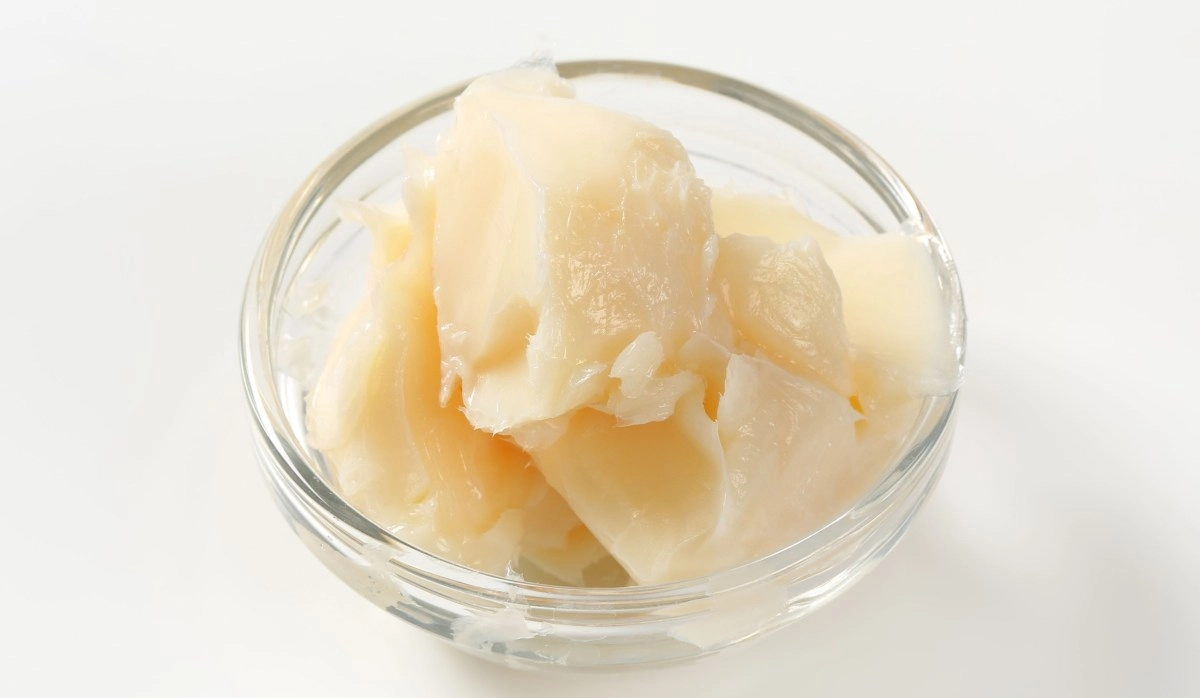

For more than half a century, lard carried an almost unanimous sentence in nutritional discourse: it was a “bad” fat, associated with cholesterol, overweight and cardiovascular diseases.
Today that sentence has been softened. In recipe books, health columns and social networks an idea reappears that a few years ago would have sounded heretical: lard, consumed in moderation, not only would not be as harmful as was believed, but it would have advantages over some modern alternatives. What changed?
From villain to “misunderstood fat”
Lard's fall from grace began in the mid-20th century, when processed vegetable oils were positioned as the “modern” and healthy alternative for cooking. With the advent of processed vegetable oils in the 20th century, their use decreased, and with it came the perception that butter was an unhealthy option due to its saturated fat content.
That perception was sustained for years on a simple premise: saturated fat equals high cholesterol, and high cholesterol equals heart disease. However, modern science has qualified some of these claims, pointing out that its impact depends on the amount and frequency with which it is consumed.
What the composition of fat says
The central argument of those who today defend moderate consumption of butter has to do with its fat profile, which is less homogeneous than what the “saturated fat” label suggests. According to different nutritional sources, about 45% of its composition is monounsaturated fats, associated with benefits for heart health, and there are even estimates that raise that proportion: a fact that usually surprises is that about 60% of pork fats are unsaturated, which makes it a healthier option than one might think.
In addition, other nutritional contributions are attributed to it that went unnoticed for years. It contains vitamin D—in small amounts—as well as monounsaturated fatty acids, similar to those found in olive oil. Some sources add that it contains choline, which supports cellular integrity and fat metabolism.
Comparative with trans fats
One of the keys to this review is not so much that butter is “good,” but rather that it stopped being compared only against olive oil and began to be compared against industrial trans fats, which today contain the most solid scientific consensus on cardiovascular damage.
There is consensus in the scientific community that the consumption of trans fats has negative effects on health, and a 2% increase in daily consumption of trans fats significantly increases the risk of cardiovascular disease.
The Spanish Heart Foundation has been even more blunt in pointing out the origin of the problem: the most harmful fats are those derived from the vegetable kingdom subjected to hydrogenation, such as vegetable shortening or industrial margarines, and they must be avoided at all costs. That is, the debate shifted: it is no longer “animal fat versus vegetable oil,” but rather “minimally processed natural fat versus industrially modified fat.”
Thermal stability
Another argument that has gained ground is the behavior of butter when cooking. With a smoke point of about 190°C, lard does not oxidize easily when frying, avoiding harmful compounds, making it ideal for cooking at high temperatures, better than some vegetable oils.
This is relevant because a good part of the risk associated with fried foods does not come only from the type of fat, but from its degradation and oxidation when exposed to heat repeatedly.
Verdict, for now
The change in scientific opinion regarding butter is not a single finding, but rather an accumulation of studies that, over the last decade, have questioned the linear relationship between saturated fat and cardiovascular disease.
Added to this are more surprising findings, such as a study published in The Journals of Gerontology, in which researchers from the University of Córdoba demonstrated that, in mice subjected to calorie restriction, a diet rich in lard was able to enhance the beneficial effects associated with caloric restriction and further increase their longevity.
What seems to be consolidating is not that lard is a superfood, but that its bad reputation was, in part, disproportionate to other fats—especially industrial fats—that for years were promoted as “healthy” alternatives without being so. Science does not completely absolve it, but it gives it a more nuanced place: neither an absolute villain, nor a miracle ingredient, but a traditional fat whose risk, like that of almost everything in nutrition, depends on the dose.
You may also be interested in:
· “Junk food” is not the best or the only option to eat when you go on a hike or camping trip · Raw garlic with lemon on an empty stomach: a magnificent home remedy that relieves blood pressure · High blood pressure in childhood: a silent sentence that can shorten life