
This Wednesday marks one week since the double earthquake that has left Venezuela with a level of destruction and suffering that escapes any number.
As the days go by, the hope of those who have their loved ones buried in the rubble has crashed into the reality that experts warn: the critical window is closing to find survivors.
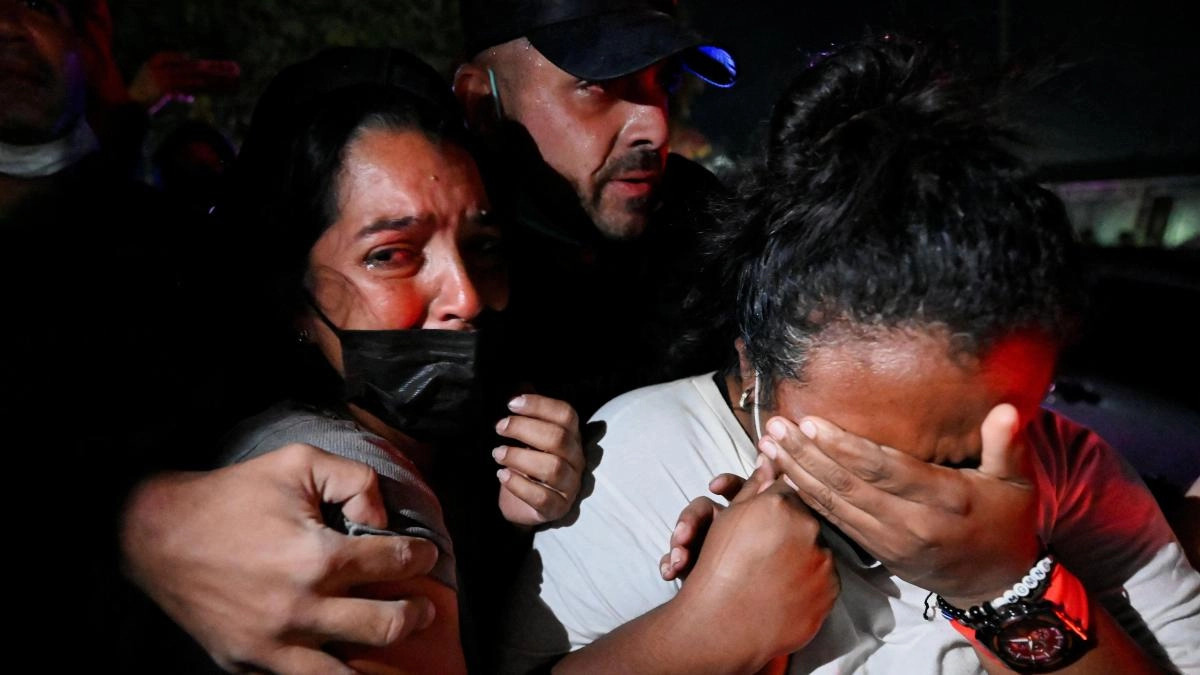
Thousands of families have had to take the painful step from uncertainty to mourning. Others cling to the possibility of a miracle like the one that occurred this Tuesday, when a 3-year-old boy emerged alive from the rubble thanks to the efforts of a group of Jordanian rescuers.
Search and rescue operations continue in full swing, with thousands of Venezuelan rescuers and those from more than 30 countries.
Meanwhile, reports from Venezuelan authorities and international organizations on the impact of the catastrophe paint an increasingly serious picture, and the full extent of the damage is still unknown.
Adding to the mourning for the number of almost 2,000 deaths is concern about the difficult conditions in which the survivors find themselves who lost everything and indignation among those who consider that the government's response to the emergency has been deficient.
This is the balance of the situation, according to the figures known so far.
Nearly 2,000 dead and thousands injured and missing
The latest death toll reported by the Venezuelan government is 1,943. The injured number 10,571.
It is expected that the number will continue to increase significantly in the coming days.
The UN resident coordinator in Venezuela, Gianluca Rampolla del Tindaro, stated that “without a doubt we are facing a figure higher than that reported.”
And he added: “I can offer you an estimate: we are purchasing, and this is something that has been agreed with the authorities, 10,000 body bags.”
The president of the National Assembly of Venezuela, Jorge Rodríguez, reported that, in the areas most affected by the catastrophe (Caraballeda and Catia La Mar), there were about 30,000 people when the two earthquakes occurred, of which 19,861 managed to get out by their own means or were rescued alive.
Immediately after the earthquakes, the United States Geological Survey's PAGER system estimated, based on available scientific evidence, that the death toll would range between 10,000 and 100,000.
And he warned of possible economic losses of between US$10,000 million and US$100,000 (or between 2% and 10% of Venezuela's GDP).
According to the United Nations Office for the Coordination of Humanitarian Affairs and the International Rescue Committee, more than 50,000 people were still missing after the disaster.
1.8 million people in need of humanitarian aid
The impact of the double earthquake does not end there.
The president of the National Assembly, Jorge Rodríguez, reported that 15,866 people have been identified as victims of the catastrophe, without clarifying which people that figure includes.
He added that 15 temporary shelters were set up in the state of La Guaira and 55 in the rest of the country for these.
Hundreds of families whose homes were destroyed or uninhabitable have been sleeping in temporary camps or spontaneous settlements.
The government has said it will relocate them to temporary shelters and has promised housing solutions for them before the end of the year.
The number of those indirectly affected is even higher.
The Geographic Information System of the private company Esri Venezuela, which is fed with citizen reports, counts 595,000 affected people, of which 133,000 are minors.
The UN children's agency Unicef ​​noted that there are 1.8 million people in need of humanitarian aid, of which 680,000 are children.
Regarding the situation that survivors are going through, the International Rescue Committee (IRC) reported this Tuesday that many have their basic needs unmet.
“Medical services in health centers and mobile units are overwhelmed, shelters are at full capacity and water and electricity services remain interrupted in the affected areas,” the IRC said.
And he added: “The magnitude of the response does not match the magnitude of the humanitarian need.”
Along the same lines, Andreas Spaett, coordinator of Doctors Without Borders in Venezuela, reported that people who lost their homes “are looking for food, looking for water, looking for shelter.”
The government has highlighted, however, that the electricity supply has been restored by 90% and that they have delivered more than 3 million liters of water.
189 buildings collapsed and more than 600 with severe damage
In his press conference on Tuesday, Jorge Rodríguez stated that the twin earthquakes left at least 855 buildings seriously damaged throughout the country.
189 completely collapsed, of which 158 were in the state of La Guaira, according to Rodríguez.
The remaining 666 were severely damaged or partially collapsed, he added.
These are figures slightly lower than those of the Esri Venezuela Geographic Information System.
This speaks of 924 buildings affected, of which 226 present total loss, 272 severe damage and 290 partial damage.
Almost 700 replicas
Another element that has made any return to normality prior to the earthquakes difficult are the hundreds of aftershocks that have occurred.
According to the president of the National Assembly, almost 700 have been counted.
However, he stated that the number and average magnitude of aftershocks has been decreasing.
“On the 28th we had 86 aftershocks and on the 29th, 30 aftershocks,” he reported.
But he warned that “that does not necessarily mean that any risk of a dangerous event occurring has completely dissipated.”
The last earthquake reported by the United States Geological System, which usually records those that exceed magnitude 4, occurred on Monday morning and caused no damage.
Experts consulted by BBC News Mundo explain that aftershocks are a phenomenon that always occurs after major earthquakes.
“Aftershocks are earthquakes that relieve stress changes in the Earth's crust caused by another earthquake,” explained British geologist Sam Wimpenny.
"We can count the aftershocks, we know that the quantity and magnitudes will decline over time. We can also make probabilities of how many will occur tomorrow, but, physically, we are not clear about the process that generates them," said Chilean geologist Daniel Melnick.
For people in the affected areas, the aftershocks have an emotional effect, reliving the moment of the initial tragedy.
"I'm on the street again, because it's shaking again. I haven't slept comfortably for almost a week. I sleep in pants and flannel; I take off my shoes and leave them at the door, next to a bag with my medicines, phone charger and documents," said journalist Jesús Hurtado, who lives in Caracas.
The government has said it will notify citizens when the threat of another dangerous earthquake has dissipated.
But even then, Venezuela will be forever changed.