
A federal judge on Thursday dismissed the lawsuit filed by Donald Trump's administration against Harvard University for alleged violations of federal civil rights rules related to anti-Semitism, in a new judicial setback for the Government's pressure campaign against the institution.
Judge Richard G. Stearns of the United States District Court in Boston determined that the incidents cited by the Government were “too isolated and specific” to demonstrate that Harvard currently maintains an institutionalized failure to comply with Title VI of the Civil Rights Act of 1964.
The decision comes amid a protracted dispute between the White House and one of the country's most prestigious universities, after the administration threatened to withdraw federal funding, demand changes to the institution's policies and limit its ability to receive international students.
Stearns noted that the lawsuit, filed in March by the Justice Department, focused primarily on events during the 2023-2024 academic year, when protests occurred on college campuses across the United States following the start of the war in Gaza. The magistrate also indicated that the Government had only identified three other subsequent incidents, all of which occurred in March 2025.
“Without diminishing the concern over these events, the court finds that, individually and collectively, they are too isolated and episodic to support a plausible inference that any institutionalized noncompliance with Title VI persists at Harvard to this day,” Stearns wrote.
The Government accused Harvard of allowing anti-Israel protests
The Trump administration had accused Harvard of failing to act sufficiently to protect Jewish and Israeli students from acts of discrimination and anti-Semitism. The Justice Department maintained that the university allowed protesters against Israel's policies to violate internal rules during protests related to the war in Gaza. According to the lawsuit, Harvard's response amounted to “deliberate indifference.”
The Government also questioned the way in which the university responded to an occupation of facilities during the demonstrations. The lawsuit claimed that instead of immediately detaining the students involved, Harvard even provided them with food.
Harvard rejected the allegations and asked the judge to dismiss the case. The institution argued that the government's allegations referred primarily to old facts, did not demonstrate a current violation of Title VI, and that the legal action could be interpreted as retaliation for the university's refusal to accept the administration's demands.
Stearns decided to limit his ruling to arguing that the government had not sufficiently demonstrated a continuing violation of federal law. He considered that this point was sufficient to dismiss the lawsuit.
Harvard adds another victory in its confrontation with Trump
The ruling represents another judicial victory for Harvard, which has faced a months-long crackdown from the federal administration. The government had frozen more than $2 billion in federal funding for the university after Harvard rejected several demands related to its admissions, hiring and supervision policies for students and employees.
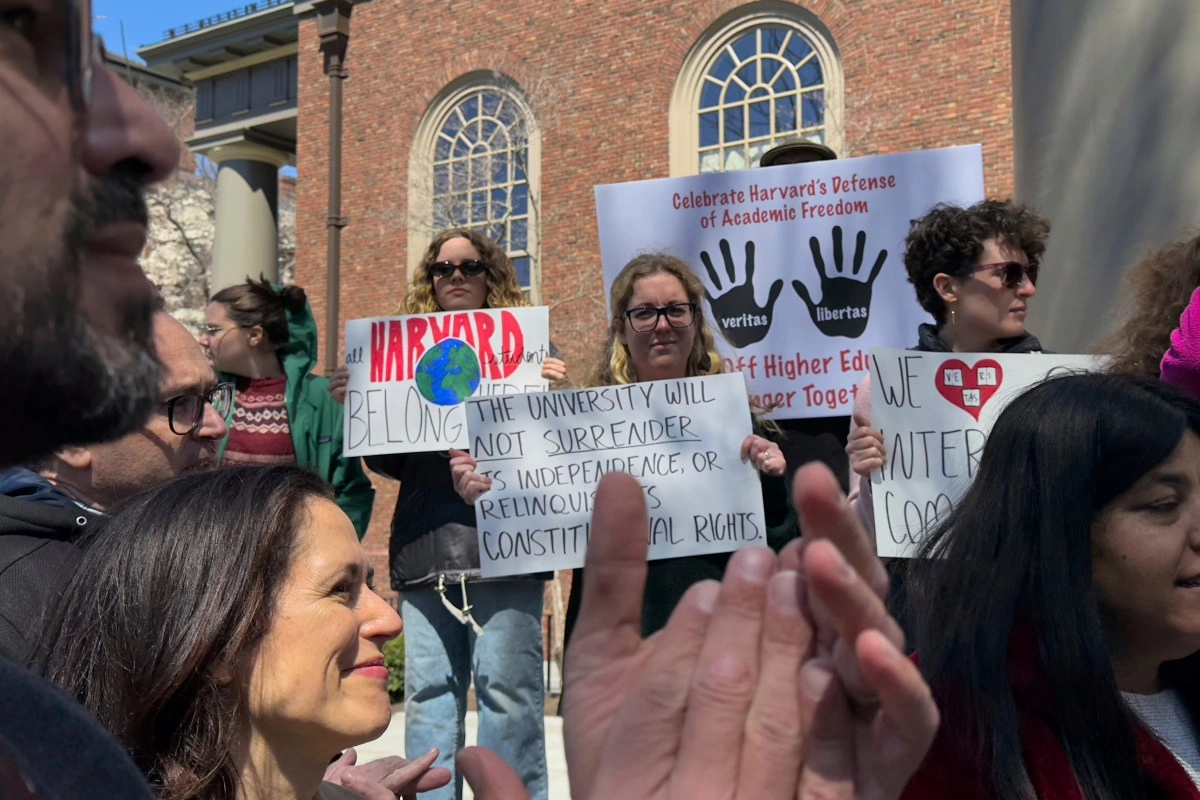
The institution responded with lawsuits in court and previously got another federal judge to block the attempt to withdraw those funds. Harvard also won a court ruling that halted the administration's efforts to prevent it from enrolling international students.
The dispute has been closely followed by other universities, whose leaders have considered Harvard's resistance as a precedent in the face of pressure from the White House.
As of Thursday, neither the White House nor Harvard had issued an official response to the new ruling. The Trump administration may still evaluate other legal avenues in its dispute with the university, as Harvard continues to defend its institutional autonomy and policies in the face of federal demands.