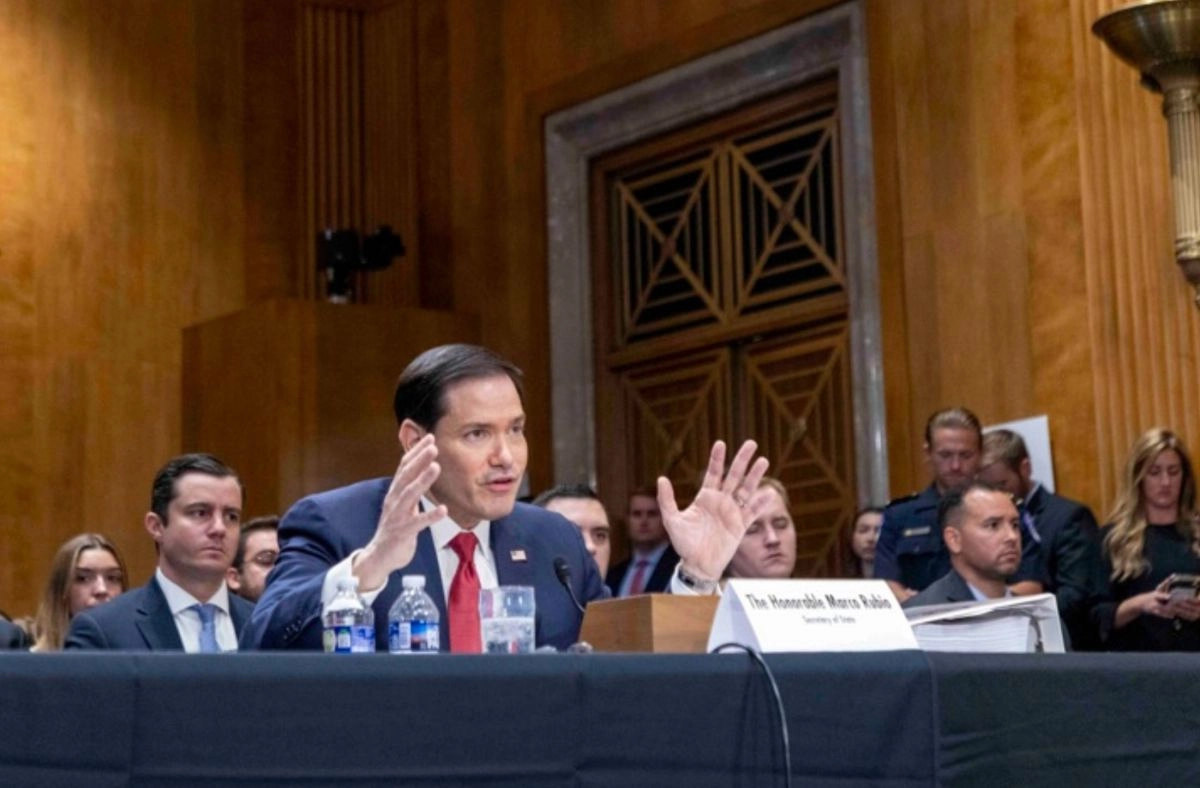

Marco Rubio affirmed this Tuesday that the Trump administration is not considering lifting sanctions against Iran in exchange for the country reopening the strategic Strait of Hormuz, one of the most important maritime routes for the global oil trade.
During a hearing before the Senate, the Secretary of State was clear in pointing out that this possibility “has not been discussed” nor has it been offered to Tehran; He explained that any sanctions relief will continue to be tied exclusively to changes in the Iranian nuclear program.
Sanctions linked to the nuclear program
"Iran is sanctioned because it has enriched uranium to high levels. Iran is sanctioned because of its nuclear activities," Rubio told lawmakers. He added that if the Iranian government agrees to abandon those activities and fulfills its commitments, then there could be a gradual easing of economic restrictions.
The statements came in response to questions from Democratic Senator Chris Murphy, who asked if Washington would be willing to relax its position to facilitate a reopening of the Strait of Hormuz, a key step for global energy transportation.
Debate in the Senate
Later, Republican Senator Rand Paul considered it positive that the administration kept open the possibility of negotiating a lifting of sanctions linked to the dismantlement of the uranium enrichment program. However, he noted that sanctions alone have not led to significant changes in Iran's behavior.
Rubio's statements make it clear that the White House maintains its strategy of pressure on Tehran and that any future negotiations will continue to focus on Iranian nuclear activities, not on the situation in the Strait of Hormuz.
Khamenei returns to the center of negotiations
Rubio also assured that he believes that the Iranian supreme leader, Mokhtabá Khamenei, is still alive and has assumed an increasingly active role in contacts aimed at reducing tensions between both countries. His comments come amid speculation about the status and location of Iran's top leader after weeks of conflict.
In addition, he suggested that Khamenei's public absence responds to security reasons derived from the internal situation of the regime. “We have not seen it in public and I imagine that, given what has happened to various leaders in the regime, being very publicly visible is probably not something that is recommended to them internally,” he said. The official added that, despite his low profile, the Iranian leader would be participating more directly in talks to seek a solution to the conflict and address key issues such as the reopening of the Strait of Hormuz.