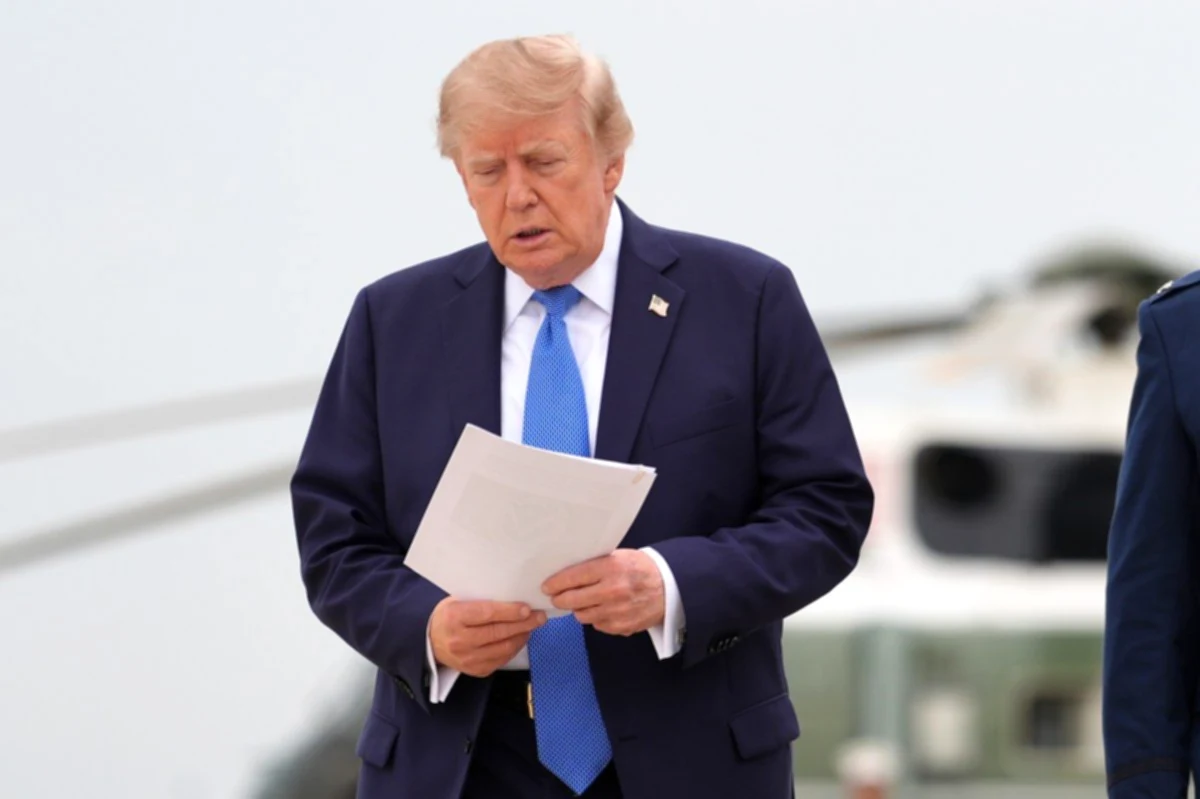

Many who tuned in to US President Donald Trump's press conference on Saturday were probably expecting to hear dramatic details about how US forces captured Venezuelan leader Nicolas Maduro in a raid before dawn.
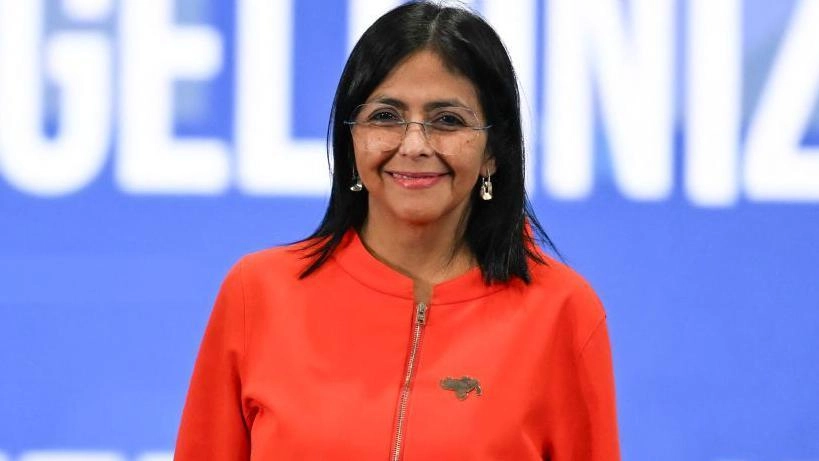
But arguably the most surprising moment came when Trump announced that, now that Maduro was in custody, The United States would “lead” Venezuela “until we can carry out “a safe, proper, and sane transition.” In another unexpected turn, he added that Secretary of State Marco Rubio had been speaking with Maduro's vice president, Delcy Rodriguez, who, he said, was “basically willing to do what we believe is necessary to make Venezuela great again.” However, Rodriguez, who will assume the interim presidency of Venezuela this Monday, was not initially very cooperative in her own subsequent press conference, in which she denounced Maduro's detention as a kidnapping and stressed that Venezuela would not become a colony. “What is being done to Venezuela is barbaric,” she asserted in a national radio and television address. After calling on her compatriots to come to the defense of their country, Rodriguez stated: “In Venezuela there is only one president, whose name is Nicolas Maduro Moros.” However, Rodriguez's tone changed radically on Sunday, when he posted a conciliatory message toward the US and Donald Trump after chairing his first cabinet meeting. "Venezuela reaffirms its commitment to peace and peaceful coexistence. Our country aspires to live without external threats, in an environment of respect and international cooperation," the message posted on his Instagram account reads. “We consider it a priority to move toward a balanced and respectful international relationship between the US and Venezuela, and between Venezuela and the countries of the region, based on sovereign equality and non-interference,” it adds.Trump made it clear that if Rodriguez “doesn't do the right thing, she's going to pay a very high price, probably higher than [Nicolas] Maduro.”
Given this exchange of contradictory messages, many are wondering who is now in charge in Venezuela.
Who is in charge?
According to the Venezuelan Constitution, in the event of the president's absence, the vice president assumes the office.
Thus, at first glance, the Venezuelan Supreme Court's decision that Delcy Rodriguez be the acting president of the country seems like a logical step.
But most observers of Venezuela expected the immediate consequences of a US intervention to be different.
The United States, like many other countries, did not recognize Nicolas Maduro as the legitimate president of Venezuela, after denouncing the 2024 elections as rigged.
Maduro was declared president by Venezuela's National Electoral Council (CNE), a body dominated by government supporters.
However, the CNE never released a detailed vote count to support its claim, and copies of the counts compiled by the opposition and reviewed by the Carter Center suggested that opposition candidate Edmundo Gonzalez had won by a landslide.
In light of this, the US and dozens of other countries recognized Gonzalez as president-elect.
Gonzalez, a little-known former diplomat, had the backing of popular opposition leader Maria Corina Machado, who he replaced in the elections after the Maduro government swept her from running.
After the security forces repressed the opposition following the elections, Gonzalez went into exile in Spain and Machado went into hiding in Venezuela.
For the past 18 months, they have been urging Maduro to resign and pressing for international support for their cause, especially from the US.
Machado's image was bolstered when she was awarded the Nobel Peace Prize for “her struggle to achieve a just and peaceful transition from dictatorship to democracy” in Venezuela.
Following the publicity and recognition she received after undertaking a risky journey from her hiding place in Venezuela to Oslo to collect the prize, Many assumed that any post-Maduro scenario would see her return to her native country to take the reins of power alongside Edmundo Gonzalez. Machado herself published a letter on social media after Maduro's capture in which she declared that "the time for freedom has arrived." "Today we are ready to fulfill our mandate and take power," she wrote. But the US president surprised reporters by declaring that Machado did not have the "support or respect" necessary to lead the country. Trump stated that his team had not spoken with Machado after the US attacks,but that Marco Rubio had spoken with Delcy Rodriguez. Trump's next remark might provide the answer to why the Trump administration is now Maduro's loyal lieutenant, at least for now. Trump quoted Rodriguez as saying, "We'll do whatever you want," and added, "She really doesn't have a choice."
Internal Support
Since Maduro's inner circle appears to still be in power in Venezuela, US officials may have considered that the smoothest transition would be achieved if someone from the current government assumed power.
“They believe they can establish a tutelage-like arrangement, rather than intervene on the ground and take over the day-to-day operations of the country,” said Mara Rudman, a former senior national security official who served in the Clinton and Obama administrations. administrations.
Rudman described this approach as unprecedented in the modern era.
In his press conference, Trump stated that the US was “prepared to launch a much larger second attack if necessary,” which seems to explain why he believes Delcy Rodriguez has no choice but to comply with US orders.
The fact that Rodriguez was seen surrounded by some of the most powerful men in Maduro's inner circle hours after the president was arrested and taken out The country's presence seems to suggest that she has also won their support.
Beside her were her brother Jorge Rodriguez, president of the National Assembly of Venezuela, the Secretary of the Republic for Defense, Security and National Sovereignty, Diosdado Cabello, the Secretary of the Republic for Defense, Security and National Sovereignty, Vladimir Padrino, and the Commander-in-Chief of the Armed Forces, Domingo Hernandez Larez, among others.
This will have pleased US officials concerned that Maduro's capture could lead to a power struggle among his inner circle that could destabilize the country.
But Delcy Rodriguez's initial message to the USThe US statement we mentioned at the beginning would have been less palatable to American ears.
“We will never again be a colony of any empire,” he insisted, vowing to “defend” Venezuela.
While he certainly didn't look like the person Trump had described as “willing to do US bidding,” there has been speculation that he might have adopted a nationalist tone to keep Maduro's most loyal supporters on his side.
And, as noted, his tone was much more conciliatory a day later.
When Marco Rubio was asked about Trump's support for Rodriguez and his statements, Rubio told CBS on Sunday that the US would make an assessment based on his actions, not his words.
“Do I know what decisions people are going to make? No,” he added,apparently implying that he wasn't as certain as Trump about Rodriguez's willingness to cooperate with the US
In what was shown He was unwavering in the US's willingness to pressure the interim government of Rodriguez.
“What I do know is that if they don't make the right decisions, the US will maintain multiple levers of influence to ensure the protection of our interests, and that includes the oil quarantine that is in place, among other things,” he stated.
In an interview with ABC, Rubio also appeared to suggest that new elections should be held in Venezuela.
“The government will emerge after a transition period and real elections, which they haven't had.”
Rubio also appealed to “realism,” implying that new elections would take time: “Everyone is asking: why, 24 hours after the arrest of Nicolas Maduro, are there no elections scheduled for tomorrow? That's absurd.”
John Bolton, who worked on plans to remove the president of Venezuela when he was national security advisor in Trump's first term, welcomed the US military operation and the Maduro's capture.
However, the prominent Trump critic told the BBC that it was unlikely Rodriguez would yield to the US, especially since the regime continued to have the backing of China, Russia, and Cuba.
“The most rational thing in this case is to overthrow what remains of the Maduro regime and put the opposition in power until free and fair elections are held. They have capable people to run an interim government while the elections are organized.”
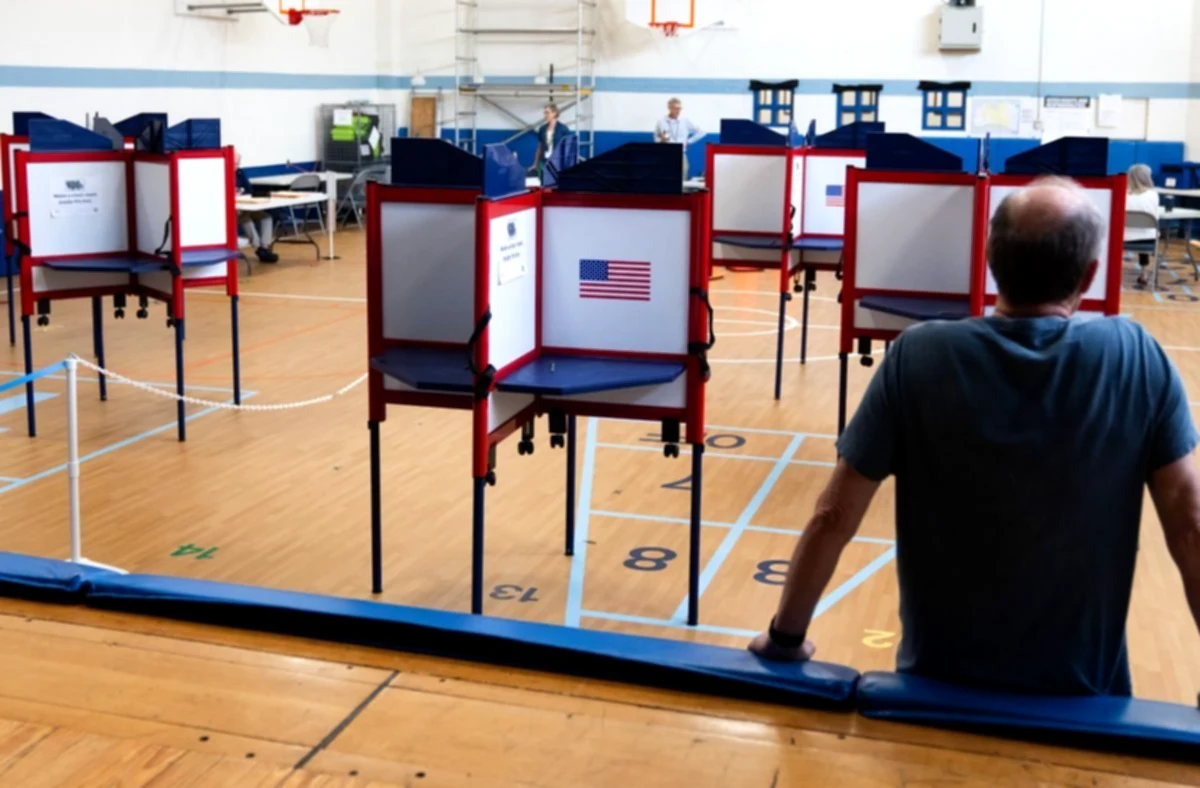
Undoubtedly, talk of new elections will disappoint not only Maria Corina Machado and Edmundo Gonzalez, but also many of the Venezuelans who voted for them and who have been adamant in their desire for those votes to be respected.
The opposition has long insisted that it is not possible to hold free and fair elections while the key institutions involved in their organization are filled with Maduro supporters. Reforming these institutions will take time.
Therefore, in the short term, it seems likely that Venezuela will be governed by Delcy Rodriguez and Maduro's inner circle, as long as they meet the Trump administration's expectations.
How long this situation lasts will depend on whether Rodriguez is able to find a middle ground between satisfying Trump's demands and the interests of Maduro's base.
She may soon find herself between a rock and a hard place.