Laura Fernandez Delgado is the new president-elect of Costa Rica.
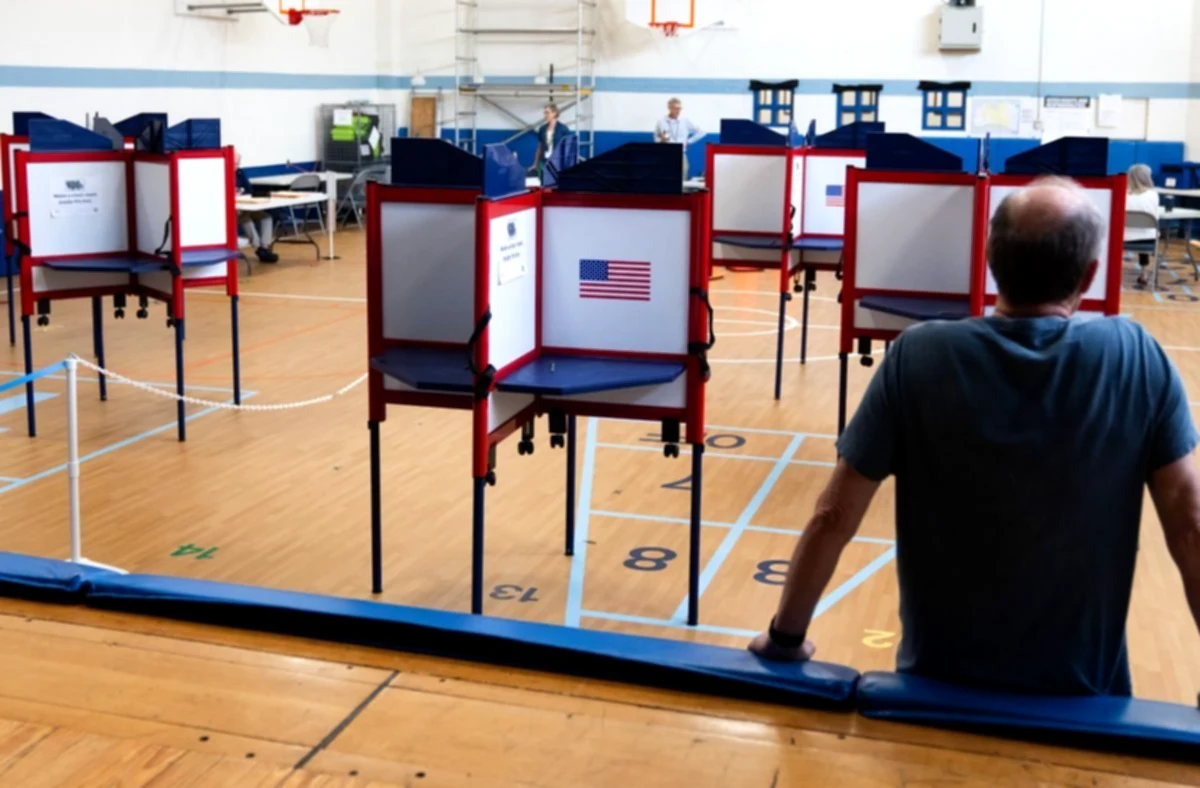
The candidate of Pueblo Soberano, the center-right party of outgoing president Rodrigo Chaves, achieved a resounding victory in Sunday's presidential elections, allowing her to take power without the need for a runoff.
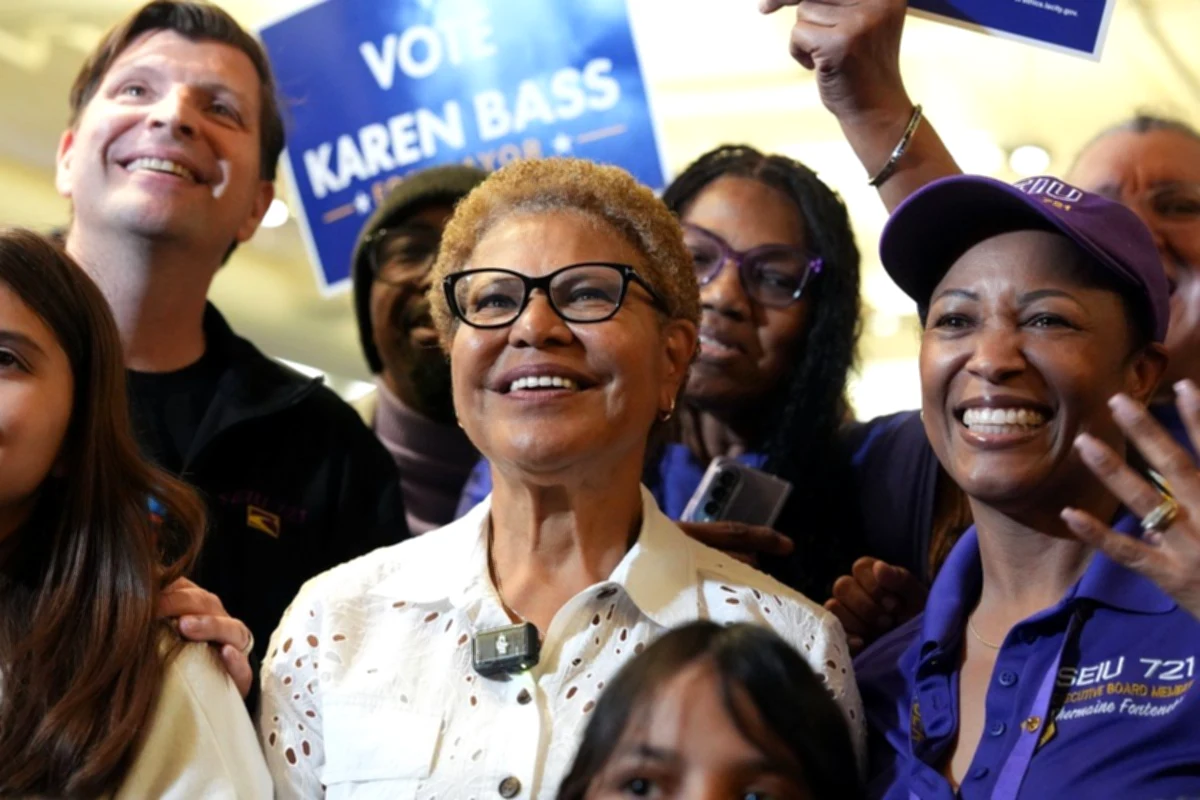
With more than 48% of the vote, she defeated her Nineteen of her closest rivals, including Alvaro Ramos of the National Liberation Party, who came in second with 32%, according to data from the Supreme Electoral Tribunal (TSE) with more than 88% of polling stations counted. Her party also won 30 of the 57 seats in the Costa Rican parliament. In her first speech after her victory on Sunday night, she promised to “preside over a government of dialogue and national harmony, respectful and firm in upholding the rule of law,” although she was very harsh on part of the opposition, which she described as “obstructionist and saboteurs.” She also made statements in favor of “life,” family, and the free market, and repeatedly expressed her gratitude to Chaves, who supported her as his successor for the 2026-2030 term. Fernandez, 39, will become the second female president in Costa Rican history on May 8. after Laura Chinchilla (2010-14).
We tell you who she is.
Chaves's “heir”
Laura Fernandez entered the presidential race without prior electoral experience.
Trained in Political Science by the University of Costa Rica and specializing in Public Policy, she has built a technical profile that positioned her as the president's trusted confidante.
“Nobody has to explain to me how institutions work or tell me where there are problems,” Fernandez told Diario Extra. “I know very well how to be a manager in the public sector.”
Former Minister of Planning and former Minister of the Presidency under Chaves, both positions she resigned to launch her presidential candidacy, the main difference with the president is not so much one of ideas but of style.
During the campaign, Fernandez presented herself as the “heir” of Rodrigo Chaves, a leader with a confrontational style and a discourse critical of the traditional political class, who ends his term with a positive image among more than half of Costa Ricans, according to polls cited during the campaign.
His followers often identify themselves as “Rodriguistas,” a direct reference to the outgoing president.
Fernandez faced the challenge of building her candidacy in the shadow of a strong president, explains Ronald Alfaro-Redondo, PhD in Political Science from the University of Pittsburgh.
“Chaves maintains a direct and even confrontational tone, which makes him appear as a firm politician. Fernandez’s style is different from the president’s, which poses a challenge for the candidate,” the academic states.
“The president has made efforts to transfer his high popularity, based on his personalistic style,” he adds.
Fernandez’s candidacy starts from the high ground left by Chaves. The president's positive image has allowed him to build a campaign around the idea of ??continuity rather than change.
“Continuity means deepening, without hesitation, the frontal fight against drug trafficking and organized crime, with the firmness and iron fist that only we have dared to exercise,” the candidate said during the campaign.
The Chaves administration has highlighted as achievements 5% economic growth, a reduction in unemployment from 13% to around 7%, negative inflation, and a drop in poverty to 15.5% by 2025, according to official data reiterated by the ruling party's candidate.
These economic indicators, along with the anti-corruption rhetoric of the traditional parties, have been some of the main pillars of the message that Fernandez has conveyed to voters.
According to measurements by the Center for Political Research and Studies at the University of Costa Rica, 58% of those surveyed value positively reflects on Chaves's administration.
“The support he receives is based on aspects of his personality, his manner and style, rather than his performance in government,” Alfaro-Redondo tells BBC Mundo.
Security as a priority
In her government program for the next four years, the candidate from the Sovereign People's Party has emphasized security in a country that has shown an alarming increase in violence in recent years.
Costa Rica registered the third highest homicide rate in its history in 2025 (16.7 per 100,000 inhabitants), according to the country's Judicial Investigation Agency. Of these, almost 70% of the homicides are linked to drug trafficking.
Fernandez said that, if she wins the elections,could declare a state of emergency in conflict zones of the country. To that end, she has called on the population to grant her a legislative majority of 40 deputies, necessary to advance her reforms in Congress.
“As the future president of Costa Rica, I am prepared, in strictly necessary cases and if we were to see an escalation in contract killings and crimes related to organized crime, to request the Legislative Assembly to lift or suspend individual guarantees,” Fernandez stated during the campaign.
The decision to suspend constitutional guarantees to allow, among other things, the detention of suspects without a warrant is one of the proposals most questioned by the opposition.
“Laura, why are you promoting the suspension of individual guarantees instead of finding solutions to the security crisis?” the leftist candidate, Ariel Robles, asked Fernandez during one of the presidential debates.
Two weeks before the elections, Chaves received the president of El Salvador, Nayib Bukele, to announce the start of construction on the High-Containment Center against Organized Crime, a mega-prison located near the country's capital.
In his government program, Fernandez assures that he will move forward with the construction of this penitentiary, with a capacity for 5,000 detainees, which represents a “modern infrastructure, designed to isolate the leaders of crime.”
However, the opposition maintains that the construction of this high-security center, inspired by the controversial Center for the Confinement of Terrorism (Cecot) in El Salvador, is not the answer to solving the problem of insecurity.
Furthermore, they add that the government has announced the start of construction, but it has not yet begun.
“They weren't even capable of laying the first stone in a media spectacle,” questioned Claudia Dobles, centrist presidential candidate for the Citizen Agenda Coalition, who classified the promise as “ridiculous.”
The challenge of continuity
Fernandez proposes to continue with the The judicial reform initiated by the current president, a measure that several analysts interpret as an intrusion into the separation of powers, threatens the rules established in the Constitution.
“In Costa Rica, there is a principle of non-belligerence. Undoubtedly, the president has extended the limits,” explains Alfaro-Redondo regarding Chaves's crusade against the judiciary.
Last October, Costa Rica's Supreme Electoral Tribunal petitioned Congress to lift the president's constitutional immunity in order to prosecute him for alleged interference in the current political campaign, a request that was rejected twice.
In economic matters,The presidency of Chaves has shown growth close to 5%, a drop in unemployment to less than 7%, and negative inflation, according to official data presented in his government program. However, the main opposition leaders to the Chaves government assert that the stabilization of the macroeconomy has been strengthened at the expense of a reduction in social investment. “A primary surplus cannot be achieved at the expense of a child without a scholarship and with educational setbacks (…) In our government, we will not cut social program funds to achieve surpluses,” emphasized the leftist candidate, Robles, during his campaign. Fernandez competed from the wide advantage afforded by being Chaves's chosen successor. “Laura is very close to the president, but now she will also have to manage things in her own style,” adds Alfaro-Redondo. The open question is what her government will be like, in the shadow of the former president, and what role she will play. The former president will occupy the position.
“That will be one of her biggest challenges, given that her candidacy is emerging in the shadow of President Chaves,” says Alfaro-Redondo.
Fernandez stated in press interviews that she would like Chaves to be Minister of the Presidency or Minister of Finance, something unprecedented in Costa Rica.
“This is completely unusual in Costa Rican politics. In this country, when a former president finishes their term, they leave the field clear. We'll have to see how she handles that,” the analyst points out.