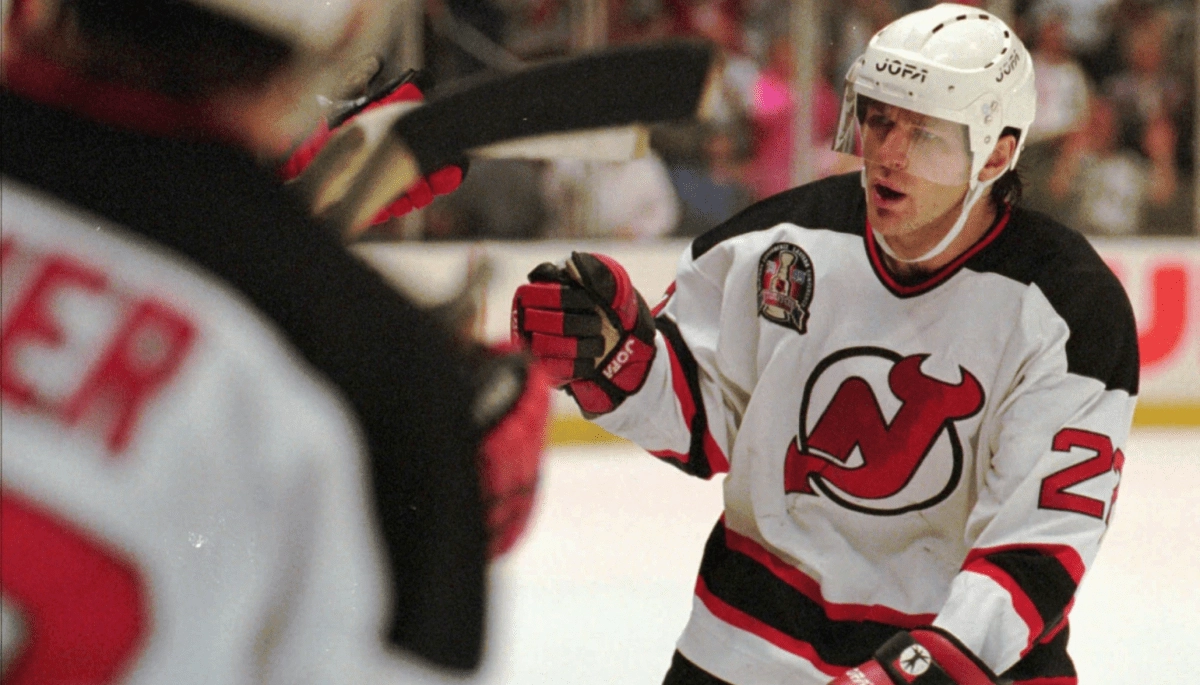

The family of Claude Lemieux, former Canadian National Hockey League (NHL) player, confirmed the decision to donate his brain to the Boston University Chronic Traumatic Encephalopathy Center. This action seeks to investigate the effects of repetitive brain injuries in athletes.
Lemieux, who played nearly 1,500 games in the NHL from 1983 to 2009, was noted for his aggressive play and exceptional performance in decisive situations, earning him four Stanley Cup titles. After his retirement, Lemieux dedicated himself to working as an agent, focusing on helping the new generation of players. His legacy is not only limited to his career, but also to the support given to other athletes, reported the Associated Press (AP).
The case comes up due to his recent death. Lemieux was found dead early on May 28 inside the warehouse of Andros Home, his family's furniture business in Lake Park, Florida. The Palm Beach County Sheriff's Office confirmed suicide as the manner of death, the New York Post reported, which detailed Lemieux's death as hanging.
Reflections on mental health in sport
Lemieux's relatives expressed hope that research into Claude's brain will help promote greater understanding of mental health issues in athletes, and encourage more open and honest conversations on the topic.
“Claude dedicated his post-retirement career to helping the next generation,” the family stated, referring to Lemieux's foray as an agent. “By linking his name to this investigation, we hope his life will contribute to greater understanding, more honest conversations and better protection for athletes and their families for years to come.”
The act of donating your brain is part of a broader effort to improve the protection of athletes and their families, ensuring their mental and physical health needs are taken into account.
Chronic traumatic encephalopathy
Chronic traumatic encephalopathy (CTE) is a degenerative condition caused by repeated head trauma, which is typical of contact sports.
The symptoms of CTE can include memory loss, aggression, mood swings and even depression, but the most serious thing is that it can only be confirmed postmortem.
At the moment, there is no finding of CTE in Lemieux, but it is not ruled out either. For this reason, his family undertakes this task and leaves the determination in the hands of science.
Recent research indicates that a significant percentage of athletes who have died by suicide have CTE. These findings are a call to action to improve athlete mental health awareness and prevention.
In this sense, we remember that cases like that of former American football player Shane Tamura, and that they do not happen again. It is a clear example of an outcome involving CTE.
Symptoms of CTE in hockey players
The most common symptoms of chronic traumatic encephalopathy in hockey players fall into four main categories, and typically appear years or decades after repetitive head impacts.
Initial symptoms (onset in young adulthood, ~4th decade):
Later symptoms (develop later, ~7th decade):
Key characteristics in hockey players:
CTE is a progressive brain disease that can lead to death within 10-15 years after the onset of symptoms.
You may also be interested in:
· Blows to the head: when they should be taken into account · Warning signs! 1 in 3 people in the world has neurological disorders, according to the WHO George Atkinson, Super Bowl XI champion with Raiders, died