
Montreal usually sells itself in the summer. After the cold months, the terraces and pedestrian streets return. The festival calendar changes every week. The bicycle becomes a practical way to get around the neighborhoods. The markets are filled with seasonal products and even hot days find a remedy in a spa installed on the San Lorenzo River.
In 2026 there is a less obvious reason to choose it. It is fifty years since the Olympic Games and the city decided to spend the summer reviewing what happened in 1976. The anniversary programming includes exhibitions and special tours of the Olympic Stadium; The facilities that still exist also recovered part of their history. Nadia Com?neci, who here scored the first perfect 10 in Olympic gymnastics, returns to the city for the central event of the commemoration. In September, the World Road Cycling Championships will once again bring international competition to the streets.
For a traveler from Los Angeles, the coincidence has an added appeal. LA will host the Games in 2028 for the third time and maintains it can host them without building permanent sports venues. Montreal took another path: it built a stadium conceived as an emblem and arrived at the inauguration with the work incomplete. It finished paying off the debt associated with the complex in 2006. For decades, the bill dominated the memory of Montreal 1976. The anniversary broadens the look at what happened since then and at how the city preserves that summer. My entry into that history was at the McCord Stewart Museum.
The anniversary begins at the McCord Stewart Museum
The exhibition Montreal 1976: An Olympic Feat opens with the image that the city wanted to project to the world. The signs and signage pictograms retain a modernity that I did not expect to find in materials from half a century ago. The organizing committee created a visual language capable of guiding thousands of visitors and maintaining the same identity from an entrance to the uniform of thousands of employees and volunteers.
The sports history appears immediately. On July 18, 1976, Nadia Comăneci was 14 years old when she earned Olympic gymnastics' first perfect 10 on the uneven bars. The Montreal Forum scoreboard was not prepared to display that rating and flashed a disconcerting “1.00.” The Romanian repeated the perfect score six more times and left the city with five medals, three gold.
For Canadians, another great image came in the rain. Greg Joy cleared 2.23 meters in the high jump final and won the silver medal. The athletes' stories lead the way to the less celebratory part of the journey.
The exhibition focuses on the people who built the public face of the Games. In the museum are the drawings that promised the building and the cartoons that made fun of it. Inflation coincided with prolonged strikes. Design changes further increased costs. The Olympic Stadium opened with the tower and roof pending.
The International Olympic Committee estimates that Montreal 1976 earned 606 million Canadian dollars in revenue and had 383 million in operating expenses. Capital expenditure reached 1,210 million. That difference matters: the competitions were able to operate with income greater than their expenses, but the construction of the facilities left an account that took thirty years to close.
The more cumbersome documents explain another part of the cost. The retrospective addresses the so-called “Olympic cleanup” promoted by Mayor Jean Drapeau, which included harassment of homosexual communities and arrests of homeless people. The campaign also removed posters from public spaces. Corridart, an artistic intervention installed on Sherbrooke Street as part of the cultural program, was dismantled by municipal order during the night of July 13, four days before the inauguration.
This material prevents the anniversary from becoming a complacent celebration. It also allows you to better appreciate the graphic identity and the effect that athletes had on several generations. The McCord lets the two versions share the same space.
The journey took me about two hours. Make sure you reserve time because the museum also presents On the Menu, an exhibition on the history of Montreal restaurants. I came to it after several days in markets and kitchens in the city, and it functioned as the index of everything I had already eaten. I told that gastronomic route separately, from the Tlaxcaltecan corn of Bar Luz to the stalls of Jean-Talon.
The Olympic exhibition will be open until September 13. During the summer, the anniversary was extended to other museums through a “cultural marathon.” The Museum of Fine Arts incorporated works related to sports and the MEM gathered stories and memories from 1976. That way, someone interested in art can follow the theme without spending the entire trip around a track.
From the museum to the Olympic Stadium
After the McCord, the next logical step is in the east of the city. The journey is made by metro and allows you to spend half a day at the Olympic Park. In 2026, a 75-minute guided tour was released and will be available until September 27.
The construction keeps the interior of the stadium and the Montreal Tower closed, so the tour does not function as a conventional visit to the stands. The route enters areas that normally remain off-limits, including the former locker room of the Montreal Expos, the baseball team that played there for twenty-eight seasons. It is important to check hours and conditions before going because access may change as the renovation progresses.
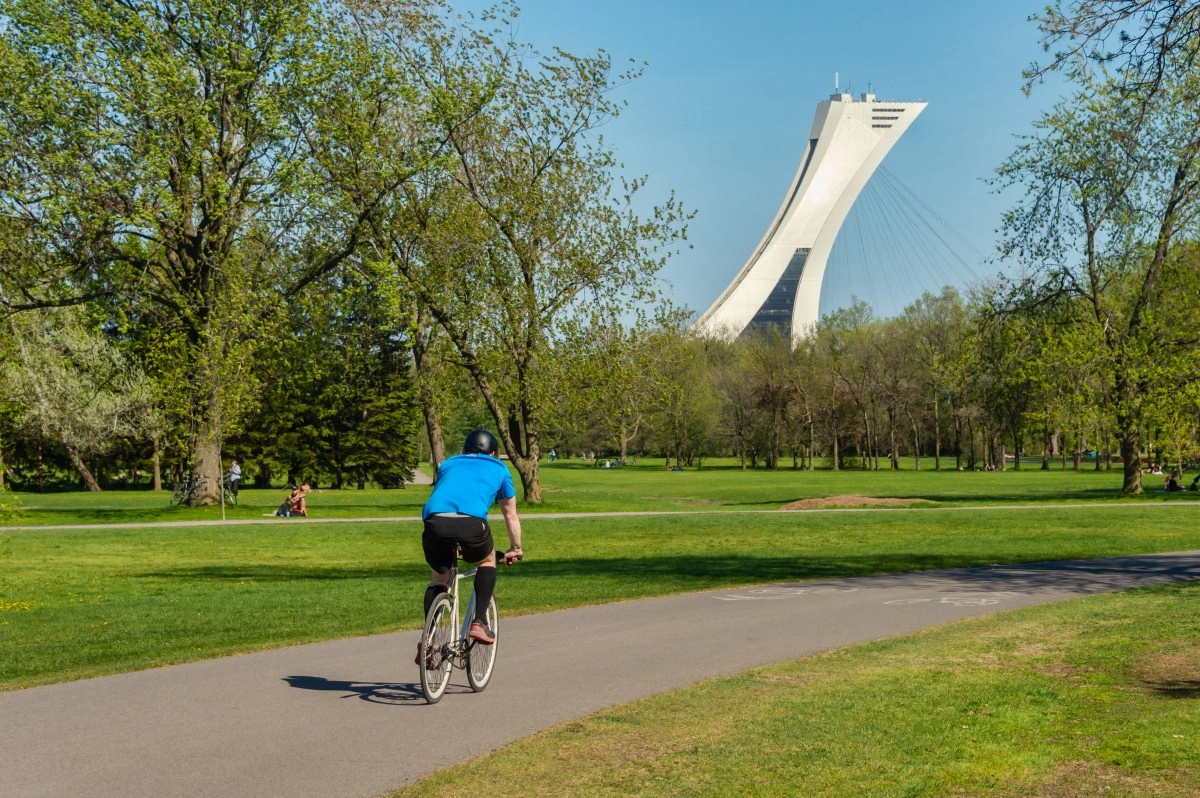
The contrast with the McCord justifies the move. In the museum are the plans and the promises. In the Olympic Park is the building that had to live with all of them. The leaning tower was completed more than a decade after the Games and roof problems became a constant. Another cover replacement is currently underway.
Next to it is the clearest example of a second life. The velodrome that hosted track cycling and judo became the Biodôme in 1992, a natural science museum where five American ecosystems are reproduced. The structure retains its curved profile, but the interior experience is no longer related to the competition for which it was designed. With children, it is the stop that best sustains an entire morning.
The fiftieth anniversary added a free display in the stadium rotunda and historical outdoor photographs. He also brought concerts to the esplanade. For August 1, fifty years after the closure, the program reserved its main celebration: the Feu sacré show, with artists from Quebec and a tribute to Nadia Com?neci. Her participation connects the teenager who forced a “1.00” to be reinterpreted with the most recognizable face of those Games.
Summer takes to the streets
This tour works best in summer. Between June and September temperatures can hover around 80 degrees Fahrenheit. The afternoons get longer and a good part of the cultural programming takes to the streets. There are jazz, circus, urban art and African music festivals. Piknic Électronik occupies Parc Jean-Drapeau during the warm months.
One morning I picked up an electric bike at Ça Roule Montréal, near the Old Port, and followed the Lachine canal southwest with Octavio Amaro of Tourisme Montréal. The route passed through Griffintown, Little Burgundy and Saint-Henri. They are neighborhoods linked by a corridor that during the 19th century helped turn Montreal into an industrial center. The old warehouses and factories now coexist with homes, workshops, restaurants and businesses that were established around the water.
The road is flat and lends itself to advancing without haste. In about two hours you can cover a considerable part of it, stopping by the canal and reaching Atwater Market. The art deco building has been in operation since 1933 and remains a useful stop to grab a bite to eat. From there you can return to the center or continue towards Lachine; The complete route reaches between 35 and 40 kilometers round trip.
For those who don't want to take the long route, Tourisme Montréal estimates that the canal is about 15 or 20 minutes by bike from the center. BIXI allows you to take and leave bicycles at different points, while rental stores offer conventional and electric models. It's worth checking what the rental includes and bringing a bottle of water on hotter days.
That drive explained Montreal to me better than anything else I did on the trip. The bicycle is used to get to places and allows you to see what happens between them. On the way I passed people walking and runners using the same route. Near the water, several families spent the afternoon. The ride maintains interest even when there is no attraction in front of it.
The canal has also added a 3.6 kilometer cultural corridor that connects Old Montreal with the southwest through galleries and heritage buildings converted into art spaces. It is an option for those who want to incorporate contemporary culture into the route without locking themselves up for another full afternoon in a museum.
After pedaling, Montreal offers good reasons to slow down. For example, the Bota Bota spa, which occupies an old ferry anchored in the Old Port and allows you to go through saunas, steam baths, swimming pools and rest areas overlooking the river. On July 15, the Pavillon, a second vessel with a larger Aufguss sauna and four individual cold baths, opened. The location makes it easy to combine the water circuit with Old Montreal or with dinner downtown.
Food deserves its own planning. Montreal made the Michelin Guide's first selection for Quebec in 2025, and the 2026 edition expanded the conversation around its restaurants. During my visit I found a scene that relies on seasonal products and migrant communities that have built businesses in different neighborhoods. Jean-Talon looks especially good on a sunny morning; Bar Luz and Hélicoptère showed two very different ways of working with Quebec ingredients. Here it is best to reserve and let the ten bites guide do the more detailed work.
An afternoon of music about Olympic history
Piknic Électronik took me to Parc Jean-Drapeau on a Sunday in May. From the center, the Yellow Line crosses the river and drops off attendees near the venue. That day the music started in the afternoon and the public took advantage of one of the first sunny weekends of the season.
The visit can take up much more than the hours of the festival. La Biosphère preserves the structure of the United States pavilion at Expo 67 and operates as a museum dedicated to the environment. The trails allow you to explore Île Sainte-Hélène and cross to Île Notre-Dame, where the Gilles-Villeneuve circuit and the Olympic basin meet.
The islands were expanded and modified for Expo 67. Nine years later, the basin hosted the Games' rowing and canoeing competitions. Continue receiving high-performance competitions and training. During the fiftieth anniversary, Parc Jean-Drapeau added a free 45-minute interpretive tour of Île Notre-Dame and activities with athletes returning to the facility. A great plan for the weekend is to visit the Biosphère and tour the park by bike. With the calendar in your favor, you can end the afternoon in front of a stage. The installations from 1967 and 1976 form the landscape where Montreal organizes part of its current cultural life.
The schedule changes frequently and major events may modify access. It is a good idea to check the calendar before choosing the day, especially during Formula 1 and the busiest festivals. On a normal day, the metro avoids dependence on the car and simplifies returning to the center after a concert.
The history that Montreal shares with Los Angeles
LA28 builds on the reputation that Los Angeles built in 1984. The organizing committee says it will be the first edition in eighty years without new permanent venues built specifically for the Games. The Coliseum and SoFi Stadium headline a network of existing facilities spread across Southern California.
The challenge is also in the distance between the headquarters. LA Metro estimates up to one million additional trips each day and is preparing a supplemental spectator system, with bus lanes and better walking and cycling connections. The agency presents those investments as lasting benefits for neighborhoods, a promise that will have to be measured after decommissioning. The daily transformation of Metro is already part of the conversation in Los Angeles.
Montreal doesn't offer a formula for Los Angeles. The two cities have different scales and a good part of what travelers enjoy in Quebec was born outside of the Olympic project. The anniversary, however, allows you to visit this city in the French-speaking region of Canada with a look that can be very interesting.
In 1970, Los Angeles lost this seat in the Amsterdam vote. Fourteen years later she received hers without rivals, because what happened in Montreal had scared away the rest of the candidates. In 2028 he returns with a plan designed to not repeat that. The McCord exhibition closes on September 13 and the guided tours of the Olympic Park on the 27th: there are six weeks left to come and see what exactly it was that no one wanted to repeat.
Transparency: The trip was organized with support from Tourisme Montréal, which covered transportation, accommodation, and some of the experiences mentioned. Editorial decisions and opinions belong to the author.