
Google has taken advantage of the Made by Google stage to present Pixel Tag, its first smart tracker designed so that keys, backpacks, purses and suitcases stop becoming small everyday mysteries. The device arrives integrated into the Pixel and Android ecosystem with a simple and powerful proposal, finding personal items from your cell phone, watch or even through voice commands with the Pixel Buds.
Pixel Tag arrives to monitor your important objects
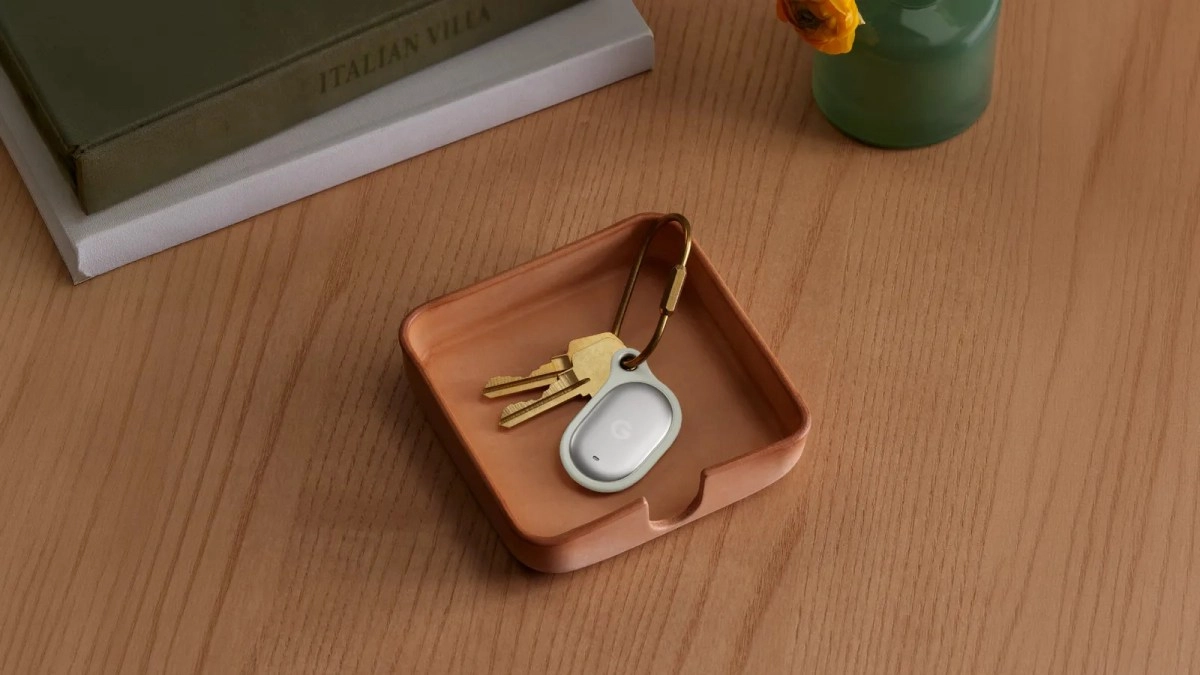
The Pixel Tag debuts as Google's official response to the growing popularity of Bluetooth trackers. Its function is clear, to accompany the objects that we usually lose sight of and offer tools to recover them quickly. It can go inside a suitcase before a flight, on a keychain with the right accessory, in a work backpack or next to a purse that always seems to hide just when there's a rush.
Google has opted for a thin and light format made of resistant stainless steel. The design seeks to withstand daily use and has IP67 certification against dust and water. In practical terms, this provides peace of mind against splashes, rain or an accident with a bottle inside the backpack. The company also points out that it is designed to resist bending and cracking, although it is worth remembering that it is not indestructible nor is it designed to survive strong blows without consequences.
One of its most interesting points is in the battery. The Pixel Tag offers an estimated autonomy of up to one year of use and allows you to replace the battery without complications. This is an important detail because it prevents the tracker from becoming a disposable product when it comes time to renew the energy. The actual duration will depend on elements such as how often the device is sounded, precision searches, and environmental conditions.
Google has also incorporated a speaker inside. When the object is close, simply open the Find Hub app and ring the Pixel Tag to keep track. It's the kind of function that seems small until you have to search for keys between cushions, accumulated clothes, or the bottom of a backpack. And there is a curious twist to the idea, since the Pixel Tag itself includes a button capable of ringing the linked phone.
Find Hub and UWB make searching much more precise
The key to the Pixel Tag does not lie solely in the small metal accessory. Its big advantage is in Google's Find Hub network, formerly known as Find My Device. From the application, the user can consult the location of their objects on a map, review the last detected point and activate the sound of the tag when it is within Bluetooth range.
When the object is outside that close range, the system enters much more ambitious territory. Find Hub leverages a network of over one billion Android devices to help securely locate a lost item. This infrastructure allows a nearby Android mobile to detect the Pixel Tag and help update its location without revealing the personal information of those participating in the network. Google ensures that this location data is protected with end-to-end encryption.
The experience goes up a notch thanks to Ultra-Wideband connectivity with Bluetooth Channel Sounding. On compatible Android phones, this technology enables precision search with visual indications of distance and direction. Instead of looking at a map and starting to walk randomly, the phone can guide the user to the tag with clear signals until it is found. It is especially useful when the object has been left between the sofa cushions, under a pile of clothes, or hidden in a large room.
Pixel Tag also incorporates forgotten item alerts. If the user walks away from their keys or wallet, Find Hub can send a preemptive notification. It doesn't eliminate confusion, of course, but it does help detect them before an everyday trip becomes an unnecessary trip home.
Safety occupies a relevant place in this product category. The phones will detect an unknown Pixel Tag that is traveling with a person and display instructions to ring it and take action next. This layer is designed to reduce misuse of trackers and give the user useful information when a foreign device appears nearby while traveling.
Pixel Tag compatibility, price and availability
Setting up a Pixel Tag will be very easy. Google indicates that simply remove the battery tab and bring the accessory closer to an Android device running Android 9 or later. Pairing is done using Fast Pair and the object can be identified with a predefined category or a custom name within Find Hub.
The tracker allows you to share your access with up to ten people. This capability is especially practical for objects that belong to a family, a couple, or a work team. A shared suitcase, car keys, or a backpack with technical equipment can be visible to authorized people without relying on a single account.
Google's approach also strengthens the connection between its devices. Pixel Watch owners can locate and ring the tag from their wrist via Find Hub. Those using Pixel Buds will be able to ask Gemini to ring the tracker, a feature with plenty of potential for those times when you're leaving the house with your hands full.
The Pixel Tag will cost $29 per unit in the United States. Google will also sell a package of four units for $99, a logical alternative for those who want to cover several important objects from day one. Its commercial launch is scheduled for November 11.
With that price, Google makes the Pixel Tag an accessible piece of its ecosystem strategy. The great appeal is not only finding something lost, but also preventing forgetfulness, sharing the location of important objects and accessing a gigantic Android network from a familiar interface. For many Pixel and Android users, this little device may end up being one of the most useful accessories featured at Made by Google.