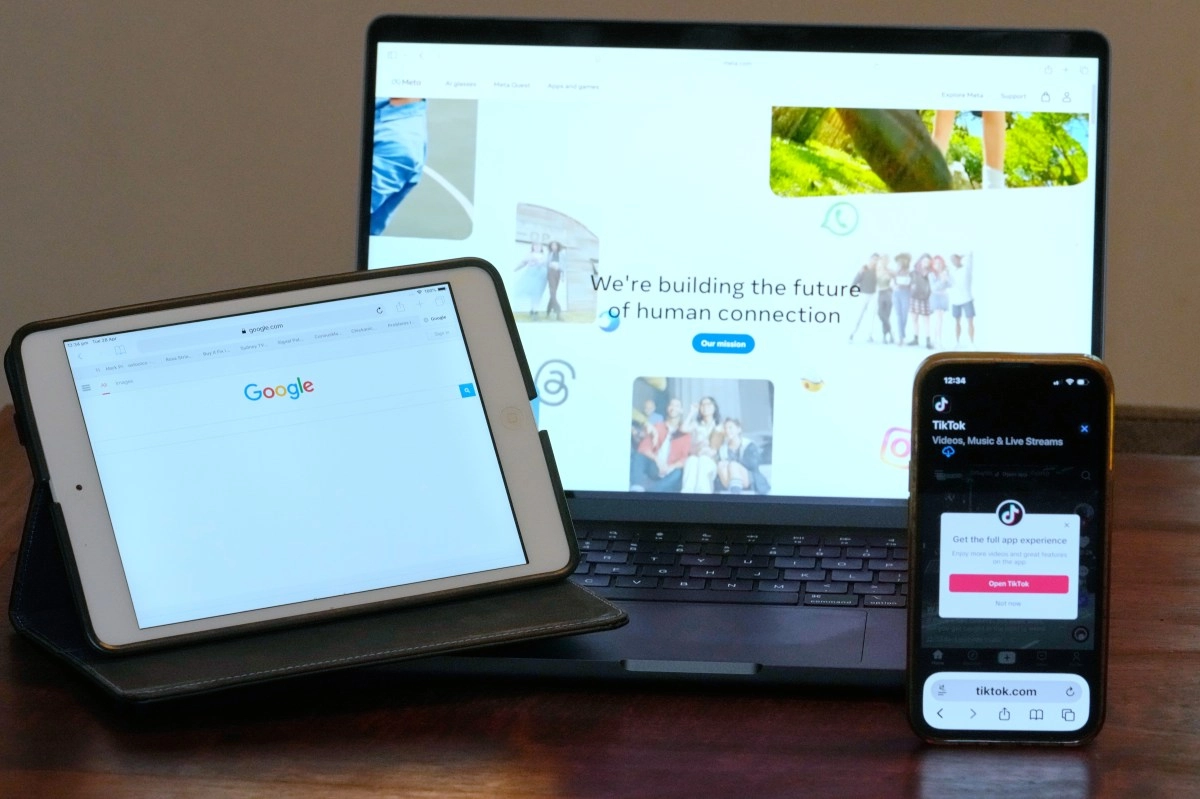

A federal appeals court on Monday rejected the argument of Meta, Google, TikTok and Snap that a 1996 law protects them from thousands of lawsuits related to the alleged addictive design of their platforms for children and teenagers.
The Ninth Circuit Court of Appeals, based in San Francisco, California, ruled that companies cannot use Section 230 of the Communications Decency Act as a blanket immunity from claims challenging the way they designed and operated their products.
The ruling allows more than 3,000 lawsuits filed by states, school districts, families and users who claim the platforms contributed to problems among young people, including depression, anxiety and body image difficulties, to proceed. Judge Jacqueline Hong-Ngoc Nguyen wrote in the decision that the court “disagrees” with the arguments presented by the companies and noted that the law does not provide that the protection can be applied generally to these types of claims.
The companies had argued that Section 230, passed in 1996, not only protected them from certain lawsuits related to user-generated content, but also prevented them from being sued for allegedly failing to warn the public about the potential addictive effects of their platforms. However, the Ninth Circuit found that the companies had attempted to appeal too soon and determined that Section 230 provides a defense to liability, but not absolute immunity from lawsuits.
Meta also fails to delay the trial of several states
The court also rejected a request by Meta to delay a trial related to a lawsuit filed by state attorneys general, scheduled to begin Wednesday in federal court in Oakland. The states accuse Meta of having designed Facebook and Instagram features to keep children and adolescents hooked on their platforms, in addition to having collected and used information from minors and minimized possible risks to their safety.
The ruling represents another legal setback for the technology company. Last week, a New Mexico court ordered Meta to pay $567 million to a youth mental health fund after concluding that its practices had contributed to a public health problem in the state.
Meta and Google have denied the accusations and have announced that they will appeal adverse decisions in other processes. Lawyers Lexi Hazam and Previn Warren, who represent thousands of school districts and individuals in the federal litigation, considered that the decision will allow progress in both the states' trial and in another process related to school districts scheduled for February.
“A trial is the public's way of finding out what Meta knew about the impact of its products on children, when it knew it, and what it decided to do with that knowledge,” the attorneys said. The cases were brought before federal Judge Yvonne Gonzalez Rogers in Oakland. In addition to the more than 3,000 federal lawsuits, the companies face approximately 3,300 similar claims consolidated in California state court.
The legal conflict also had a precedent in March, when a Los Angeles jury declared Meta and Google negligent for the design of platforms that, according to the plaintiffs, harm young people. In that process, a young woman received $6 million after claiming that she developed an addiction to Instagram and YouTube during her childhood.
Meta and the other companies continue to defend their platforms and will now face new legal proceedings as they seek to reverse the decisions through appeals.