NASA reveals new images of interstellar comet 3I/ATLAS and rejects rumors about alien spacecraft
NASA says third interstellar visitor comes from a solar system older than ours
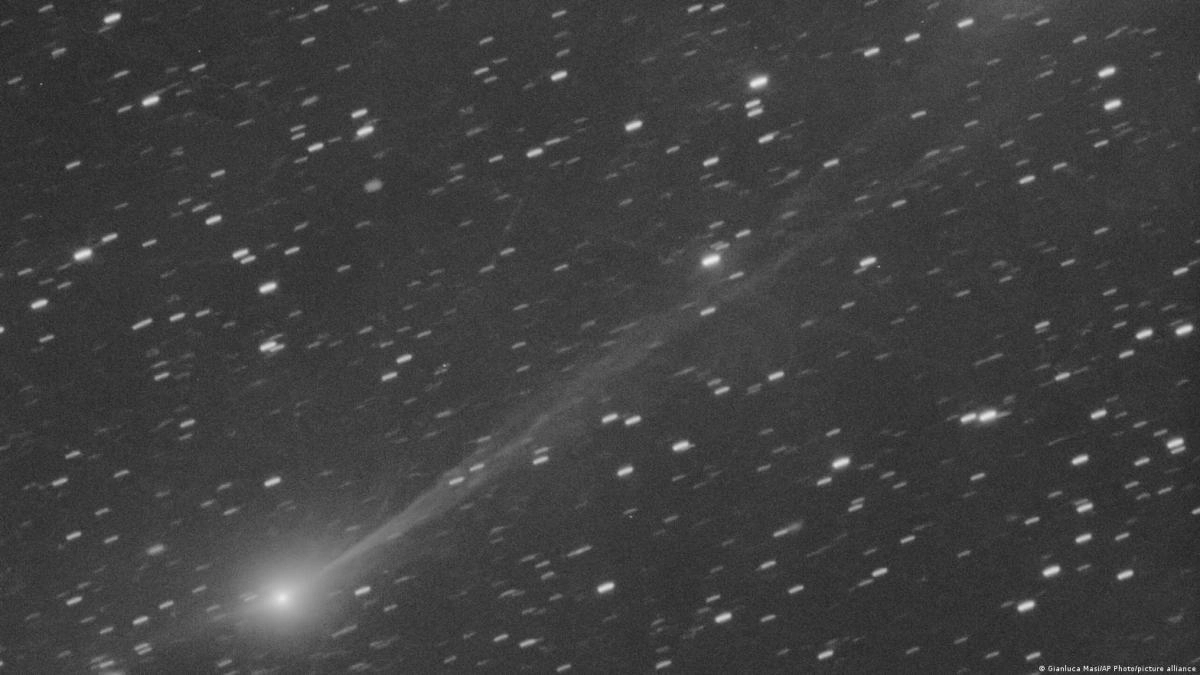
The long-awaited new images of the elysium object 3I/ATLAS, the next visitor to our cosmos, which may be older than our full solar system, were unveiled by NASA.
The space agency refuted rumors about synthetic systems or alien spacecraft, and said it was a natural comet.
The US government shutdown's publication of these pictures had fueled rumors about the revelation of extraterrestrial life.
a question-stricken image
The ATLAS camera system in Chile discovered the comet in July. Since then, astronomers have studied its peculiar trajectory closely, which may suggest that it originates in an unfamiliar area. It's normal to know what it is. We adore that others have wondered along with us, said Nicola Fox, equate director of NASA's Science Mission Directorate. This is the second interstellar image to be found in our cosmos, joining 1I/'Oumuamua in 2017 and 2I/Borisov in 2019. NASA dispels stories about extraterrestrial aircraft. After a professor suggested that 3I/ATLAS might be an item made of extraterrestrial technology, media attention increased on it. But, firm experts completely refute this and say that its behavior is typical for a comet.
" First, I'd like to tackle the stories. I believe it's crucial to discuss that. A meteor is what this is. It appears and acts like a meteor. And all the supporting evidence supports that it is a single entity, said associate superintendent at NASA Amit Kshatriya.
" Yes, it certainly behaves like a comet, we were able to say that quickly. We haven't seen any technological signs or evidence that would support the theory that it's anything other than a meteor," said Nicola Fox.
Chris Lintott, an Oxford University scientist who is not associated with NASA, believes that the concept of? It is" simply absurd" to have an alien spaceship. Little suggests such a thing, and it would be like saying that the sun is made of cheese, he said. The hunt for career continues beyond Earth. NASA continues its energetic search for biosignatures on various worlds despite ruling out an intergalactic source for this galactic object. Kshatriya made note of the possibility that an old bacterial life may be found in a rock sample taken from Mars by the Perseverance rover. She resisted," We are quite eager to find evidence of life in the universe. " Photos taken in various areas: The subject was examined by more than a few instruments, including satellites orbiting Mars and the James Webb and Hubble space observatories. The new photos show a clear, feature coma, a cloud of gas and dust around the nucleus, and a clearly defined sand neck, 3I/ATLAS, though a little blurry. A tourist from a different renewable system: According to scientists, the comet is believed to have been created in a solar system that was approximately 4. 5 billion years old. According to Tom Statler, NASA's main scientist," It's not just a window into another solar system; it's also a window into the far past, so far that it actually predates the formation of our Earth and Sun. " Additionally, scientists point out chemical differences between local comets and comets:" We're now seeing some extremely interesting differences compared to comets in our solar system," says Fox. The image is about to leave our solar system, according to Larry Denneau, an astronomer at the University of Hawaii and co-principal inspector of ATLAS. However, it poses no threat to our world. as well as observatories that are in orbit with Mars.
The new images show a clear and distinctive coma, a cloud of gas and dust around the nucleus, and a clearly defined sand tail, despite being a little blurry.
A person from another thermal program is traveling.
According to scientists, the comet is believed to have originated in a thermal system that was formed about 4. 5 billion years ago. According to Tom Statler, NASA's main scientist," It's not just a window into another solar system; it's also a window into the far past, so far that it actually predates the formation of our Earth and Sun. " Additionally, scientists point out chemical differences between local comets and comets:" We're now seeing some really interesting differences compared to comets in our solar system," says Fox. The image is about to leave our solar system, according to Larry Denneau, an astronomer at the University of Hawaii and co-principal inspector of ATLAS. However, it poses no threat to our world. as well as observatories that are in orbit with Mars.
The new images show a clear and distinctive coma, a cloud of gas and dust around the nucleus, and a clearly defined sand tail, despite being a little blurry.
A person from another thermal program is traveling.
According to experts, the comet is believed to have originated in a thermal system that was formed about 4. 5 billion years ago. According to Tom Statler, NASA's main scientist," It's not just a window into another solar system; it's also a window into the far past, so far that it actually predates the formation of our Earth and Sun. " Additionally, scientists point out chemical differences between local comets and comets:" We're now seeing some extremely interesting differences compared to comets in our solar system," says Fox. The image is about to leave our solar system, according to Larry Denneau, an astronomer at the University of Hawaii and co-principal inspector of ATLAS. However, it poses no threat to our world.
This news has been tken from authentic news syndicates and agencies and only the wordings has been changed keeping the menaing intact. We have not done personal research yet and do not guarantee the complete genuinity and request you to verify from other sources too.