

Remains of a four-ton SpaceX rocket would have collided with the Moon
Researchers seek to use data from this crash to analyze the behavior of space debris
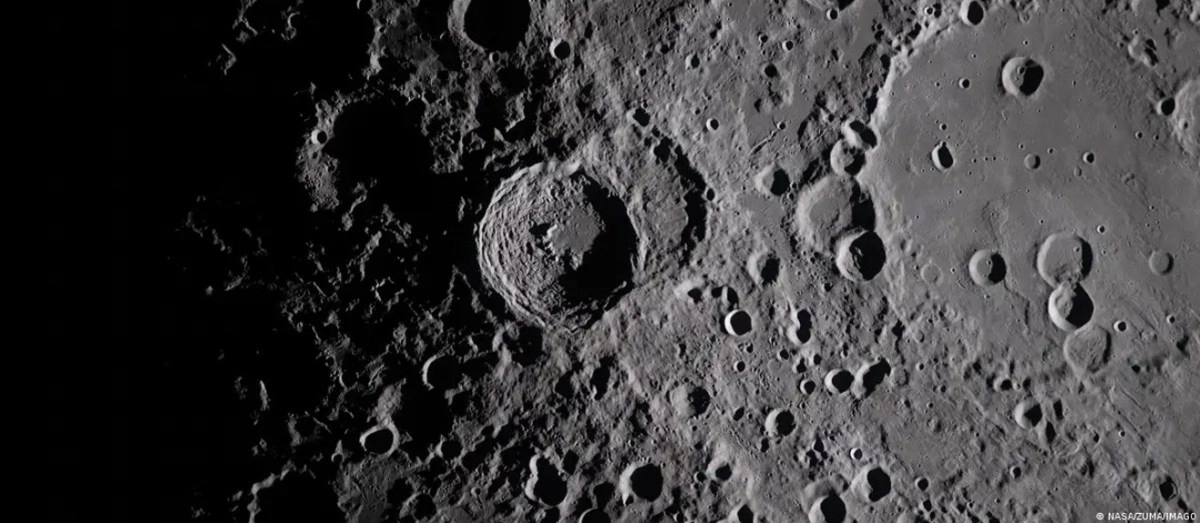

This Wednesday, a four-ton part of a SpaceX jet may have unintentionally hit the Moon, according to area companies and researchers.
The incident was anticipated to occur around 06 :35 GMT, despite the lack of official confirmation thus far regarding whether the second phase of the Falcon 9 rocket has yet to collide with the lunar surface.
Data analysis and medical research
Although receiving that information may take time, NASA intended to take pictures of the area after the effects along with its Lunar Reconnaissance Orbiter and South Korean Pathfinder spacecraft.
Both the medical community and astrophysics enthusiasts were eagerly awaited the plume of particles that the event would have produced.
" Citizens with telescopes might be able to observe the debris jet created by the impact. One of the reasons we're interested in studying this function is that it's not known how promising it will be, according to Benjamin Fernando of the Los Alamos National Laboratory in the United States, the lead author of a review of the predicted effect, which has yet to be peer-reviewed.
The event provides" the opportunity to test a method to locate effects on the lunar surface for future seismic experiments, investigate the dynamics of dust and plumes generated by impacts on the Moon, and assess the risks posed by artificial place debris," according to the researchers ' work.
The occurrence is certainly harmful to Earth.
The authors assume that the boat's fuel ran away, leaving it with approximately 4, 000 kg. At a rate of about 8, 690 kilometers per hour, the part may have slammed into the northern continent of the Moon, close to the Einstein Crater.
Although the event left a noticeable solar crater, it did not pose any threat to Earth. A NASA director promises that the space agency will continue to monitor the boost for teaching purposes and to eventually observe the impact page for research purposes in a NASA statement.
SpaceX bad space
The Falcon 9 jet, which was built by SpaceX's tycoon Elon Musk, launched in January 2025 with two solar landers. The major boost went back to Earth, but the upper step remained in space.
Julianna Scheiman, director of Science Programs at NASA and the Dragon spacecraft at SpaceX, explained that the company usually ensures that the second stage “is in a safe position in accordance with the relevant rules and regulations.”
“We did that,” he declared, but “what has happened is that, essentially, a combination of solar activity and gravitational forces put it on a path to the Moon,” he justifies.
With a view to future missions on the Moon
NASA hopes to soon establish sustainable human presence missions on the Moon, making it essential to better understand space debris in lunar orbit.
The Moon is regularly hit by space debris, such as meteoroids. Artificial collisions, on the other hand, are less common. In the 1970s, NASA conducted deliberate collisions during its Apollo program to collect seismic data.
Dangers associated with space debris
This part of the rocket was just one more fragment among the thousands of pieces of space junk orbiting the Earth.
The European Space Agency (ESA) noted at the end of July that there are currently more than 46,000 pieces of space debris in orbit, weighing a total of 17,000 tons.
Some experts have warned that excessive accumulation of space debris around Earth could trigger a dangerous chain reaction of collisions known as “Kessler syndrome.”
This news has been tken from authentic news syndicates and agencies and only the wordings has been changed keeping the menaing intact. We have not done personal research yet and do not guarantee the complete genuinity and request you to verify from other sources too.