
Google has a tool built into Android phones that is capable of detecting earthquakes and sending a warning to users before the ground begins to shake strongly.
The system demonstrated its effectiveness forcefully on June 24, when thousands of Venezuelans received the alert on their phones between 3 and 15 seconds before the most destructive waves of the 7.2 and 7.5 magnitude earthquakes reached their cities. Far from being a coincidence, that notice was the result of years of technological development that turns every Android smartphone into an active seismic sensor.
The system that uses 2,000 million phones as seismographs
The Android Earthquake Alerts System was launched by Google in 2021 with a central idea that is as simple as it is powerful: if all Android phones in the world have accelerometers, they can collectively function as the largest seismic detection network that has ever existed. The accelerometer is that sensor that you already know because it rotates the screen when you turn the phone, but it is also capable of recording the micro-vibrations generated by an earthquake before the human body can perceive them.
When a device's accelerometer detects an unusual vibration pattern, the phone automatically sends an anonymous signal to Google servers. If multiple devices in the same geographical area report the same pattern simultaneously, the system activates neural models trained with thousands of real seismic events to confirm whether it is a genuine earthquake. If yes, the alert is immediately distributed to all devices in the risk area, within milliseconds.
Google currently has more than 2 billion active Android devices in the world, making this network the most extensive seismic detection infrastructure in history. In densely populated urban areas, the concentration of these “sensors” far exceeds any traditional government seismological network.
The physics that makes it possible to warn before it shakes
The technical basis of early warning is the difference in speed between two types of seismic waves. P or primary waves are the first to be generated after an earthquake, they travel quickly through the Earth's crust and produce little perceptible damage. The S or secondary waves are slower, but they concentrate most of the destructive energy of the earthquake and are responsible for the shaking that collapses structures.
Google's system detects P waves through accelerometers and transmits that information over the Internet at a speed that exceeds the physical propagation of S waves. This allows the alert to reach devices in areas further away from the epicenter before the most violent movement reaches those areas. The greater the distance to the epicenter, the greater the lead time the user receives.
As a performance reference, during an earthquake recorded off the coast of Almería in 2025, Google distributed the alert to five million devices in just 12.5 seconds from the start of the event. That time is comparable to that of national systems such as ShakeAlert, the official United States network that operates with 1,675 high-precision physical sensors installed on the ground.
An algorithm designed to not trigger false alarms
One of the system's biggest technical challenges is distinguishing seismic vibrations from noise generated by thunderstorms, heavy traffic, or sudden movements of the phone itself. To solve it, Google uses artificial intelligence models trained with thousands of documented seismic events that analyze the pattern, frequency and coherence of signals received from multiple devices at the same time.
The alert is only activated when a minimum number of devices in the same area simultaneously confirm a recognizable seismic pattern, significantly reducing the margin of error. Since its launch, the system has recorded only three false alarms in its entire global operation, while correctly detecting more than 1,279 earthquakes in 98 countries between 2021 and 2024.
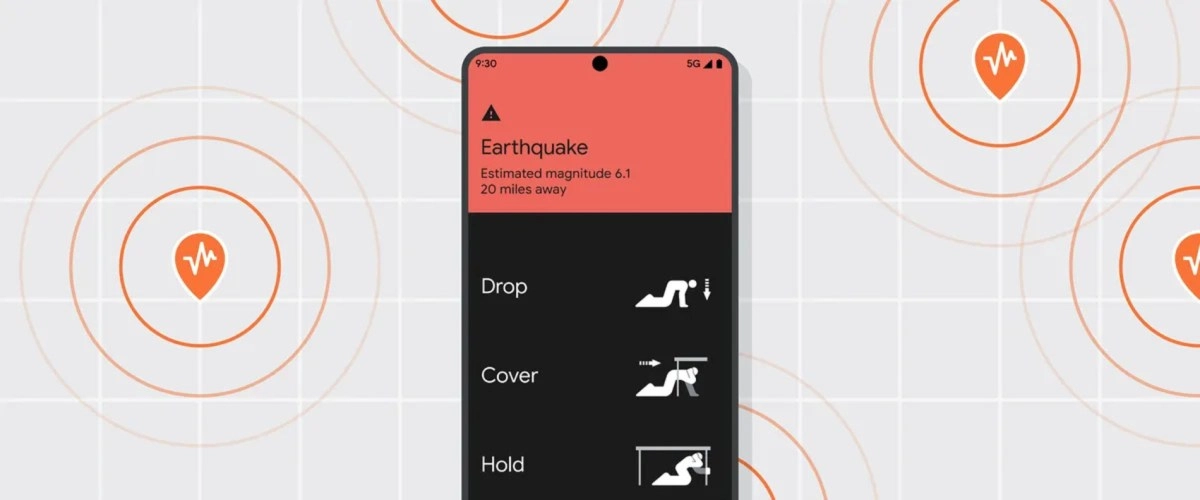
The notification arrives in full screen with a maroon background, activates the emergency sound even if the phone is silent and includes the estimated magnitude, the distance to the epicenter and basic safety recommendations. The function is available for free on any Android with version 5 or higher and is activated by default on many devices. To verify this, just go to Settings, look for the Security and emergency section and confirm that the earthquake alerts option is turned on.