

ACLU and advocates win key case for immigrant families over birthright citizenship
Civil organizations highlight that the decision reaffirms that no president can limit a constitutional right
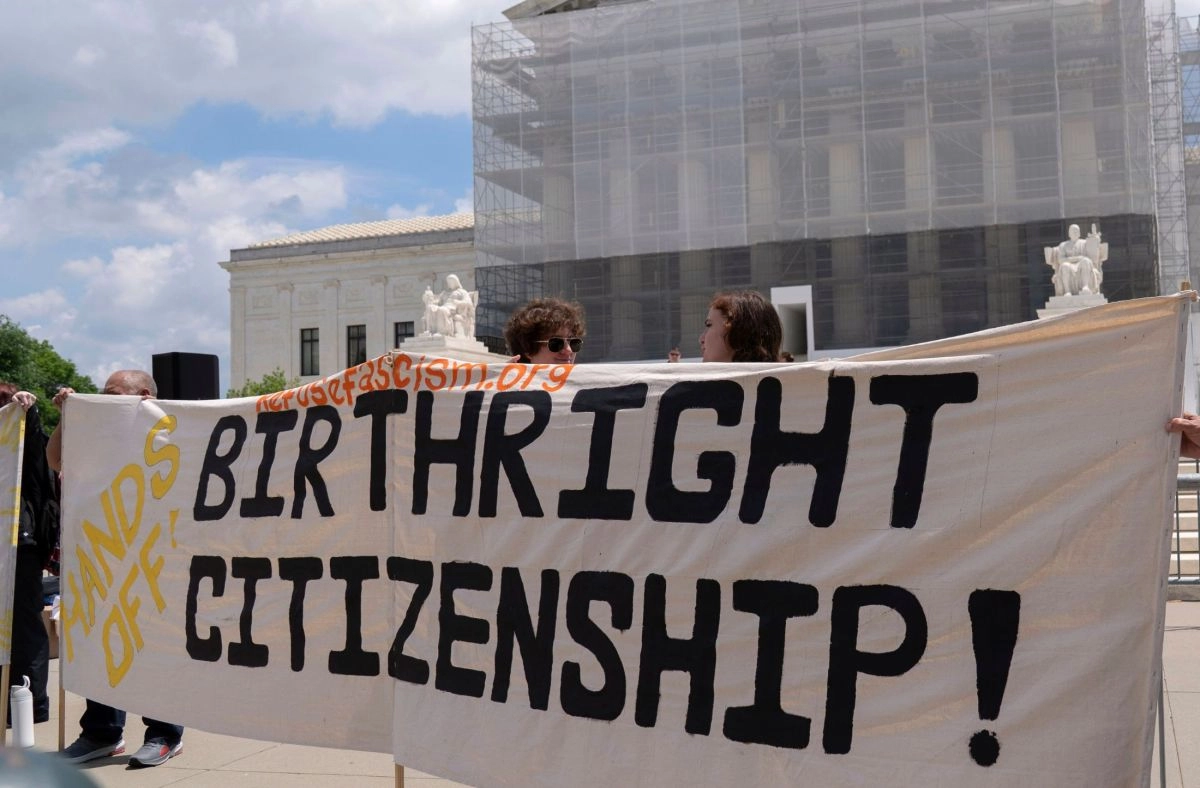

The Supreme Court dealt a major setback to President Donald Trump by declaring unconstitutional his executive order that sought to restrict birthright citizenship for children of irregular immigrants born in the United States.
By a vote of 6 votes to 3, the highest court concluded that the United States Constitution protects this right and that no president can modify it by executive order. The resolution annuls the decree signed by Trump at the beginning of his second term in 2025, one of the central pieces of his immigration policy.
The lawsuit was brought by the ACLU, along with the ACLU of Maine, the ACLU of Massachusetts, the ACLU of New Hampshire, the Legal Defense Fund, the Asian Law Caucus and the Democracy Defenders Fund, on behalf of minors who would have lost automatic access to citizenship under the presidential measure.
The Court reaffirms a historic constitutional right
The ruling strengthens a principle in force for more than 150 years, derived from the Fourteenth Amendment, which establishes that every person born in the United States is a citizen of the country, regardless of the immigration status of their parents.
After the decision was announced, Cecillia Wang, national legal director of the ACLU, said: "The court's decision reaffirms a fundamental American promise: if you are born here, you are a citizen. A president cannot change the Constitution by executive order."
For her part, Molly Curren Rowles, executive director of the ACLU of Maine, called the resolution “a victory for immigrant families” and assured that it reaffirms the legal consensus that for decades has recognized the United States as a nation of immigrants.
Organizations celebrate a decision with national impact
Various civil rights organizations agreed that the ruling represents one of the most relevant constitutional rulings in recent years.
The executive director of the ACLU, Anthony D. Romero, maintained that Trump “suffered a resounding defeat” in one of the most important litigations of his administration and highlighted that even judges appointed by the president himself rejected his constitutional interpretation.
Meanwhile, Janai Nelson, president of the Legal Defense Fund, stated that “the Constitution, not the president, defines who is a citizen,” while Aarti Kohli, executive director of the Asian Law Caucus, said the ruling reaffirms that Asian Americans “fully belong” to the country.
Retired ambassador Norm Eisen, president of the Defenders of Democracy Fund, described the resolution as “a human milestone,” believing that it guarantees that no president can decide who deserves the rights protected by the Constitution.
The decision comes after the Supreme Court heard oral arguments in the case on April 1, 2026 and constitutes one of the most significant judicial defeats for the immigration policy promoted by Donald Trump.
This news has been tken from authentic news syndicates and agencies and only the wordings has been changed keeping the menaing intact. We have not done personal research yet and do not guarantee the complete genuinity and request you to verify from other sources too.