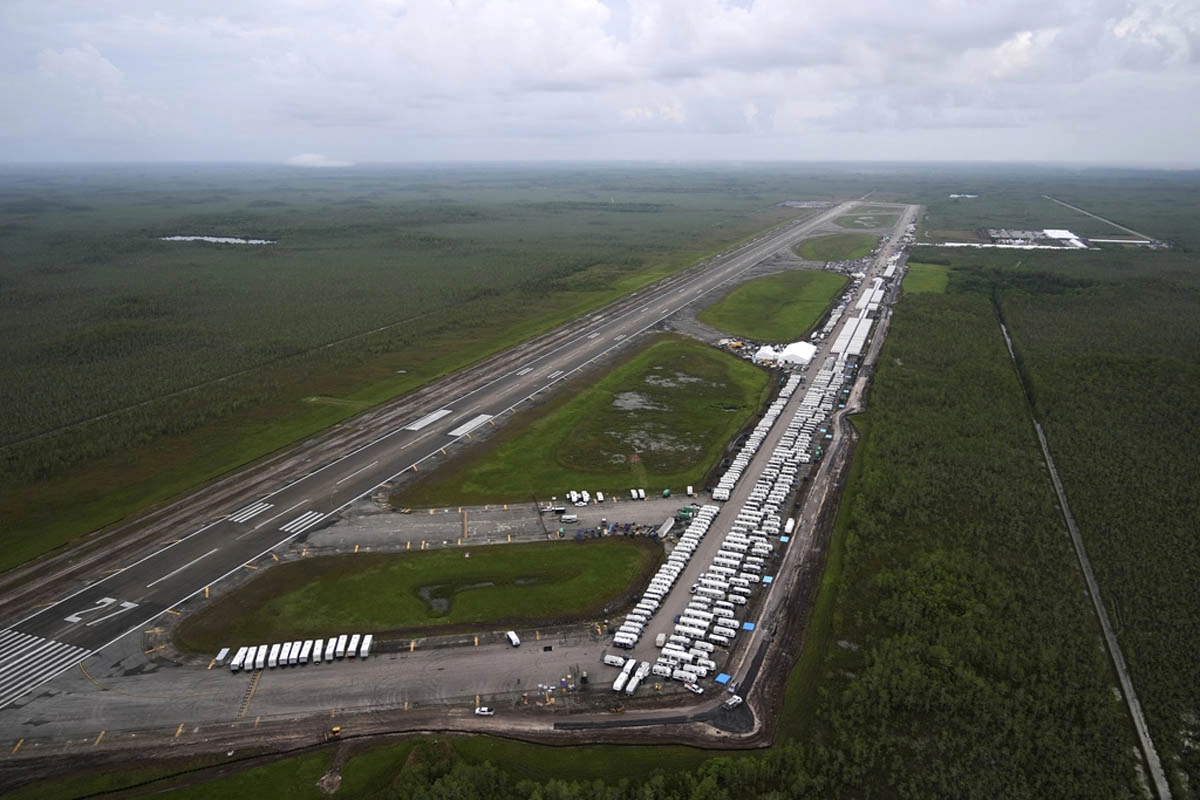

The state of Florida chose to return to Miami-Dade County the land where, for about a year, the controversial immigration detention center named Alligator Alcatraz operated.
In July of last year, President Donald Trump was in charge of inaugurating a complex intended to detain foreigners lacking legal status detained by the Immigration and Customs Enforcement Service (ICE) while their deportation process took place.
Mounted very close to the Miami Dade-Collier Training and Transition Airport, where the Everglades National Park is located - an ecological reserve inhabited by alligators, snakes and swarms of flies, which has been protected by UNESCO as a World Heritage Site since 1979 -, Alligator Alcatraz became a true martyrdom for the people who came to stay there.
Despite multiple lawsuits filed by humanitarian and environmental organizations citing mistreatment of immigrants, as well as a negative impact on the ecosystem, during its fleeting period of operations, these facilities became an emblem of the campaign of mass deportations ordered by the head of the nation.
In fact, Ron DeSantis, governor of Florida, recently boasted that thanks to the support offered by Alligator Alcatraz, immigration authorities were able to carry out nearly 30,000 deportations.
However, the closure of the facilities occurred due to the high cost of keeping it open, as it was estimated that it required more than a million dollars a day.
Although it was always said that the federal government would take care of an accumulated debt close to $1.2 billion, in the end the bill will fall on taxpayers.
Democrat Daniella Levine Cava, mayor of Miami-Dade County, published a video on the X platform, formerly known as Twitter, where she was optimistic about having managed to recover a reserve where nothing that affects the ecosystem should be built.
“From the beginning I have been clear that this detention center should never have been built, and now we have the opportunity to shape a better future for these lands,” she said.
At the moment, local authorities are analyzing the option of selling or transferring the almost 10,000 unoccupied hectares to the National Park Service or to other entities committed to recovering the wetland.