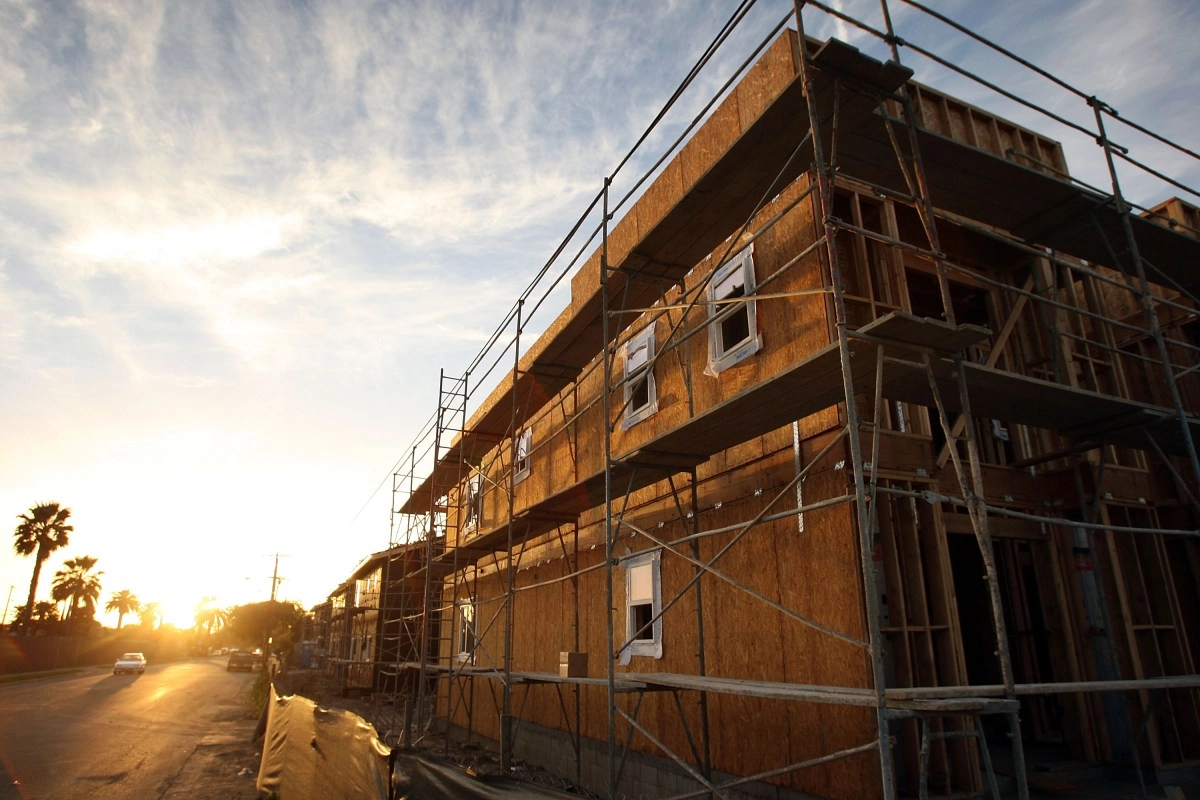

When the house you bought, which was built less than ten years ago, shows defects that can arise from the construction, the owner wants the problem solved. Go to the construction company. In order to prevail in the lawsuit, you have to meet a series of requirements.
This column is about those requirements and how a new bill supposedly created to support them does precisely the opposite.
On May 26, the California Legislature passed AB 1903 by a massive vote of 68 in favor and no votes against.
Such a display of support and solidarity is impressive and logically one should deduce that the proposed law is good.
That impression would be misleading.
And it is something that is repeated too often.
And I say this, because this proposal, which is now being debated in the state Senate, is not what it claims to be.
And the vote of 68 to zero? The absence of serious opposition reflects the way the bill was presented, as if it were a step forward in housing reform.
It's unfortunate
On the other hand, ten assembly members voted against. All of them, Democrats.
AB 1903 is a bill regarding construction defect claims for new residential housing. Its function is to modify the existing law in this regard, SB 800 of 2002, called the California Right to Repair Act.
If approved, it will apply to condominiums and townhouses (duplexes) built on or after January 1, 2027.
Supporters describe it as a measure to reduce litigation costs and spur condo construction.
Is that so? A close reading shows that it restructures the claims process in a way that reduces buyer protection and increases control of construction companies.
It is true that the result of the application of this law, if it is finally approved by the Senate and signed by the Governor, will be a drop in litigation due to poor construction. Some think, or say they think, that this is good; that this will be a step forward in solving the housing shortage problem in California. A shortage that leads to extraordinarily high prices, which drives away entire segments of the population without sufficient necessary resources from purchasing.
They are wrong. Yes, the problem is serious. The situation is serious.
Thus, while in 2000 the homeownership rate in California fluctuated around 50%, in 2021 it had fallen instead of growing, to 44%, especially among Californians between 35 and 45 years of age and 15% less than in the rest of the country.
Litigation is just one factor in the process, along with the cost of land, high interest, the aftermath of the recession period, the socio-political climate in the state and more. AB 1903, however, focuses on amending SB 800 to make it more difficult for homeowners to sue construction companies.
When other factors are ignored, this law becomes an excuse. Those who vote yes, especially if they understand what they are doing, will do so so they can say they did something to resolve the situation. But this law will not bring that solution.
What it will cause is that construction companies will have an incentive to be less strict in the quality of construction.
The Terner Center report that enlightened the project's authors, published in July 2024, concludes: “Reexamining California's current approach to managing construction defect liability – with a view to reducing litigation, lowering costs, and building consumer confidence – is a critical step in creating much-needed homeownership opportunities for Californians.”
I agree. But how can a law that helps construction companies at the expense of those consumers “foster consumer confidence”? What leaves the inhabitants aside?
The report, unfortunately, claims that homeowner protection laws are a negative incentive for housing construction. “The scope of California's construction defect liability laws provides a significant disincentive for developers and contractors to build new condominiums,” he says. But it is not like that. A market where the buyer has rights encourages the “American dream.”
The changes touted by AB 1903 sometimes make no sense outright. For example, and I quote portions of the statute's text, the bill would authorize the builder to obtain a certificate “by conducting private inspections, repairs, and re-inspections during construction.”
Once that certificate is obtained – or purchased – the law “would prohibit future challenges to the status of a certified building.”
What's more, the construction company – and not the owners, or a mediator – will have the right to “establish its own procedure for managing post-construction claims.” In addition, repairs will be carried out “within the deadlines established by the builder.” And further, “if a claimant rejects the offer of repair or prevents, restricts, delays or thwarts access for more than 7 days from the mutually agreed upon date, the bill would consider the builder to have been released from liability.”
With one stroke of a pen, legislators are depriving the community of protections and resources that belong to it as a property owner. The president of the California Building Industry Association justifies it in an interview with this comment: wherever a condominium complex is built in California, “100% of them will be subject to litigation”… “I don't know of any condo built in California that doesn't receive a claim for defects.” This phrase, which is intended to describe how terrible condo owners are, is actually a testament to how problematic the buildings are.
Point after point, the bill makes it extremely expensive and difficult for the homeowner to sue for repairs. They go on and on in the text of the law.
This is bad for our community. Because the shortage of condominium supply hurts Latino and African American families the most, who are more likely to buy a condominium than white families. Because they are cheaper. Or less expensive.
This bill seems like a bad deal. The families most likely to purchase condominiums and townhouses in much of the state are those who have the least financial margin to absorb the costs derived from construction defects.
Do the math.
There are alternatives. In 2024, then state senator Steve Glazer proposed bill SB 1470, which created the figure of an impartial inspector of the repair process, in charge of verifying them and verifying that the repairs were carried out within a period of 30 days. The proposal did not gather enough support and died in committee without even reaching a vote. A pity.
The same report recommends a mandatory mediation mechanism to solve the problem before resorting to judicial channels. It also recommends emulating the example of New Jersey and establishing home warranty programs (Home Warranty) that would pave the way for efficient, low-cost and short-term resolution of construction defects.
It would be good for legislators to once again review their drafts and improve the bill to benefit not only construction companies but also buyers.