
Iran has accused US President Donald Trump of employing a fear-based strategy to justify potential military action against the country, following his assertion that Iran possesses the capability to inflict significant damage on major US cities, specifically Los Angeles and San Diego in California.
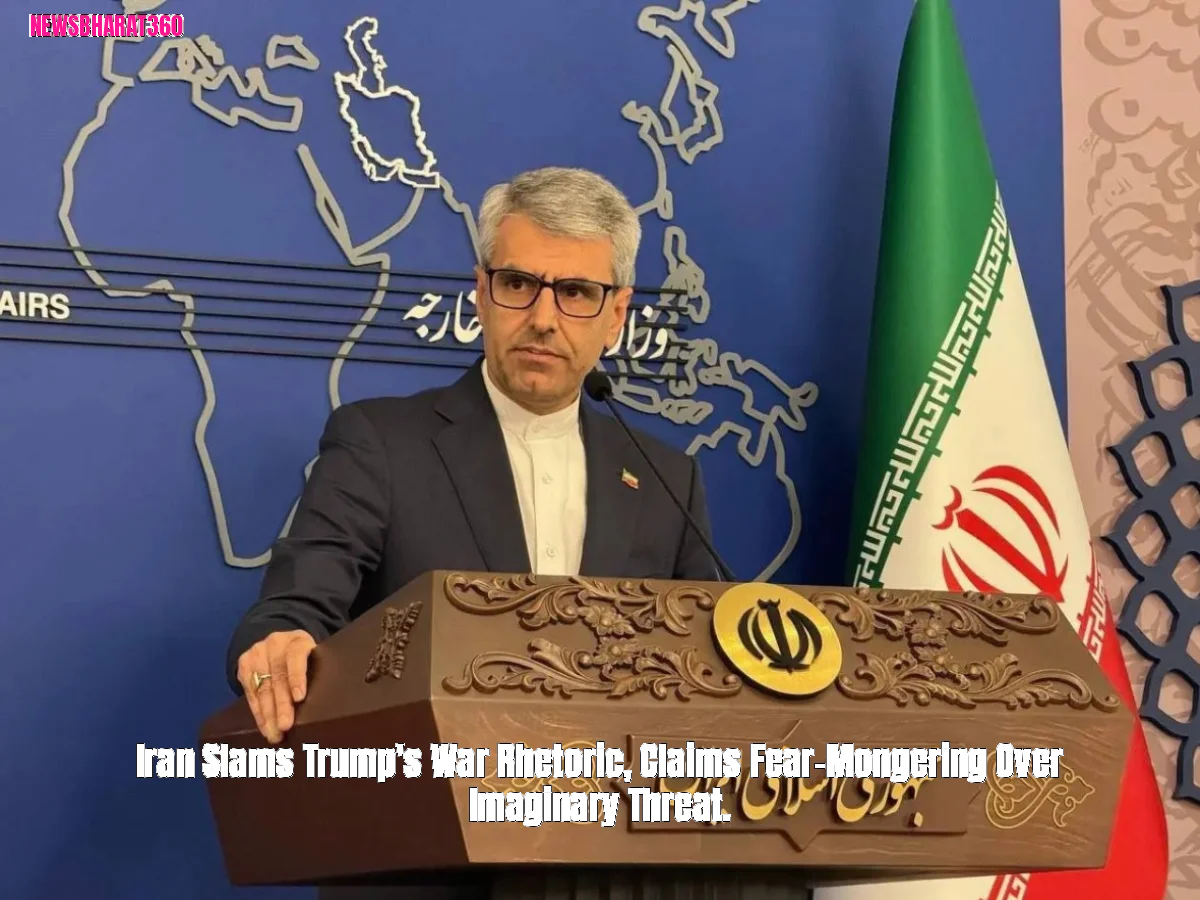
Iranian Foreign Ministry spokesman Esmaeil Baghaei countered US President Trump's comments by posting a statement on the social media platform X, in which he claimed that Washington's assertions of an external threat are an attempt to deflect attention from the repercussions of its own actions.
A diplomat has expressed skepticism that the U.S. administration is genuinely concerned about the threat posed by Iran, suggesting instead that they are fabricating a threat from a non-existent enemy to justify their actions. The diplomat also questioned the U.S. president's willingness to accept the destruction of American cities as a consequence of the conflict with Iran.
The spokesman emphasized that the underlying message aims to persuade Americans to accept certain expenses without scrutinizing the government's choices. He further stated that the primary threat does not stem from external forces or domestic terrorism, but rather from a ruling elite that has unilaterally imposed an unlawful conflict, resulting in far-reaching global repercussions.
The ruling establishment has created a fabricated threat in the form of an extraterrestrial enemy to distract from the genuine dangers facing the nation. The true peril is not located beyond the country's borders nor is it a celestial threat hovering above major cities like Los Angeles and San Diego. Instead, it originates from within the government itself, which has implemented policies that pose a significant threat to the well-being of its citizens.
A controversy erupted on Monday during an election rally in Nebraska, where former US President Donald Trump stated that Iran poses a threat to US cities and justified the US offensive against Tehran as a necessary measure to prevent Iran from acquiring nuclear weapons.
The president's statement suggesting the potential destruction of Los Angeles and San Diego as a viable option in the war has been met with criticism from California's Democratic and Republican politicians. His words imply that the cost of such devastation would be relatively low, sparking concerns about the implications of this stance within the context of the conflict.
Former President Trump addressed the controversy surrounding a temporary gasoline price increase on his platform Truth Social, where he criticized the media for disseminating "fake news." He attributed the price hike to a strategic measure aimed at preventing Iran from obtaining a nuclear capability, deeming the associated costs acceptable.
Contradictory messages regarding the conflict's future have emerged, coinciding with recent statements from the US administration. Following a UN address in which Iran's potential destruction was threatened, the US president has since indicated that no further military actions will be taken prior to the November 3 US parliamentary elections. Additionally, the president has acknowledged the existence of ongoing, productive communication channels with the Iranian government.
Iran's Foreign Minister Abbas Araqchi has stated that his government is developing a response to the United States' most recent proposal aimed at bringing an end to the conflict. Diplomatic channels remain open through intermediaries. The situation in the Strait of Hormuz and the Gulf of Oman remains volatile, with US naval forces enforcing a blockade and reports of clashes involving commercial vessels continuing to emerge.
Diplomatic efforts notwithstanding, the ongoing exchange of accusations between the US and Iran underscores the complex nature of their relationship, with both nations struggling to navigate the escalating conflict and secure control of a critical energy transportation route.