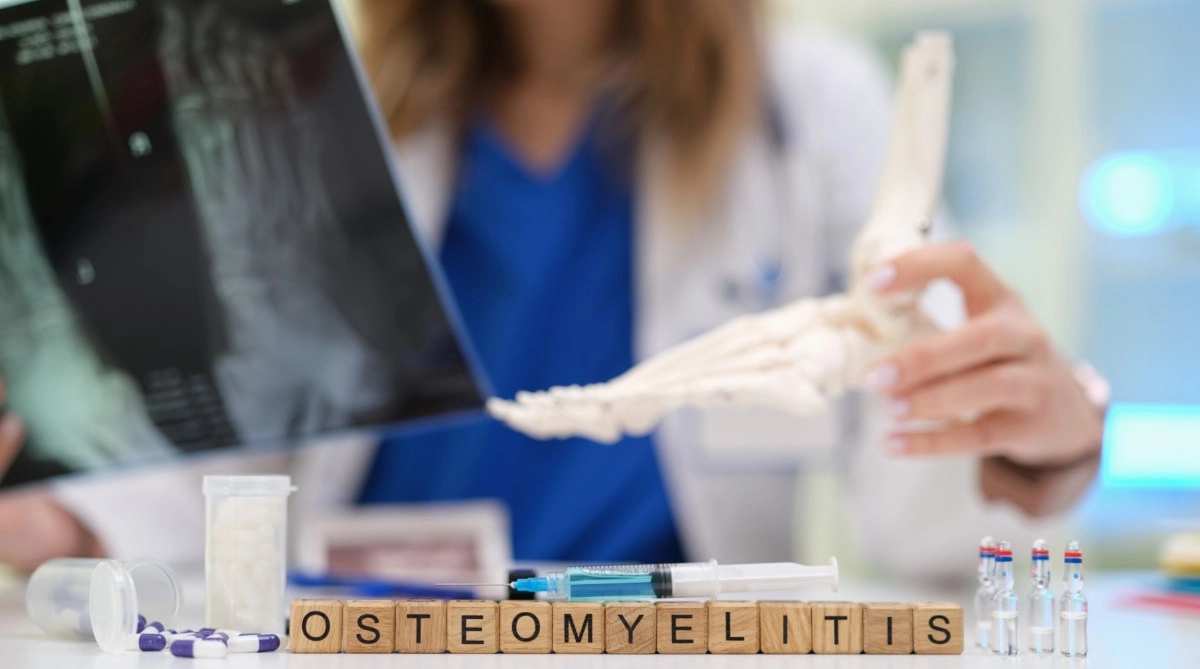

One of the most challenging problems in the field of viral osteoarticular conditions is infection. This disease, which is caused by bone cells infection, has existed since antiquity but is still a significant threat in modern medicine. If left untreated, it can lead to severe pain, swelling, and probably life-long damage to bone tissues. It is a fungal infection that affects the vertebrae and bone marrow. This condition, which can manifest either exceedingly or severely, constitutes a health emergency that warrants quick, highly trained care. Although advancements in antimicrobial therapy and medical techniques have significantly improved the outcome, the treatment of this condition also necessitates a multidisciplinary and time-consuming approach. Complicanies that compromise the hospital's quality of life and also harm the patient's complete arms are the result of infection ' intensity. Staphylococcus aureus is the most prevalent bacterium to blame for infection, but another microbes, including gram-negative bacilli, and in some cases, mycobacteria or spores, may also be involved. The bone can be infected with the infection via three main means: hematogenous dissemination ( through the bloodstream ), contagion from local infected soft tissue, or immediately following an open fracture, orthopedic surgery, or penetrating trauma.
Patients with diabetes, peripheral venous insufficiency, compromised immune systems, users of intravenous drugs, and those with placed orthopedic devices are high-risk groups. In adults, immediate spread or adjoining infection predominates, whereas in children, osteomyelitis can spread hematogenously.
Clinical expressions
Depending on the assessment, symptoms vary. Patients with acute infections experience significant bone pain, temperature, malaise, and swelling in the affected region. Mobilitatea may become considerably limited. The severe form, in contrast, has more insidious symptoms, periodic drainage of serous material through urogenital tracts, and less prominent systemic symptoms. It has persistent but less intense pain. A Comprehensive Approach to Diagnosis. A combination of medical evaluation, lab tests, and imaging studies is necessary to determine osteomyelitis. ESR and C-reactive protein ( CRP ) are typically elevated inflammatory markers like erythrocyte sedimentation rate ( ESR ). Bone changes may be seen on ordinary radiography, but they frequently occur weeks after the infection has started. Advanced imaging methods are essential in this regard. The most delicate study to identify first infection is MRI, which enables the visualization of tooth marrow abscesses, abscesses, and soft tissue abnormalities. For bone loss and medical planning, computed imaging is useful. Nuclear healthcare studies, such as spine scintigraphy, may detect numerous foci of infection. But, bone tissue culture obtained via biopsy serves as the medical gold standard for identifying the causative microorganism and determining its antibiotic susceptibility, which can help guide the development of a specific treatment. Surgery and medications are the two therapies. A mixed approach that incorporates prolonged antimicrobial therapy and, generally, surgical intervention is required for the treatment of osteomyelitis. The basis of antibacterial treatment is antibiotic treatment, which is typically started directly with broad-spectrum medications until culture results are obtained. Therapy is adjusted in accordance with the antibiogram once the infection has been identified. The average length of antibiotic treatment is four to six weeks, but in severe cases it can go for months. Vancomycin and macrolides, clindamycin, and doxycycline are the most frequently used antibiotics for methicillin-resistant Staphylococcus aureus. Some patients can continue using highly absorbable oral antibiotics following the initial iv course. In addition to performing surgical procedures, there are instances where necrotic bone tissue needs to be removed ( debridement ), foreign bodies or implant-infected implants, or when medical care fails to stop the infection. To eliminate chronic illness, extreme clinical exfoliation, which involves the removal of all sick or devitalized bone and tissue, is necessary. Rhinoplasty procedures may be required to complete spine gaps in complicated cases using grafts, osteoinductive distraction techniques, or vascularized tissue flaps. Surgery may be the only treatment option when the infection is irreversibly lethal and intractable. Alternative Therapies: In addition to regular treatments, there are antidepressant modalities that can increase outcomes. In some cases, especially when capillary compromise is present, hydrobaric oxygen therapy has shown advantages. The use of antibiotic-impregnated tooth stones or cements allows for sustained regional release of higher drug concentrations straight at the infection site. Most cases of acute infections resolve properly with fast and appropriate treatment. The serious form, however, has more difficulties because it has frequency prices that can reach 30 %. Pathological injuries, septic arthritis, tooth sequestra ( fragments of dead bone ), infection spreading to other locations, and a surprisingly malignant chronic urogenital tract are possible complications.