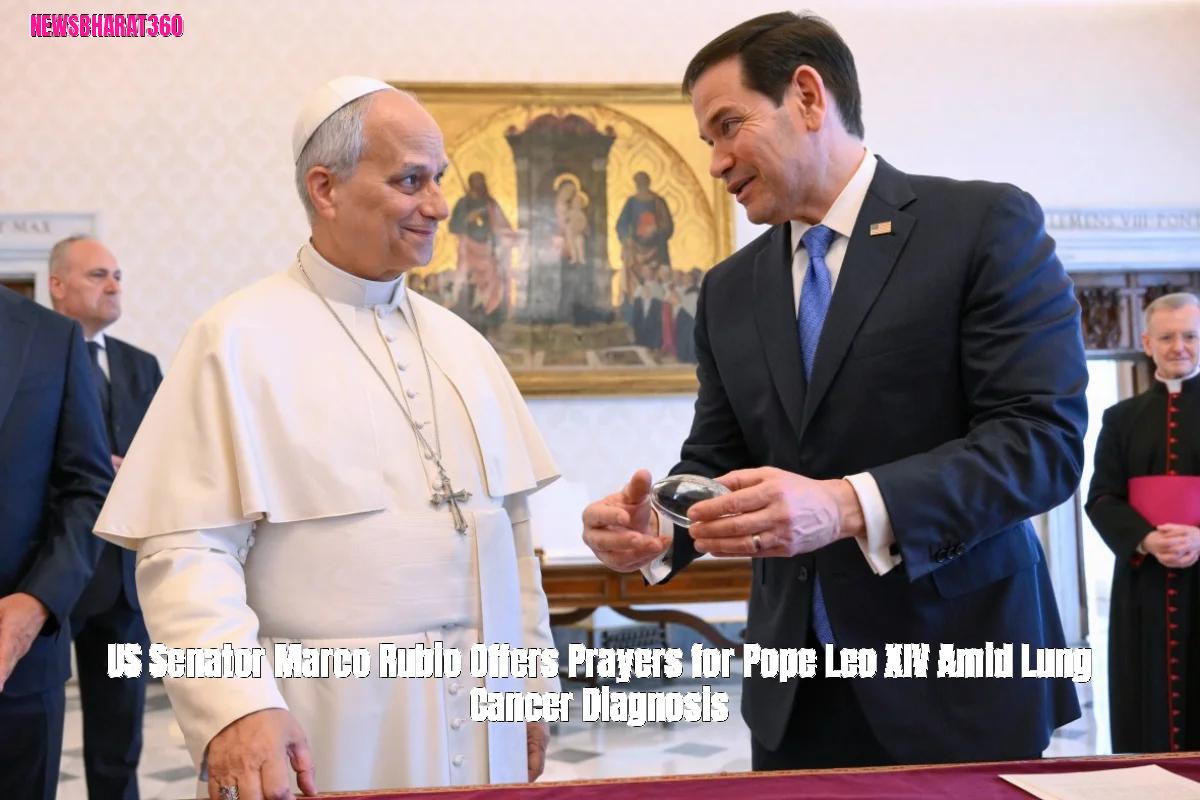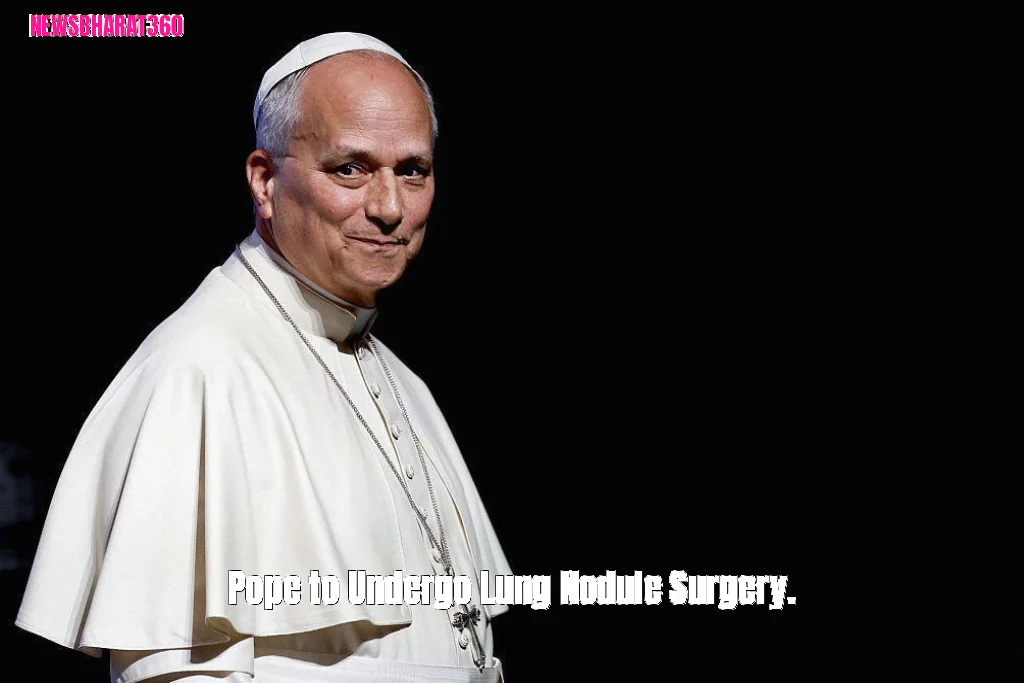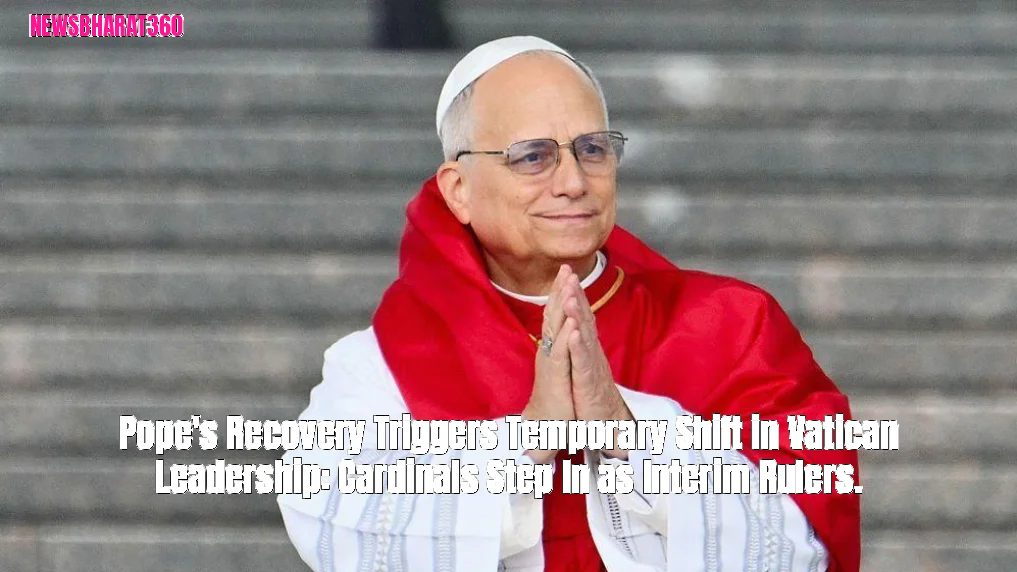

The recent diagnosis of lung cancer in Pope Leo XIV has sparked concerns about the future of the Catholic Church, echoing questions raised in March 2023 when his predecessor, Pope Francis, underwent hospitalization.
A query central to the Catholic Church's governance was posed by AP news agency journalist Nicole Winfield on Wednesday, namely, who assumes leadership when the Pope is incapacitated, unable to govern, or unconscious.
The individual responded with a simple yet definitive answer, stating that the solution lay with the Pope.
Winfield's concise response offers a simplified explanation of a multifaceted issue.
In instances of incapacitation, such as a serious illness, the Catholic Church lacks a well-defined protocol for transferring leadership, unlike the established procedures for succession following the death or resignation of the Pontiff.
Pope Leo XIV, 71, underwent a 90-minute surgical procedure at the Gemelli Hospital in Rome, where a portion of the lower lobe of his right lung was successfully removed.
The Vatican has confirmed that Pope Francis spent a peaceful night and will provide further updates on his health throughout the day.
The Holy See's Press Office Director had previously confirmed Pope Leo XIV's upcoming trips to Uruguay, Argentina, and Peru, but the pontiff's health status has become uncertain following a diagnosis on Tuesday.
As the supreme leader of the Catholic Church and the Vatican State, the Pope's role is crucial in navigating the institution's multifaceted responsibilities, encompassing spiritual guidance, administrative oversight, and diplomatic representation.
In the event of the Pope's inability to perform his duties in person, the Roman Curia, the governing body of the Church, assumes responsibility for its administration, with the Vatican Secretary of State playing a key role. This position is currently occupied by Cardinal Pietro Parolin.
In March 2025, Filipe Domingues, director of the Laic Centre in Rome and an expert in Vatican affairs, stated to BBC News Mundo that if the Pope were to be incapacitated, the situation would likely remain unchanged.
The Vatican's Secretary of State holds a significant position within the institution, with each Cardinal having distinct responsibilities.
Cardinal Pietro Parolin, the current holder of this position, is responsible for managing the Vatican's diplomatic and administrative matters, effectively serving as the chief administrative officer and a key advisor to the Holy See.
Cardinal Secretary of State Parolin acknowledged concern for the Pope's health, stating that he was taken aback by the situation.
The Vatican Secretary of State reported that a conversation with the Pope on Monday night had provided him with reassurance.
Early detection of issues typically allows for prompt resolution, a fortunate outcome that can be attributed to timely intervention.
The Vatican Secretary of State, Cardinal Pietro Parolin, has yet to issue a statement regarding the recent diagnosis.
The secretary of state's authority does not supersede that of the pontiff, and as such, it cannot assume the pontiff's decision-making powers, including the appointment of bishops.
The Pope has a unique responsibility in the Catholic Church, which includes formally approving the canonization of new saints. Additionally, he delivers weekly messages to the faithful, typically on Sundays or Wednesdays.
The Holy See has established protocols to ensure continuity in the event of a prolonged absence of the pontiff, but its regulatory framework still contains gaps that could create challenges if the pope's health issues persist.
Papal succession procedures outlined in canon law are designed to handle scenarios involving the Pope's death or resignation, but a significant loophole exists when the Pope remains alive yet unable to fulfill his duties.
The Canon 335 of the Catholic Church Code suggests that the Holy See may be vacant or completely unable to function, however, it does not provide a clear definition of what constitutes a completely incapacitated Holy See, nor outlines specific procedures to be followed in such an event.
The Catholic Church has established guidelines for the role of bishops, as outlined in Canon 412. A diocese is deemed "impeded" when its bishop is unable to exercise his authority due to illness, exile, or other circumstances, resulting in the transfer of responsibility to an auxiliary bishop or general vicar.
The question of who would assume the role of the Pope in the event of a disability or incapacitation remains unresolved due to the lack of a comparable provision.
In accordance with established protocol, a Pope who is unable to continue serving due to health reasons would be required to vacate the office of St. Peter.
Pope Paul VI penned letters to the Dean of the College of Cardinals in 1965, outlining a contingency plan in the event of his serious illness, which would involve the Dean and other cardinals accepting his resignation.
Pope Francis confirmed in 2022 that he had prepared a letter of resignation in advance, to be used in the event of a medical disability.
Papal resignation procedures are subject to uncertainty, particularly in scenarios where the Pope's ability to express his will is compromised, as canon law dictates that a resignation must be voluntary and clearly communicated.
Pope Benedict XVI publicly declared his intention to step down from the papacy during his tenure from 2005 to 2013.
The Secretary of State should be authorized to disclose a medical report and make public any relevant documentation if the Pope were to become incapacitated due to Alzheimer's or another condition, thereby preventing a decision-making vacuum.
A proposal put forth by a panel of experts in 2021 recommended that, in the event of a Pope becoming completely incapacitated, the College of Cardinals assume temporary leadership of the Church and establish a commission to periodically assess the Pope's health.
A proposed arrangement would involve a medical committee conducting regular health assessments of the individual every six months. If it is deemed that the person is no longer capable of fulfilling their duties, the College of Cardinals may initiate a process for the selection of a replacement.
The Vatican has yet to implement any of these proposed measures, leaving the Church without a formal framework to handle an extended period of a Pope's incapacitation.
Atahualpa Amerise, a 30-year-old Italian sailor, successfully completed a solo non-stop circumnavigation of the globe in a 9-meter sailboat, named Amerise. The journey, which began on April 27, 2023, and ended on July 18, 2023, covered a distance of approximately 40,000 nautical miles. During the 90-day voyage, Amerise encountered extreme weather conditions, including storms and high winds, but managed to stay on course. Atahualpa Amerise's remarkable achievement is a testament to his skill, determination, and experience as a sailor.